Monday, February 21, 2011

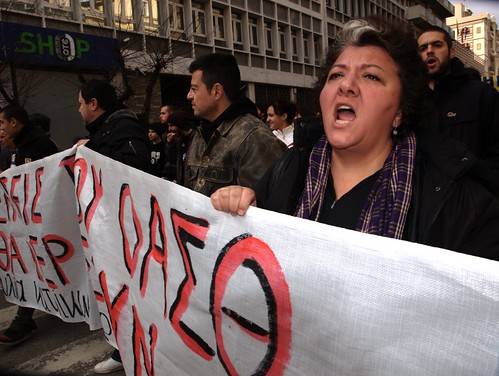
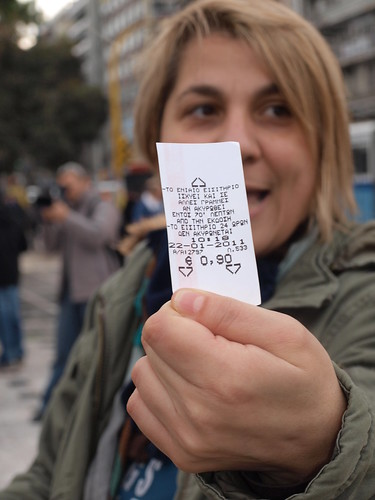
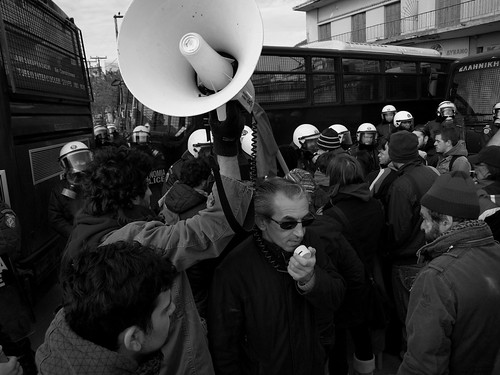
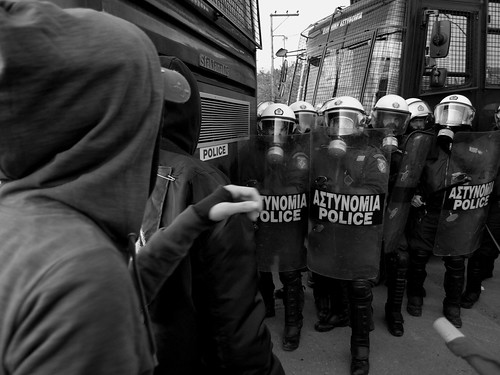
Greek activists take over road tolls nationwide in protests over price hikes


Greek activists take over road tolls nationwide in protests over price hikes

For more information on the movement check out their blog.

Papandreou's credibility gap widens at home.

Today the Greek government started its plan to boost the local car market by encouraging motorists to take their old cars off the road in return for subsidies of up 6000 euros on the purchase of new vehicles. The plan is according to government designed to revive the country's ailing car market which has been hard hit by the current economic crisis.

Yet the idea of paying millions at a time of major financial readjustment seems odd, especially considering the Greece has virtually no automobile industry and the vast majority of the money will go abroad. Also the fact that subsidies are designed so that the larger the car the greater the money returned (in effect, a tax break for the better off) is particularly galling when poorer Greeks are being faced with public transport price rises of between 40% and 180%

Although prime minister Giorgos Papandreou likes to give the appearance of being more ecologically minded than his predecessors the policy of promoting more car sales whilst making bus and tram use much more expensive is hardly the greenest way forward. However, such contradictions are emblematic of the ruling PASOK party's often schizophrenic policies.

Last week junior minister for education Fofi Genimata announced that introduction of a new 2.2 billion euro package designed to promote life long learning yet at the same time lecturers in Greek polytechnics (TEI) were occupying campuses nationwide in protest over the fact that they have not been paid since November. Likewise angry parents demonstrated the decision by school bus drivers in Greece's second largest city, Thessaloniki  to suspend work until they have been paid money owed .

Time and time again the government announces new programmes or introduces legislation without checking whether the funds are available in the vain hope that such policies will, at least in the short term divert voters attention from the fact that the economy is in free fall and no one, least of all politicians have the slightest idea how to fix the problem .

Whilst everyone agrees the answer to Greek woes is "development" the policies being promoted to encourage it are not working. Cuts in the public sector have reduced government spending but at the same time disrupted  the national economy and lead to spiralling unemployment and the closure of hundreds of thousands of small businesses. Likewise falling wages are crippling Greek families who are also facing huge rises in costs of utility bills, transport and food. Even consumption of bread has been hit with bakers reporting drop in turn over of 30%.

Much has been made of the fact the Greek wages have outstripped rises in productivity over the last two decades but what foreign economist fail to realise is that the cost of living has steadily risen as well, especially after the introduction of the Euro which saw the price of  goods and services double or triple. As a result higher salaries have not been translated into higher standard of living but rather greater profits for the cartels and monopolies that control much of the Greek economy. (In the case of bread the cost of loaf has risen from 50 drachmas (15 cents) to 80 cents, an increase far in excess of even the most generous pay rises)

The most blatant contradiction between Papandreou's stated aims and the government's day to day running concerns political corruption. Although the country has been rocked by revelation after revelation over the bribes paid to government ministers and other high level officials belonging to both PASOK and its main rival New Democracy not one MP has been charged nor spent a day in jail. On the other hand when faced with a campaign of civil disobedience over increases in bus fares and road tolls legislation was quickly passed that make such actions criminal offences.

It's hardly surprising given this background that the government faces an ever growing credibility gap with fewer and fewer people believing that those in charge have either the will or the ability to drag Greece out of its present slump.

Wednesday, February 16, 2011

Back to the future for Greece.

Greek anti-austerity protests turn violent

I suppose it is natural when faced with new and unsettling situations to turn to tried and tested solutions. This certainly seems to be the case with the Greek government who are in a historically retrospective frame of mind.

Recently, the ruling PASOK party decided that the private sector would be better suited to the job of collecting tax, an idea almost as old as civilisation itself. In Ottoman times it was named Iltizam with the state auctioning off taxation rights to the highest bidder (any connection between and the current greek system of road tolls is purely coincidental). A similiar set up known as the Ferme Générale was also used to great effect by Louis XVI, well, at least until outraged tax payers helped liberate the Sun King's head from the rest of his body during the French Revolution.

Also dating from this period the Greek government headed by the son of a political refugee and immigrant is in the process of restoring the18th century prison hulk for immigrants entering the country via Turkey. Αccording to the Vima newspaper 300,000 euros per year will be spent on renting a Dutch owned prison ship which will be anchored off the coast near the northern city of Alexandroupoli. The fact that such a vessel can be towed out to sea means that it is far away from such interfering busy bodies as the UNHCR and Amnesty International who have regularly condemned the conditions under which immigrants in detention are held.

As with the idea of privatised tax collection the prison ship has a long and glorious history which does it credit. Just ask the Nazis and Chile's Pinochet regime who made use of this wonderful innovation. Add  a touch of malnutritian and a case or two of scurvy and the glory days of the 1800's are once again yours.

Those of a more modern turn of mind might be able to see similarities between Athens handling of  public protests over the building of a landfill site in the Keratea region near Athens and those that followed the Japanese government's attempts to extend the Narita airport from the late 60's till the 70's. In both cases the government believed that the best way to promote devlopment was through the liberal apllication of riot police, tear gas and violence. In this case Giorgos Papandreou is no slouch and has employed the quasi - military MAT special police units with an elan that would make his fellow members (well, till last month) of the Socialist International Hosni Mubarak and Ben Ali green with envy.

Like the Narita example, villagers and local inhabitants of towns in the area have been fighting long and bitter battles with the authorities for other 70 days. While the government insists that the rubbish dump is necessary for the future of waste deposal in the capital the type of facilities it is promoting is due to be phased out in the EU within two years according a blog written by residents.

The reality of the situation is the current administration is clutching at straws, left staggering from a series of politically damaging gaffes and losing supporter at an ever increasing rate the PASOK leadership is desperately attempting to claw its way out of the hole which it has dug for itself by promoting even the most improbable of policies in the hope that voters will be convinced that it is doing something positive for the country.


Monday, February 14, 2011

Greek PM feigns shock over EU-IMF reform plans

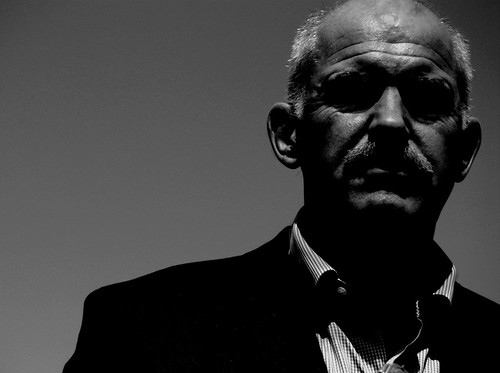
Giorgos Papandreou -  Γιώργος Ανδρέα Παπανδρέου


On Friday the IMF, EU and ECB (known locally as the Troika) announced their joint proposals concerning the future of the Greek economy and actions needed  to reduce the country's massive debt load which is set to exceed 150% of GDP this year. The most controversial element of the plan is the privatisation of 50 billion euros of public assets over the next three years and was protrayed in much of the media as a sell off of the family silver at bargain basement prices. Only the rabidly pro-PASOK Ethnos newspaper dared to present the news that troika representatives had issued an apology as a victory for the government.

In the face of such stiff opposition Greek Prime minister Giorgos Papandreou claimed to have blind sided by the EU-IMF saying that the press conference had given the impression that the Greek government was simply following the orders given it by the country's creditors.The reality of the situation is that the so-called argument is a rather crude PR trick designed to spin the fact that the ruling PASOK party have already agreed to carry out the measures demanded and is attempting to sell the public the idea that they are still in charge and not just acting as locally recruited management representatives.

The ploy has failed to convince even ardent government media supporters in the privately run SKAI channel who condemned it as a cheap theatrics. Indeed it is hard to believe that after months of negotiations the head of the Greek government was unaware of all the details of the EU-IMF strategy and was taken by surprise.


Many Greek journalists and commentators have derided the plan to raise the 50 billion as impractical given the depressed state of the economy and the Greek state's abysmal record in selling off public assets. For example more than seven years after hosting the Olympic games in 2004 much of the expensive facilities built are falling apart, forgotten and neglected despite the billion dollar price tag.

Another fear is that given the deeply corrupt nature of Greek politics much of the assets will be sold off in sweet heart deals to friends and supporters of the government and so the sacrifices made by the Greek people will be wasted as little of the money will actually make it into public offers. These concerns are no just limited to a few crackpots but are daily reinforced as scandal after scandal involving officials from both of the largest political parties are swept under the carpet. Only last week charges against those involved in the massive Vatopedi monastery land swap scandal were dropped despite the fact that the case resulted in the Greek state losing hundreds of millions in lost revenue.Likewise revelations in Der Spiegel last year that members of the ruling PASOK party including an ex - minister of defence took bribes in return for buying German submarines have resulted in no official reaction of behalf of the country's justice system.

Given the inability of the political system to police itself the idea of politicians handling billions of dollars in real estate and public property is an invitation to corruption on a scale not seen since the debacle that followed the fall of the Soviet Union when massive fortunes were made by ruthless “businessmen” who used bribes and threats to amass fortunes by taking control of state owned industries.

Saturday, February 12, 2011

Civil disobedience in Greece's second largest city


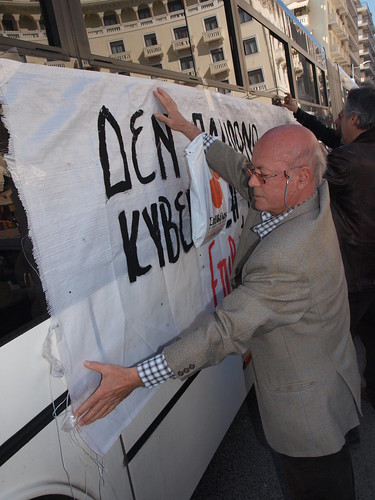
Members of the "We Won't Pay" campaign take over buses in Thessaloniki, Greece in protests over the latest round of bus fare increases which have pushed up ticket prices by up to 180%.

The PASOK minister for transport, Demtrios Reppas responded by calling those taking part "freeloaders" while the government hastily passed legislation making failure to pay bus tickets a criminal offence.It is ironic that Reppas who has, as a member of Greek parliament since 1981 been entitled to free travel for three decades is now accusing those who refuse to pay fare and toll price hikes of ranging from 40% to 300% of being unreasonable.

For more on the aims and actions of the organisation (in Greek but tyou can use Google Translate).

http://epibates-thess.blogspot.com/

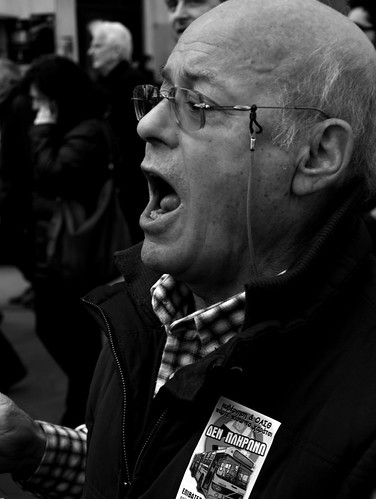
Employees of the Agelioforos and Makedonia newspapers protest wage cuts in Thessaloniki, Greece


Management of the newspapers are attempting to reduce pay by between 25 and 40%. In protests employees marched through the centre of Thessaloniki, Greece's second largest city yesterday morning.

The newspaper industry in Greece is, like so many other places in crisis with falling sales and an uncertain future. However, unlike other countries the main problem is not so much competition from the internet as with falling advertising revenues caused by a shrinking economy.

On the other the quality of journalism in many papers is poor and people are less and less willing to pay for reporting that is often little more than rehashed party political PR and overly reverential interviews with those in power. The media in general is viewed by many as being unreliable and beholden to powerful political and business interests (see here for survey carried out by GPO) . Less the fourth estate than the propaganda wing of the PASOK and New Democracy parties along with those businessmen who support them.

Tuesday, February 08, 2011

Vodafone can go to hell


I've just changed my mobile phone service, finally. The final straw for me was Vodafone's shameless support of the Mubarak regime and the way in which they allowed their network to be used to incite violence against those Egyptians who wish their country to have a more democratic government.

It wasn't just that, of course the massive tax evasion by Vodafone in the UK, phone tapping scandals in Greece and the fact that that the company offers a poor service at exorbitant prices proved to be a fatal combination.

Monday, February 07, 2011

Is Greece the next Egypt?

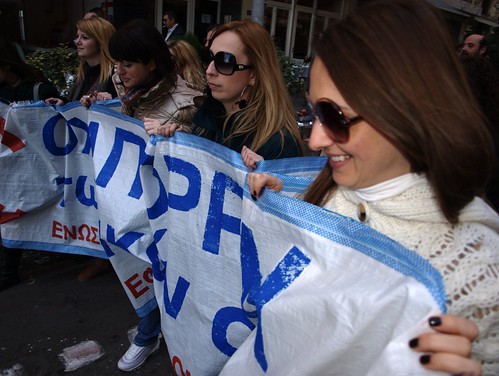
Angry consumers in protests against rising prices - Thessaloniki, Greece

It seems that Greek farmers are getting ready to protest following the break down of talks with the government. If this does take place then they will become yet another group that has decided that the only way Athens will listen to their demands is to take action and in the case of the farmers this usually means blocking highways.

More and more employees are refusing to buckle down and accept the bitter medicine prescribed by the IMF, European Central Bank and the EU. Doctors are currently on strike and have been occupying the Ministry Of Health offices, public transport employees in Athens are continuing their strikes, teachers and chemists are also following the same route. Whilst the protest movement against massive price hikes in road tolls and bus ticket prices grows ever stronger and despite villification in the mainstream press remain popular.

On the other hand the ruling PASOK party has been reduced to fighting this growing tide of civil disobedience with a mixture of police crackdowns and slurs which are dutifully repeated and amplified by pro - government TV stations in their news bulletins. The reality, however,  is that support for Giorgos Papandreou is at an all time low and the loathing that ordinary Greeks feel for their politicans is so intense that PASOK cabinet members travel only under conditions of strictest security whereby itineries are often not announced till the last minute and public apperances are almost impossible unless those present are carefully vetted. Even then they are accompanied by hundreds of the quasi - military riot squad, known as the MAT in Greek.

While both PASOK and New Democracy parties have once more swept the Siemens and Vatpoedi corruption scandals under the carpet they insist that many of the protests are illegal and that the law should be applied. One can't be helpthink that if that were the case a large portion of Parliament would either be in prison or in exile with Tunisia's Ben Ali.

There is such a huge disconnect between rulers and ruled in Greece that I wouldn't rule out Egyptian style mass demonstrations  before the year is out. In both cases corruption, nepotism and incompetence can no longer be tolerated by people whose living standards are being depressed by those who live in the lap of luxury. It is a bitter irony that Greek MPs whose income is often more than 10,000 euros a month are demanding those who do not earn that in a year make sacrifices in the name of competiveness.How long this massive inequalities can be sustained is a matter of debate and given the intense feeling of anger and disappointment it is very hard not to see Greece as parched forest in which just one spark will set off a wildfire which will quickly rage out of control..

Friday, February 04, 2011

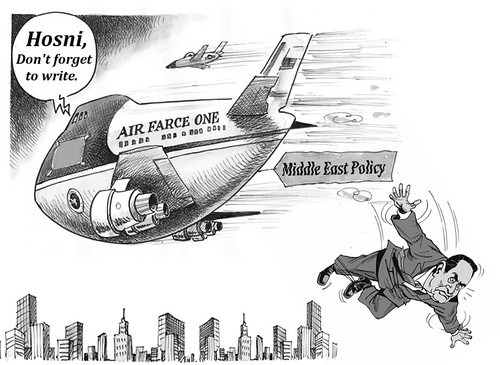
Hosni, don't forget to write.


Vodafone: Keeping dictators in touch


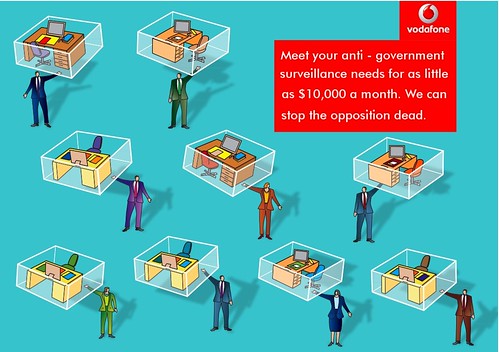
Vodafone for all your anti - government surveillance needs

Vodafone sent out millions of messages in support of Hosni Mubarak

"In a press statement, international mobile operator Vodafone said that Egyptian authorities have ordered the network to send pro-government messages.

“Under the emergency powers provisions of the Telecoms Act, Egyptian authorities can instruct the mobile networks of Mobinil, Etisalat and Vodafone to send messages to the people of Egypt,” read the message posted on Vodafone’s website on 3 February."

Thursday, February 03, 2011

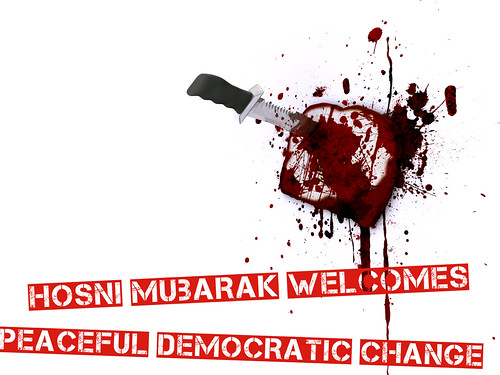
Regime change in Egypt - Just do it.


Hosni Mubarak welcomes peaceful democratic change


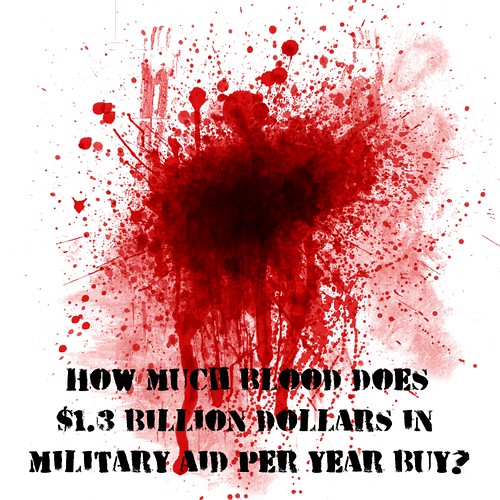
How much blood does $1.3 billion dollars military aid per year buy?

Over the last 24 hours I have been following the tragic events in Cairo and other Egyptian cities as ordinary people try to rid themselves of a truely corrupt and violent regime which has ground them into the dirt for decades. Yet despite endless abuses by Mubarak and others in the government the USA still finances them to the tune of nearly $2 billion per annum ($1.3 billion going to the military), making Egypt the second largest recipient of American foreign aid. Just how much blood do such large amounts get you?

For live coverage check out Al Jazeera here or on Youtube.

Also for more updates check out the #Egypt and #jan25 hash tags on Twitter.

Wednesday, February 02, 2011

People Power in Egypt


Photographs of the protests in Cairo by photographer, blogger and journalist Hossam el-Hamalawy. For more pictures click here to see his Flickr page.

Monday, January 31, 2011

Beyond the Border - Pictures by Mathias Depardon


"In 2010, the Turkish border with Greece became the main entry point for people attempting by irregular methods to reach member states of the European Union, with some 128,000 arrivals. While some entered as migrants with the simple wish of finding a better life, a significant number fled violence or persecution in countries such as Afghanistan, Eritrea, Iraq and Somalia. The journey is perilous, with many reports of drowning when people board flimsy vessels and try to cross the Mediterranean Sea or the River Evros on the border between Greece and Turkey.

The many deficiencies in the Greek asylum system are exacerbated by the pressure of tens of thousands of people awaiting asylum hearings. Reception facilities for new arrivals, including asylum-seekers, are woefully inadequate. Last year, UNHCR visited a number of overcrowded facilities where children, men and women were detained in cramped rooms with insufficient facilities. UNHCR is working with the Greek government to improve its asylum system and has called upon other European states to offer support."


Sunday, January 30, 2011

Angry consumers in protests against rising prices - Thessaloniki, Greece


About 1000 protesters marched through the centre of Greece's second largest city angered by massive price hikes in basics such as public transport, power and road tolls. Even though incomes are dropping inflation has tripled over the last 12 months.

For more information (in Greek)

epibates-thess.blogspot.com

Thursday, January 27, 2011

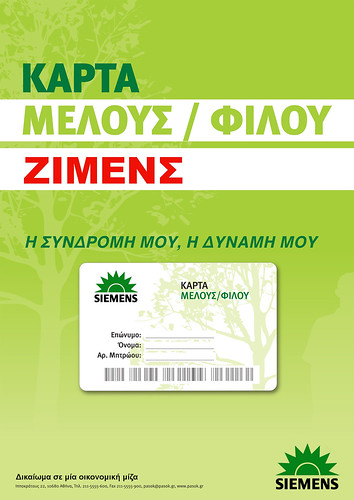
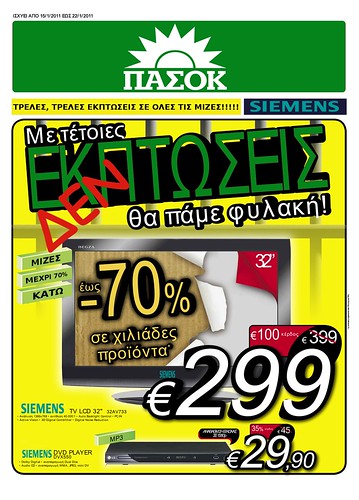
ΚΑΡΤΑ ΜΕΛΟΥΣ ΖΙΜΕΝΣ - PASOK/Siemens Party membership card


More photoshop parody of those involved in the Siemens scandal in Greece during which 100 million euros was paid to politicians in return for contracts for the 2004 Olympic games in Athens. Despite the fact that this has cost the Greek people over 2 billion euros in added costs not one minister or MP has been charged, let alone been convicted of any crime so far. I guess membership (of parliament) really does have its privilieges.

Monday, January 24, 2011

Public trust in Greek politicians falls even lower following Siemens scandal report


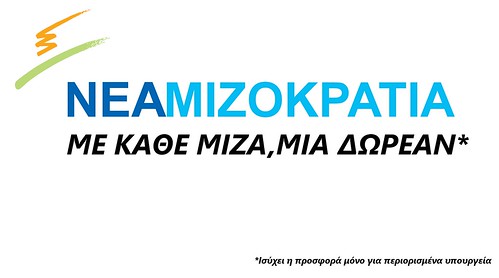
Nea Kleptocracy- ΝΕΑ ΜΙΖΟΚΡΑΤΙΑ

Yesterday the Greek parliament released its long awaited report on the Siemen bribery scandal. According to the authors of the report the German electronic giant poured millions of euros into the party coffers of both PASOK and New Democracy when they were in power. In return the Greek government granted Siemens lucractive contracts which are said to have incurred additional costs in the region of two billion euros.

As expected report has become a political football with parties making five different sets of recommendations over who is to blame and which poiliticians should be investigated further. The reality of the situation is that whatever happens there is little or no chance that anyone will go to jail. Once again the political leadership has proved that it is unwilling or unable to police its own no matter how how serious the charges. Instead it is reduced to playing power games which are convincing fewer and fewer voters who believe that the country is run by a deeply corrupt, moral bankrupt elite. The report coming just after one concerning the Vatopedi land swap scandal will do little to convince many of the honesty of politicians whose popularity rating are reaching record lows.


"ΤΑ ΦΑΓΑΜΕ ΜΑΖΙ" - "WE'RE ALL TO BLAME"


The report of the Siemens bribery scandal was released today and as expected Greek parliamentarians are working hard to make sure that even the most outrageous abuses of political power are swept under the carpet.

Saturday, January 22, 2011

Greek consumer groups condemn second round of price rises for bus passengers


For the second time in less than a year Greek bus users are being faced with prices rises of between 30% and 180%. Despite growing unemployment and a substantial drop in salaries the government is insisting on passeners paying more for public transport.

In contrast with most other EU countries there are no reduced ticket prices for pensioners, the unemployed and other low income groups.

For more on the ongoing protests check out the their blog

epibates-thess.blogspot.com/

(You can use Google Translate to read the page in English and other languages)

Friday, January 21, 2011

Δεκάδες Ελληνες υπουργοί συνιστούν την Siemens - Dozens of Greek ministers recommend Siemens


ξέπλυμα χρήματος μέχρι και στο μισό χρόνο.
Αυτόματη αναγνώριση όλων των κομμάτων


Launder your money in half the time or less!
Automatic recognition of all parties.

Yet another political scandal gets swept under the carpet by the Greek parliament. Today it was the Siemens corruption case involving accusations that the company spent millions in bribes to PASOK and New Democracy party officials in return for contracts for the 2004 Athens Olympics.

Wednesday, January 19, 2011

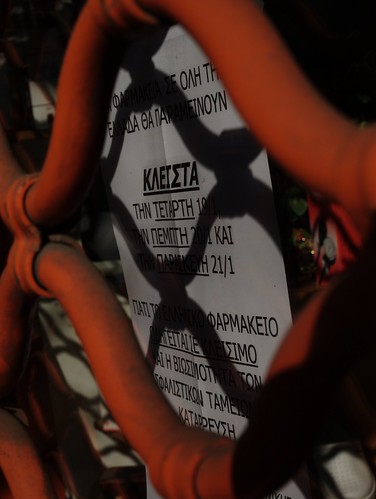
Greek pharmacies go on three day strike


"Pharmacies across Greece will be closed from today until the end of the week in protest at the government’s plans to liberalize the sector. The pharmacists called the three-day strike after Health Minister Andreas Loverdos rejected their calls to change some of the measures in the draft legislation he has prepared.

Pharmacies will also be closed Wednesday through Friday next week. During those days, only a handful of pharmacies will be open in each major city for emergencies. Details are available by calling 14944. Lawyers will also be on strike from today until the end of the week in protest at the measures drawn up by the government to open up their profession to more competition."


Kathimerini

Unveiling of a controversial new statue in Thessaloniki, Greece


On Monday the mayor of Thessaloniki, along with the leadership of the conservative New Democracy opposition party unveiled a statue of the former prime minister, Kostas Karamanlis (uncle of the previous PM, Kostas Karamanlis) on the seafront.

The statue has been a source of controversy for a number of reasons not leαst being the price tag of 250,000 euros at a time when the local council is 126 million euros in debt and does not have enough money for basics such as fuel and spare parts for the rubbish collection vehicles.

Saturday, January 15, 2011

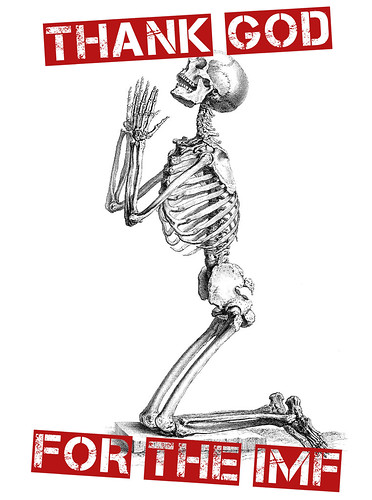
Thank God for the IMF


Thank God for the IMF, originally uploaded by Teacher Dude's BBQ.

"In debt we trust."

Friday, January 14, 2011

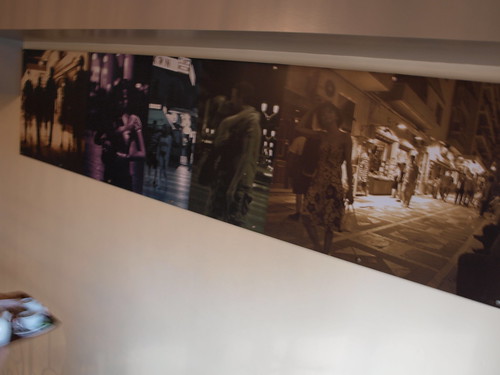
Photographs stolen from my Flickr stream on the walls of the Terkenlis cafe - Thessaloniki.


were taken three years ago and put on my Flickr page. Now they are part of a large montage on the wall of the Terkenlis cafe on the corner of Agias Sofias and Ermou in the centre of Thessaloniki, Greece.

www.flickr.com/photos/teacherdudebbq2/574462083/

I went to the cafe and spoke to the person in charge who said that he would speak to his superiors but that was two days ago and there has been no reply since. Any advice?

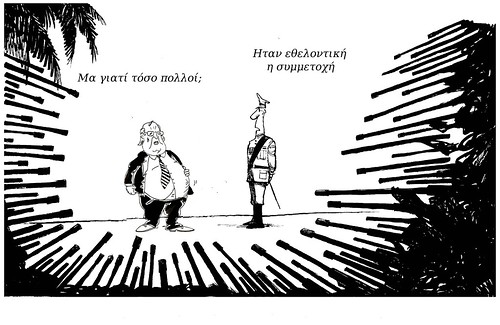
Greek politician, Theodoros Pangalos makes a new statement concerning civil servants - Νέα δήλωση του Πάγκαλου για τους δημοσίους υπαλλήλους


New statement by Theodoros Pangalos (the Greek PM's right hand man and party enforcer) concerning civil servants. Pangalos has managed to infuriate many Greeks with his explosive statements which have included announcements that public sector workers are a bunch of mongrels, voters corrupted politicians and that everyone is responsible for the current economic crisis since all Greeks had a hand in racking up the country's record debt load.

Translation of the cartoon caption

"But why so many?"

"Participation was on a voluntary basis."

Thursday, January 13, 2011

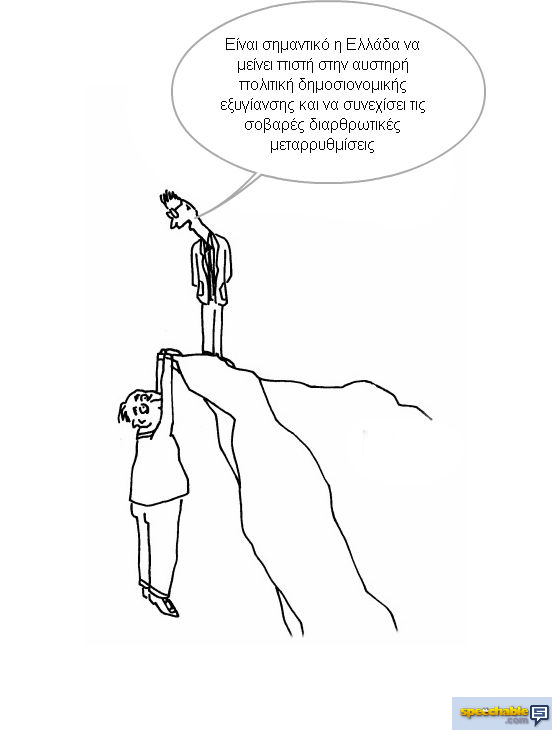
Ολι Ρεν: Εύσημα και συστάσεις για την Ελλάδα. Oli Rein: Praise and recommendations for Greece


"«Είναι σημαντικό η Ελλάδα να μείνει πιστή στην αυστηρή πολιτική δημοσιονομικής εξυγίανσης και να συνεχίσει τις σοβαρές διαρθρωτικές μεταρρυθμίσεις" - Ολι Ρεν.


"It is important for Greece to remain faithful to its policy of strict fiscal consolidation and to continue serious structural reforms" Olli Rehn

Tuesday, January 11, 2011

Greek politicians shun public appearances without police protection


It's perhaps a stark indication of how threatened Greek politicians feel that Anna Diamantopoulou's (minister for education) presence on the future of university education required the attendence of nearly 100 police officer and secret service members.

Despite press announcements that the conference woud be open to the public, the authorities refused entry to anyone without an invitaion, including university students who wished to take part in the discussions about their future.

Monday, January 10, 2011

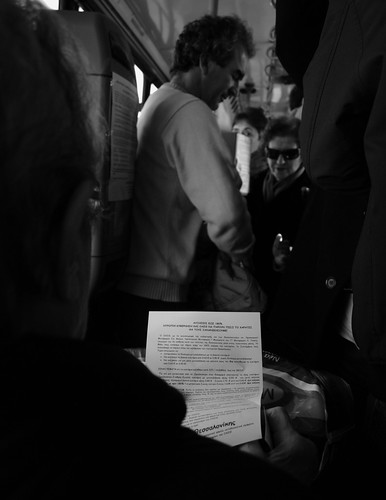
Bus passenger reads leaflet during a ticket boycott

On Saturday consumer groups organised rode buses in Thessaloniki, Greece's second largest city and encouraged passenger not to buy tickets. The action was organised in response to ticket price increases that range from 33% to 160%.

Sunday, January 09, 2011

Angry Greek consumers take over road toll booths in protest over price hikes


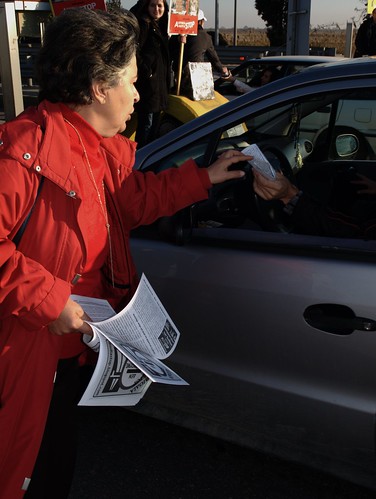
Thousands of Greek protesters took over road toll stations across the country today in protest over government plans to raise toll prices next month. From the capital, Athens to Thessaloniki, 500km to the north tolls were raised and drivers were allowed to pass through without paying.

Truck drivers, pensioners, students as well as more seasoned political activists passed out leaflets and encouraged road users to refuse pay tolls in a new form of grassroots activism which is being fed by popular anger at the government's repeated attempts to raise revenues through indirect taxation and cut public spending.

Already between 20and 30% of highway users are not paying toll charges on a regular basis, a figure which is set to rise in the wake of proposed 50% increases.

Greece's poorest face bare knuckle fight for survival in 2011


Greek consumer groups organise bus ticket boycott


Faced with yet more hikes in public transport prices Greek consumer groups go on the offensive with nationwide protest by refusing to buy ride buses, trains and underground tickets. Angry consumers sealed ticket machines and encouraged fellow passengers to not buy tickets today in response to the second major ticket price increases which range from 33 to 180%.

With the Greek government anxious to cut public spending and raise revenue Athens has announced large cuts in public transport subsidies and increases in the cost of road tolls, trains ticket prices and other utilities such as electricity. However, with incomes plunging, the economy shrinking by nearly 5% and unemployment spiralling out of control such moves have angered Greek voters who are facing the most difficult financial conditions in a generation

Tomorrow activists have announced that they will direct their attentions to the country's motorway toll system which has also announced massive increases which have made the cost of travelling by road prohibitively expensive. It is currently cheaper to go from Athens to the country's second city, Thessaloniki by air than to drive.

More photographs can be found on the Demotix news service website.

Friday, January 07, 2011

Fire next time - Greece on the edge

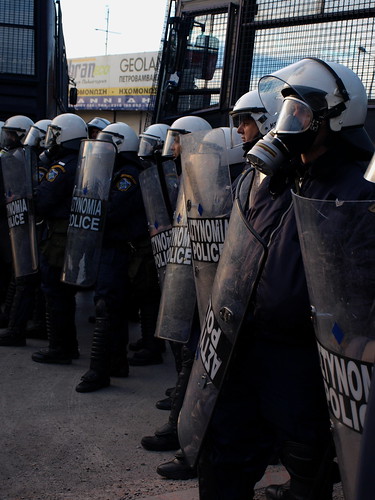
Greek protesters Vs riot police - Thessaloniki, Greece

With 2011 underway there seems little in the way of good news to cheer most Greeks. Repeated increases in VAT, road tolls, ulitility and fuel bills, public transport combined with spiralling unemployment and shrinking wages have made people both angry and weary. The list of social and economic changes being pushed through parliament by the ruling PASOK government has left voters dazed.

Yet as anyone who has ever lived here knows the difference between the political leadership announcing policy changes and those actually being implemented is often huge and in many cases such reforms end up being ignored. On the other hand the massive increases in indirect taxation on basic goods and services are having a real effect on lower income groups who are being pummelled financially to such a degree that many are no longer able to pay basic bills such as electricity and phone.

I predict however, that in the next few months the sense of numbness and helplessness that Greeks feel at the speed and scope of the changes wears off there is going to be a massive groundswell of resistance against the government. Already the first signs are apparent,  it is estimated that 20% of road users are now refusing to pay motorway tolls and despite government officials promises to clamp down that figure is set to rise as non-payment becomes more widely percieved as an act of resistance rather than just a way of saving money.

Indeed the threats by PASOK officials to come down hard to offenders is another sign of the weakness the government has in putting into action promises made to the country's creditors. It's almost a law of nature that whenever Athens announces the latest harsh punishment for tax evasionand other violations the amount of revenue collected drops. In the absence of a reliable tax system politicians are reduced to making ever more grandiose threats of punishment, knowing full well that the are likely to be ignored.

In its quest for tax euros the Greek state has been forced to adopt tactics that sound like a page out of the Sheriff of Nottingham's playbook. Grab whatever you can from whoever you can. In such a chaotic situation non-payment of tax and other obligations makes everyone feel a little like Robin Hood rather than an errant knave.

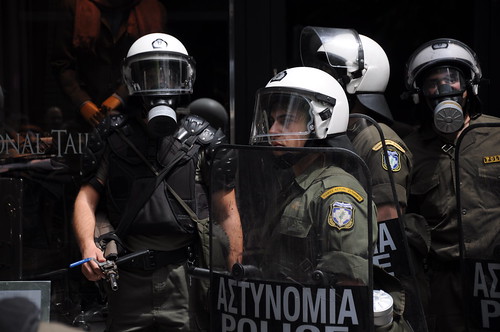
Which support for government at an all - time low Athens is using the police force more and more to deal with the fallout from its reforms, a policy that is fraught with risk and the potential for re-igniting the large scale violence that Greece witnessed in December 2008 when a 15 year old was shot by a police officer. Already the Keratea region in Attica has been the centre of widespread and violent clashes between inhabitants and police for over three weeks. Villagers in Ovriokastro have fought standing battles, blocked roads,beseiged the local police station and set fire to patrol cars in an effort to block the construction of a rubbish dump in the area. In reply riot police units have repeatedly employed tear gas, plastic bullets and water canon in an attempt to allow building to go ahead.

It is just a matter of time before another such clash between protesters and police in another, more urban part of Greece acts as a spark to set off wider confrontations between Greeks at the end of their tether and the authorities. Unlike 2008 though the spectrum of those unhappy with the status quo is much wider and the stakes much greater. The issues are no longer better wages and jobs but survival as money starts running out for whole families and those without work become ever more desperate.

Prime minister Giorgos Papandreou may cut a convincing figure on the international stage while in Brussels, Washington or Berlin but his ability to convince fellow countrymen to accept painful changes is dropping rapidy and he is faced with a hostile population that would quite happily lynch many member of the government given half a chance. The savage beating by marchers of ex-minister Kostas Hatzikdakis before Christmas was widely seen as an attack of the whole political set up rather than just a single politicians. With the social contract in tatters and the authorities relying more on force to get things done the potential for serious social disruption is growing exponentially.

Unlike the monetarist policies implemented by Margaret Thatcher and Ronald Reagan in the early 80's there is no widespread support from any sector of Greek society for the changes which are seen as unfair and deeply destructive. Whereas Thatcher could rely upon electoral support of Southern England and large sections of the working class, disgruntled with the Labour party Giorgos Papandreou's PASOK has no such mandate and has alienated virtually all the party's natural allies since taking power in 2009. What is left is spin which is propagated by a suppine local media and blunt police force, a recipe for instability as at some point neither will be sufficient to contain the growing sense of unjustice over what is happening to the Greek economy.
Tuesday, January 04, 2011

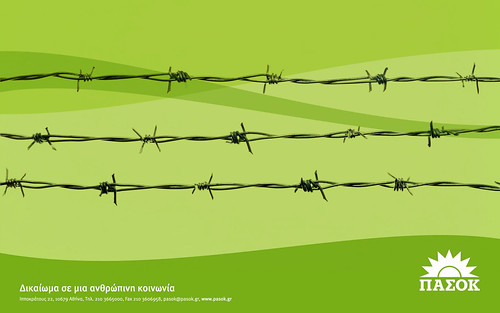
Citizens’ Protection Minister Christos Papoutsis announced that authorities plan to build a fence along Greece’s 206-kilometer land border with Turkey


"Citizens’ Protection Minister Christos Papoutsis announced that authorities plan to build a fence along Greece’s 206-kilometer land border with Turkey, similar to the US-Mexico frontier, in an effort to curb a seemingly endless influx of illegal immigrants.

In comments made to the Athens News Agency on Saturday, Papoutsis said the government was determined to harden its stance. He also expressed dissatisfaction with the contribution of other European Union countries in the fight to curb illegal immigration despite the mobilization of dozens of guards from the EU’s border monitoring agency Frontex along the Greek-Turkish border in November."


Greece has repeatedly been criticed by Amnesty International, the United Nations. the EU and many other European states over its failure to abide by treaty obligations concerning refugees and maltreatment of immigrants by police and border officials.

Monday, January 03, 2011

Estonia enters the Eurozone


Lemmings of the world unite! You only have your economies to lose.

Sunday, January 02, 2011

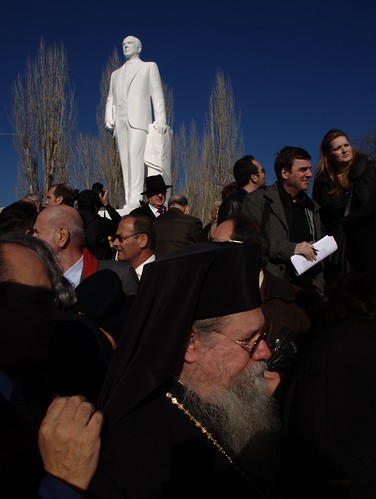
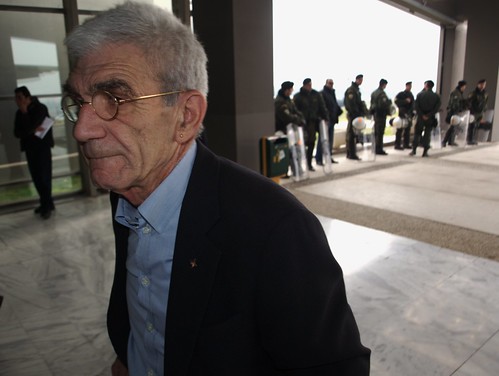
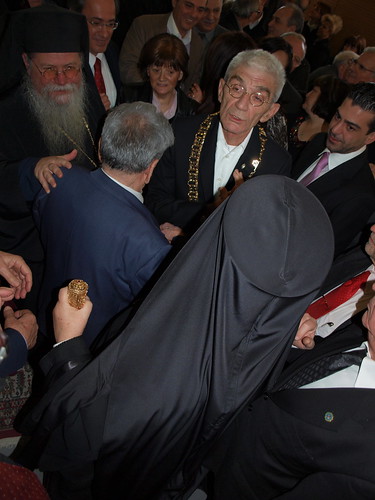
The swearing in ceremony of Yiannis Boutaris, mayor of Thessaloniki, Greece

Bishop Anthimos, the city's most senior cleric swore that he would do everything in his power to prevent Yiannis Boutaris from becoming mayor of Greece's second largest city, Thessaloniki during the country's recent local elections.

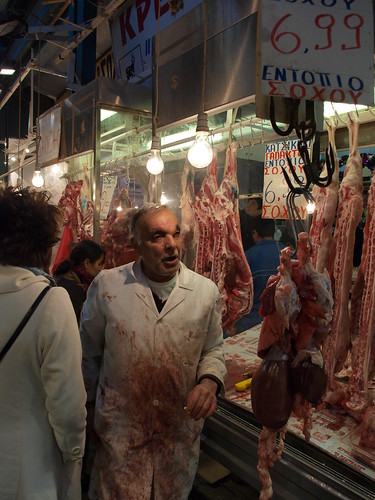
Greek butcher in the run up to New Year's eve celebration

Although Greek celebrate Christmas day like everyone else the real big celebration is New Year's when families get together and often eat lamb or kid goat.

This was taken in the Kapani central market just hours before stores closed for the holidays and shoppers were looking for last minute bargains. Of course, most Greek do their shopping in supermarkets but many still prefer places like this as the prices are lower and the produce fresher. Still, if you are not used to seeing meat presented in this manner it can come as a bit of a shock.

Thursday, December 30, 2010

Christmas in Greece


Christmas in Greece, originally uploaded by Teacher Dude's BBQ.

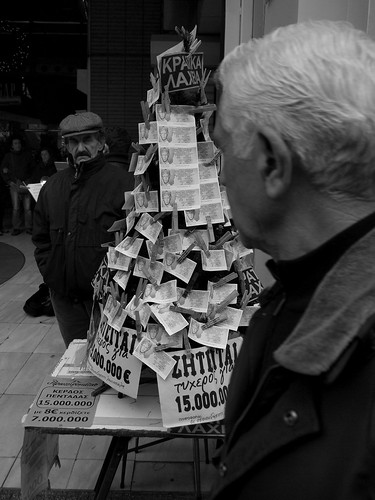
People often buy lottery tckets this time of year.

Wednesday, December 29, 2010

Apple reseller's law suit threatens internet freedom in Greece

ibook

As I write this Greek users of Twitter are flooding the micro - blogging service with comments and complaints about the Apple reseller in Greece, Systemgraph. According to the newspaper Protothema, a Greek internet user is being sued for 200,000 euros by the company following complaints  he made online about how his attempts to get his imac repaired went awry.
In his post blogger Arkoudos wrote that Dimitris Papadimitriadis, a 35 year old doctor, took his computer to be repaired by the authorised service provider, Systemgraph when he saw that shadowy areas on the screen. The company identified and claimed to have repaired the issue, however, when Papadimitriadis realised that the problem had not been fixed he returned his machine once more and then his troubles began in earnest.
On the other hand Systemgraph stated in their defence that the customer had been "rude and aggressive" and that the company had offered to repair the screen once more and was under no legal obligation to replace the machine (that being the responsibility of the store that had sold the computer). According to their statement on the AV Club forum the law suit was in response to an "organised attempt to slander and insult" the company via social media sites, blogs and forums.

This case in disturbing on two levels. Most importantly is the idea that any unwanted or disagreeble comment made on the internet can be punished with massive fines or the threat of legal action. As Papadimitriadis puts it on Twitter, "If the blogger/consumer loses (the case), then all we will be able to write in our own name will be recipes".

The Greek state been wary of internet and especially the blogosphere since its inception. In 2006 Antonis Tsiropoulos, site adminstrator for the Blogme aggregation service was arrested for hosting negative comments concerning a prominent TV personality and ultra - nationalist. In a similar vein the conservative New Democracy government attempted to introduce legislation that would strip Greek internet users of the right to blog anonymously in 2009.

Also what the case highlights is just how weak consumer protection is in Greece and that buying any big ticket item involves a risk which most other European consumers do not have to factor in. Even when the guarantee is valid some companies are loathed to accept the costs involved with repairing or replacing faulty goods. Of course, the consumer can insist on their rights as Papadimitriadis said he did when he took his case to the consumer ombudsman but this can be a long and often futile affair and even if the courts find in favour of the customer businesses can just chose to ignore the decision.

Whatever the rights or wrongs of the case are the uproar which is currently being generated on the internet via Twitter and blogs shows that consumers do have the power retailers think carefully about how they are preceived online and remind them of the power of negative word of mouth.

Friday, December 24, 2010

Protesters outside Applebee's - Thessaloniki, Greece


Applebee's describes itself as a "neighborhood grill and bar" but I'm not sure what kind of neighborhood thinks it's OK to leave people unpaid and short of money in the lead up to Christmas.

Protesters gathered outside a branch of the Applebbe's restaurant chain in Thessaloniki, Greece last night to draw attention to the fact that employees have not been paid for November despite Christmas being just two days away.

Eventually, a representative of Applebee's talked to demonstrators and promised that all salaries would be paid though not till 6th January.

Applebee's - Merry Christmas but not on our dime

Thursday, December 23, 2010

Merry Christmas Mr Papandreou


As I write this Greece is getting ready to celebrate the Christmas season and as might be expected the central shopping areas are full of stores sporting decorations. Yet behind the festive fascade the reality of the situation is that this is going to be one of the worst Christmases in decades. With over 2 million Greeks (in a nation of 11 million) living below the poverty line and unemployment rising remorselessly many have little to feel merry about.

To make things even worse the current package of austerity measures has yet to take full effect, promising to make 2011 even more difficult than the year about to end and in this climate of uncertainty people feel angry and afraid. They are deeply outraged with their political rulers who once again have led the country into crisis, though in this case on a scale unprecedented in modern greek history.

Ex - government minister Kostis Hatzidakis was on the receiving end of popular outrage during last week's demonstration outside parliament and was beaten by an enraged mob who pursued him and his police guards lashing out with a level of violence not witnessed in decades.

However, as many Greek commentators have argued the target of the mob's rage was not Hatzidakis himself but rather the political system in general which is currently in a state of crisis, a victim of the massive economic cuts being imposed by Greece's creditors in return for the 110 billion euro bailout package.

Following prime minister's Giorgos Papandreou's second policy u - turn since gaining power in Septemer 2009 voters are feeling betrayed by their leaders who swore in pre - election campaigns that there would be no further cuts in wages and then within weeks slashed pay and lowered the mimimum wage.

Greeks have long since ceased to believe the endless stream of statements from government spokesmen talking up suggestions that the economy will round a corner in the coming year as they have been lied to far too often for such ideas to be given much credence. Giorgos Papandreou has burnt through virtually all his political capital in less than 14 months, a feat unprecedented even in Greek politics and all that is left are a series of PR moves that convince an ever dwindling segment of the electorate.

Last night the Greek parliament passed the 2011 budget which will see swingeing cuts in public spending and promises little or no help to the country's poor. For them the coming year is set to be a bare knuckle fight for survival in which many will be given no assistance at all by the state. Already here in Thessaloniki the signs of the coming social crisis are evident with pensioners rooting through rubbish bins and every set of traffic lights manned by beggers. On the other hand coaches full of riot police are now a permanent fixture in the centre, a vivid reminder of the threat of a resurgence of the violence that swept the nation in 2008.

The danger is that with a political system so compromised by its rich history of corruption and incompetence Greeks will turn their back on the present set up and seek solutions elsewhere. Already many MP's, especially members of the ruling socialist PASOK party are worried aout the reception they will receive back in their constituencies over the Christmas break.

The fact that despite days of intense political confrontation within PASOK over the budget not one of their MPs voted against it is likely to lower even further voters opinion of their parliamentary representatives and raise questions about just how democratic a country Greece is.

When the party leadsership can ride roughshod over backbenchers and introduce legislation that the vast majority of voters do not support then what exactly is the role of parliament in representing the popular will?

However, in Greece, more than most European countries the political arena is not just limited to parliament and passing a law is not the same as making it a reality.

Saturday, December 18, 2010

Interviewed by the BBC


This Thursday I was interviewed by the BBC World Service on people's reaction to the latest economic developments in Greece and how Greeks view the EU's efforts to deal with the current financial crisis.

You can hear my answers here (31 minutes into the programme).

Thursday, December 16, 2010

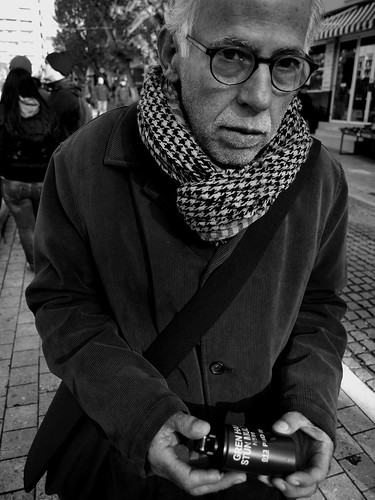
Greek protester holding a mililtary grade stun grenade used by police to disperse marchers


Greek riot police used stun grenades designed for use by special forces in anti-terrorist situations to break up protests outside the ex-ministry of Macedonia and Thrace in the northern city of Thessaloniki yesterday December 15 th, 2010.

"The Grenade Hand Stun N580 and Grenade Hand Stun Multi’s N582, N591 and N592 are diversionary assault grenades, designed for use in confined spaces by Special Forces during hostage release. Noise and candela levels induce disorientation in any persons within the effective range."