Showing posts with label . Greece. Show all posts
Showing posts with label . Greece. Show all posts
Sunday, June 16, 2013


Saturday, November 03, 2012

Thursday, June 14, 2012
Saturday, June 02, 2012

Thursday, May 31, 2012
Sunday, May 27, 2012
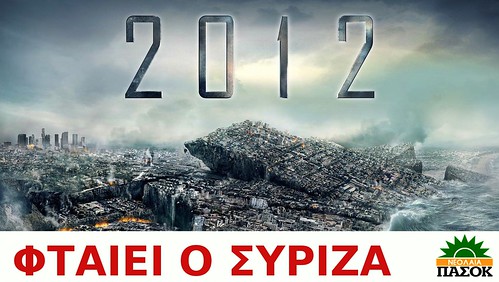
2012 - SYRIZA is to blame. ΦΤΑΙΕΙ Ο ΣΥΡΙΖΑ
Forget Mayan predictions for the end of the world, according to much of the Greek mainstream press, the rise of the Radical Left Coalition (or SYRIZA as it is known in Greek) presages the end of western civilisation as we know it.
To listen to some accounts you would think that the country hasn't been in such dire peril since the Visigoths came rampaging down the Balkan peninsula in 378AD.
Foreign reporting has hardly been much better with dire warning that Athens, Europe and in some case even the entire world economy teeters on the brink of collapse, brought there by the possibility of SYRIZA gaining power and keeping their campaign pledge to re-negotiate the terms of the country's bailout pact.
In such an atmosphere of hyperbole and exaggeration the phrase "Ftaiei, o SYRIZA" (SYRIZA is to blame) has become something of a insider's joke for Greek commentators on the internet.
However, behind the humour lies the fact that Greek voters have been subjected to a long and often dirty media campaign to scare them into voting for parties who have promised to abide by the terms set down by the EU and IMF. It is hoped that such fear mongering will bring them back into the fold and reduce support for parties opposed to yet more austerity.
To a certain extent is seems to be working as the conservative New Democracy party has risen in the polls, but also so has SYRIZA, whose dogged determination not to bow to international pressure has won it support from those disgusted with the endless machinations of more mainstream parties.
For those who do not speak Greek, the parody video above shows a wife finding her husband in bed with her best friend. The husband, taken by surprise comes up with a series of lame explanations before hitting upon one that works, "SYRIZA is to blame". She slaps him across the face before accepting his apology.
To listen to some accounts you would think that the country hasn't been in such dire peril since the Visigoths came rampaging down the Balkan peninsula in 378AD.
Foreign reporting has hardly been much better with dire warning that Athens, Europe and in some case even the entire world economy teeters on the brink of collapse, brought there by the possibility of SYRIZA gaining power and keeping their campaign pledge to re-negotiate the terms of the country's bailout pact.
In such an atmosphere of hyperbole and exaggeration the phrase "Ftaiei, o SYRIZA" (SYRIZA is to blame) has become something of a insider's joke for Greek commentators on the internet.
However, behind the humour lies the fact that Greek voters have been subjected to a long and often dirty media campaign to scare them into voting for parties who have promised to abide by the terms set down by the EU and IMF. It is hoped that such fear mongering will bring them back into the fold and reduce support for parties opposed to yet more austerity.
To a certain extent is seems to be working as the conservative New Democracy party has risen in the polls, but also so has SYRIZA, whose dogged determination not to bow to international pressure has won it support from those disgusted with the endless machinations of more mainstream parties.
For those who do not speak Greek, the parody video above shows a wife finding her husband in bed with her best friend. The husband, taken by surprise comes up with a series of lame explanations before hitting upon one that works, "SYRIZA is to blame". She slaps him across the face before accepting his apology.
Saturday, May 19, 2012
With new elections approaching EU's war of words with Greece gets down and dirty
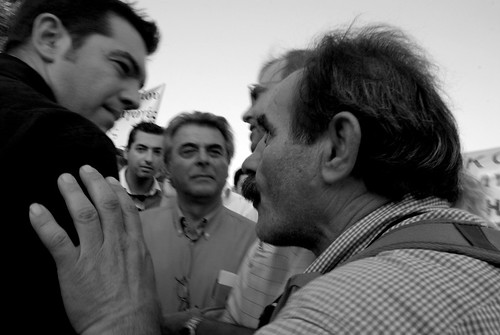
The
announcement last week that none of the parties in the Greek
government were able to form a government has brought with it a dose
of madness that dwarfs even the fervid election campaign rhetoric
that proceeded it. If you were to take the statements of much of theforeign and local mainstream media at face value Greece is about to collapse andthat it will take with it much of the Eurozone.. Once again
Athens is at the centre of a maelstrom of media speculation that can
be seen as a retread of 2011 when the Greek prime minister, GiorgiosPapandreou raised the possibility of Greece holding a referendum on
whether it should implement yet more austerity measures . Then the suggestion was met by a
vociferous campaign from within Greece, not to mention the pressure exerted by Paris,Brussels and Berlin.
With
Papandreou now gone from the political scene, his role as the
Eurozone's enemy number one has been taken over by Alexis, Tsipras,
the leader of the Radical Left Coalition (SYRIZA), which if the name didn't
give you a clue is a group of socialist and communist parties who
shot into second place in the May elections campaigning on the
promise to defy European Union's demands for yet more austerity
measures.
The
results has been a surge of interest in Greece and a concerted
attempt to paint anti-austerity politicians and parties as extremist and dangerous. The new media narrative being created goes like this; Tsipras and, by extension any political group opposed to the terms set
down by Athens's creditors are putting in danger Greece's place in
the Eurozone and so inviting economic collapse by forcing it to
re-adopt the drachma. Some variations on this theme even go as far as
to say that Greece may even by kicked out of the EU, and so face
decades of North Korean style isolation.
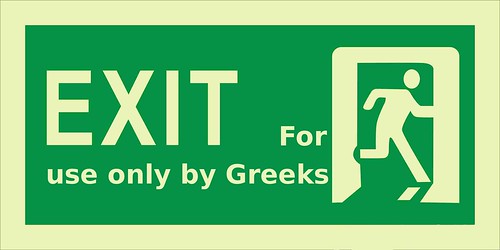
It is a
story that has been carefully cultivated in the local press as well,
with daily horror stories coming out in the state run TV stations and
their allies in the privately controlled media sector. Pro-austerity
parties such as PASOK and New Democracy appear regularly to crank up
the fear factor by painting the Radical Left as a bunch of crazed
fanatics hell bent on destroying what's left of the economy.
If that
wasn't enough this week's non-story about a run on Greek banks was
gleefully jumped upon and news organisations were desperately trying
to recruit local bloggers/twitter users to feed them stories of
people besieging banks to take out their money. Rumours of banks
limiting withdraws to just 50 E swirled around the internet. That
neither was happening proved to be no impediment to reporters eager
to get another scoop.
The fact
that this week the EU decided to cut off funding to Greek banks it
deemed non-viable did nothing to help the situation , leading some
commentators to say that maybe that was their intention after all. An
example of yet more attempts to nudge the Greek electorate in the
“right”direction.
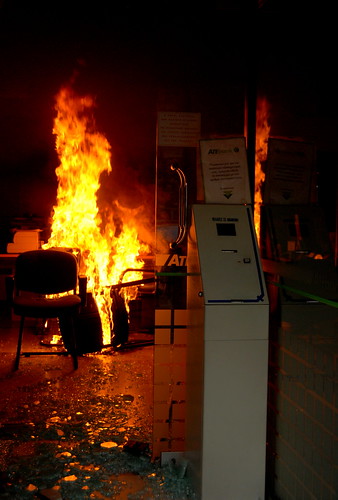
This week
also saw the arrival of EU president, Martin Schulz in Athens,
obstensibly to persuade the new Greek government to adhere to its
earlier fiscal commitments, however, his public appearances with both
the leaders of PASOK and New Democracy made it quite clear that the
EU wanted it's say in Greece's next round of elections. A message
with he then went to repeat on state run and pro-austerity channels
yesterday and today.
If that
wasn't enough the suggestion by German chancellor Angela Merkel toGreek president KarolosPpapoulias that Greece hold a referendum on
membership of the euro was meets by angry accusations of interference
in Greek internal affairs. Raising ugly memories of the two countries
troubled past relationship.
Ironically,
the suggestion, which the German chancellor's office denied (the
office of the Greek president then went on to deny the denial) has
helped undermine the position of those parties who are hoping to
persuade Greek voters to swallow more job cuts and tax increases
scheduled for June.
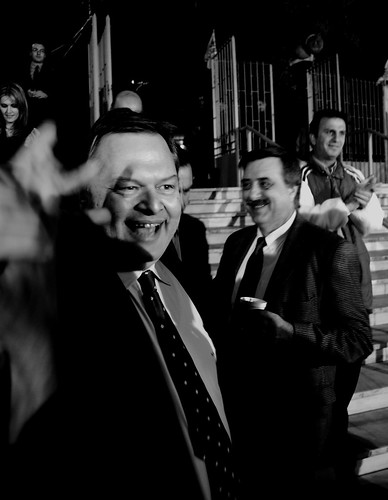
Whether
the fear of expulsion from the Eurozone is working is hard to tell.
Some local opinion polls have put New democracy ahead of SYRIZA but
then there are otherσ which show wildly differing results. The problem
is that no one knows what will happen in June. Gauging public opinion
has become much harder when the two main political parties are
constantly changing their make up and positions. PASOK has decided,
under it determinedly uncharismatical leader, Evangelos Venizelos to
distance itself from both scandal ridden past by abolishing much of
its present hierarchy.
On the
other hand Greece's right has seen a flurry of deals and team
changes. With members of the smaller unsuccessful parties jumping
ship to sign up with Samaras's right rainbow alliance. Howe much of
this will change the results of the elections is hard to say. Many of
those retuning to New Democracy such as ex party super star, Dora
Bakoyianni, northern populist, Panayiotis Psomiadis (once again the subject of legal proceedings) and
former MPs with the far right LAOS party are hardly the stuff that
electoral landslides are made of.
With a
party made up of those willing to change political allegiances at the
drop of a hat, it is going to difficult to persuade sceptical voters
that the right won't result to yet more u-turns and back flips if
elected.

Far away
from the endless media attention to those in mainstream politics,
ordinary Greeks continue to face the everyday grind of surviving in a
shrinking economy in which 30-40% are living in poverty, more than
half the country's youth (some of the most educated in Europe) are
without work and no one knows when things will get better.
Beyond
vague promises to renegotiate the terms of Greece's bailout, only
SYRIZA has offered something positive to those who have already lost
so much. Even if it's the empty gesture of defiance it gives
something concrete to those left bitter and disillusioned by the
country's more moderate political choices.
Wednesday, May 09, 2012
Asteris Masouras - Activist, blogger, photographer, citizen journalist- always online
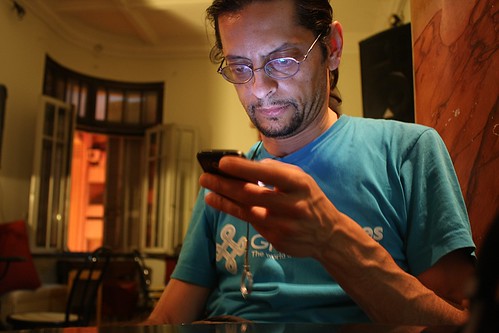
Asteris Masouras - Activist, blogger, photographer, citizen journalist - always online, a photo by Teacher Dude's BBQ on Flickr.
On Global Voices
globalvoicesonline.org/author/asteris-masouras/
Monday, May 07, 2012
End of an era in Greek politics

With the dust settling on yesterday's election results only one thing is certain in Greece; the previous political era is now officially over. Both the conservative New Democracy and left wing PASOK parties who've dominated the stage for more than a generation received a drubbing at the polls. Even though New Democracy emerged as the largest party, it garnered just 18.89% (at time of writing), just over half its 2009 election share. PASOK, lead by Evengelos Venizelos suffered an even more crushing reversal, and is left with just 41 seats, down 129 from 2009.
Other losers included the far right LAOS party and conservative Democratic Alliance who both failed to reach the 3% threshold for parliamentary representation. Also the plethora of splinter groups/parties set up by expelled PASOK and New Democracy MPs failed to make any headway, with the sole exception of the hard right Independent Greeks lead by Panos Kammenos which won 33 seats.
On the other the Radical Left Coalition (SYRIZA) came second in the polls, just a few percentage points behind New Democracy and gained 51 seats,and would be just 7 behind the conservative if it were not for the electoral rule that awards an extra 50 seats to the party with the most votes. The newly minted Democratic Left also entered parliament for the first time with 19 seats, having attracted much of its support from dissatisfied PASOK voters.
However, the official communist party KKE proved to have a disappointing night, increasing its share of the vote by less than 1%, a reflection that its old style campaign failed to reach out and convince few new voters.
The more worrying development was the rise of the neo-Nazi Golden Dawn party who are set to have 21 seats in parliament. The extremist group which has been linked numerous acts of violence against immigrants and political opponents are not simply a far right formation but rather a party that believes fervently in many of the core tenants of national socialism and Hitlerite ideology. Their ascent to power allows them a place in the political mainstream and assures them airtime on TV and radio from which they can promote a platform of racial hatred and political intolerance.
With the old political order in tatters and a parliament fractured so deeply along deeply held ideological lines forming a new government will be difficult. In the immediate aftermath of the vote many party leaders rushed to deny that they'd form alliances with others. For example KKE leader Aleka Papariga came out against an alliance with SYRIZA while Kammenos ruled out possible partnership with New Democracy. On the other hand ND leader Samaras and PASOK leader Venizelos are reaching out to other political forces in the hope of creating a viable block.
What is clear is that neither the left nor the right are in a position to form a majority government of their own, and that means either new elections immediately or a fractious coalition unlikely to survive the backlash generated by the latest round of job cuts and tax hikes which are likely to the poorest hardest. In that case new elections during the summer seems unavoidable.
The irony is that the unbending demands of the troika (IMF, EU and ECB) has created exactly the situation they were most anxious to avoid, one in which Greece is unable or unwilling to implement the austerity measures that are part of the next "bailout: plan.
Thursday, April 19, 2012
Friday, March 30, 2012
Debt crisis puts European project in jeopardy
Is this the future of Europe? When rioting broke out in Athens in previous years it was seen as a purely local phenomenon, taken as yet more evidence by foreign press that the Greeks were an unruly and undisciplined bunch who refused to see sense.
The idea propagated in much of the international press was that the the austerity measures imposed by the country's creditors were the only sensible solution for the nation and that refusal to knuckle down was was a refusal to accept reality. I remember being interviewed by the BBC and the first question was why the Greeks were so upset about being "saved". The reporter seemingly unaware of the harsh conditions of the bailout deal.
Two years on the Greek economy is in free fall beset with a disintegrating private and public sector which is shedding jobs at an unprecedented rate. If that wasn't enough, the government's attempt to balance the books by rising taxes on everything from bread to boats has just sped up the decline. At every single juncture an increase in taxation has been matched with a fall in consumption leading to even less money flowing into the coffers.
Despite two years of patent failure IMF and EU officials continue to claim that their policy recommendations have been ignored and that the Greek government has brought this disaster upon itself. Yet, in nations which have adopted troika policies more comprehensively the results are the same. In Spain and Portugal (always seen by foreign financial press as the model student) the same cycle of decline and debt is also playing out and with it a growing level of violent dissent.
Yesterday's images from Madrid and Barcelona echo those seen recently in Athens and other Greek cities as young people facing a future without hope or work work out their resentments in the streets.With youth unemployment in both country's reaching 50% a potential generation gap is opening up as young Europeans start to associate the EU with poverty and joblessness.
Even if the European ideal survives the current Eurozone crisis the damage done to its image in the eyes of the continent's youth may mean that it's future will be in doubt as young Europeans enter political life and see the union, not as a guarantor of unity and prosperity but an force for disruption and inequality.
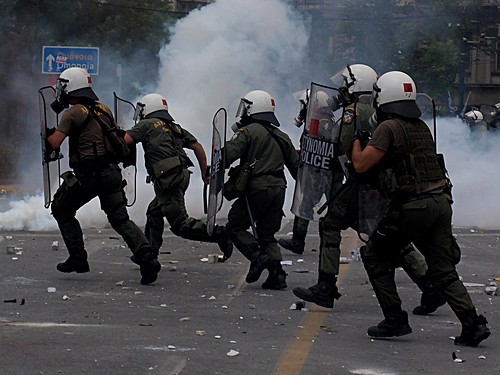
The idea propagated in much of the international press was that the the austerity measures imposed by the country's creditors were the only sensible solution for the nation and that refusal to knuckle down was was a refusal to accept reality. I remember being interviewed by the BBC and the first question was why the Greeks were so upset about being "saved". The reporter seemingly unaware of the harsh conditions of the bailout deal.
Two years on the Greek economy is in free fall beset with a disintegrating private and public sector which is shedding jobs at an unprecedented rate. If that wasn't enough, the government's attempt to balance the books by rising taxes on everything from bread to boats has just sped up the decline. At every single juncture an increase in taxation has been matched with a fall in consumption leading to even less money flowing into the coffers.
Despite two years of patent failure IMF and EU officials continue to claim that their policy recommendations have been ignored and that the Greek government has brought this disaster upon itself. Yet, in nations which have adopted troika policies more comprehensively the results are the same. In Spain and Portugal (always seen by foreign financial press as the model student) the same cycle of decline and debt is also playing out and with it a growing level of violent dissent.
Yesterday's images from Madrid and Barcelona echo those seen recently in Athens and other Greek cities as young people facing a future without hope or work work out their resentments in the streets.With youth unemployment in both country's reaching 50% a potential generation gap is opening up as young Europeans start to associate the EU with poverty and joblessness.
Even if the European ideal survives the current Eurozone crisis the damage done to its image in the eyes of the continent's youth may mean that it's future will be in doubt as young Europeans enter political life and see the union, not as a guarantor of unity and prosperity but an force for disruption and inequality.
Friday, March 02, 2012
"Did you say anything against the president?" A little piece of North Korea comes to Greece
Yesterday I attended my very first show trial. I had thought that such events had gone the way of the typewriter and VCR, consigned to the trash compactor of history. However, this particular case was more farce than fear and had a happy ending when the seven defendants were found not guilty of crimes such as insulting the person of the president of the Hellenic republic and not arresting 10,000 demonstrators on the spot.
But I get ahead of myself. On the 28th October or Ohi (No) day as it known in Greece the annual military parade in Thessaloniki was temporarily halted and the Greek president, Karolos Papoulias fled the area along with other VIPs after crowds flooded into the road and started chanting anti-government slogans (see pictures above). Eventually, the reminder of the parade continued to tumultuous applause, though without any political figure present. The same scenes were repeated across Greece and the shock of the event was such that the government of Giorgos Papandreou stepped down from government a week later.
However, live TV coverage of the Greek president and the local bigwigs being forced to abandon the parade was never going to be forgotten by the country's political elite keen for blood after the humiliation. Also with the Independence Day parades coming up on the 25th March some kind of message had to be sent to show who is in charge hence the arrest and trial of six protesters and one police officer present.
The courtroom was full of supporters of the defendants , not to mention uniformed and plain clothes police. Just to be on the safe side, a platoon of the quasi-military riot police lolled round in the corridor next door, shields and helmet close to hand in case things got feisty.
How much this particular farce has cost the tax payer is anyone's guess, but the fact that so many lawyers, police officers, court workers, witnesses and the like spent an afternoon listening to the charges that sounded more like a school yard spat that a breach of any sane law is an indication that Kafka's spirit lives on in the Greek justice system.
"Did you say anything against the president?"
was one of the questions I heard come from the judge's mouth and for a moment I thought it was a joke. But, no, much of the case revolved around allegations that some of the defendants had called the country's president "traitor" and "a mason". Actually, as I was there those were the least insulting things people shouted, and positively beniegn compared with the insults coming from some groups.
But due to the crowds involved and the fact that the police case was about as watertight as the Titanic nobody could say with any certainty that the accused were those insulting Papoulias.
The police officer faced charges of dereliction of duty since he failed to start arrest any of the 10,000 odd people who were in the streets. Given the potential for a violent reaction and the fact that the parade was full of families such a move was safe to say the most prudent and the court agreed. However you have to wonder what motivated the public prosecutor to pursue the case.
Despite what we see in the movies there was no popping of champagne corks or jubilant cheers, people shook hands, thanked those who'd helped and made their way out of the building, trailed by the riot police squads.
Tuesday, February 28, 2012
Greeks dress up for Carnival.
Fires in the street, loud explosions go off every few seconds and the place is full of people wearing masks. No, not a riot, but rather the Greek Carnivali in which people wear fancy dress, dance, drink and celebrate the last day before Orthodox Lent begins.
This year I found myself in a small, picturesque village in central Greece, visiting my daughter and her mother who have recently moved from Thessaloniki to be be closer to their family there and hoping to find a way of making a living, something that has become more and more difficult in the country's urban areas.
Economic woes aside, people took comfort in the plethora of traditions Greece still retains and for a while forgot all their worries and just laughed, danced and enjoyed the moment.

This year I found myself in a small, picturesque village in central Greece, visiting my daughter and her mother who have recently moved from Thessaloniki to be be closer to their family there and hoping to find a way of making a living, something that has become more and more difficult in the country's urban areas.
Economic woes aside, people took comfort in the plethora of traditions Greece still retains and for a while forgot all their worries and just laughed, danced and enjoyed the moment.
Thursday, February 23, 2012
Pictures used without permission by El Mundo
Yesterday I received an email asking me to look at an article in the print edition of the Spanish Daily El Mundo about the legendary Greek freedom fighter, Manolis Glezos, written by Greek journalist, Theodoris Georgakopoulos (See link to the journalist's site here)
It came as quite a surprise to see a picture I took in April 2008 was being used by the paper to illustrate the article.
The picture which appears on my Flickr page and on this blog is covered by various licences and is therefore not freely available. In the case of this blog images are covered by a Creative Commons Attribution-Noncommercial-Share Alike 3.0 Greece License. which allows activists and bloggers to use the pictures but requires commercial users to ask permission.
As I am not a professional photographer I am not really an expert on different aspects of copyright, however,El Mundo did not contact me in order to ask permission to use the photograph. As people who follow this blog are aware times are especially tough in Greece and like so many others my income has been drastically reduced over the last couple of years. When you see a large commercial operation unwilling to pay even a token fee for your work, it sticks in your throat.
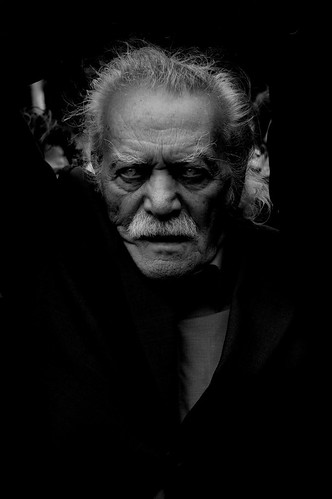
It came as quite a surprise to see a picture I took in April 2008 was being used by the paper to illustrate the article.
The picture which appears on my Flickr page and on this blog is covered by various licences and is therefore not freely available. In the case of this blog images are covered by a Creative Commons Attribution-Noncommercial-Share Alike 3.0 Greece License. which allows activists and bloggers to use the pictures but requires commercial users to ask permission.
As I am not a professional photographer I am not really an expert on different aspects of copyright, however,El Mundo did not contact me in order to ask permission to use the photograph. As people who follow this blog are aware times are especially tough in Greece and like so many others my income has been drastically reduced over the last couple of years. When you see a large commercial operation unwilling to pay even a token fee for your work, it sticks in your throat.
Monday, February 20, 2012
Thursday, February 16, 2012
Greek protester wanders through clouds of tear gas holding a gallows - Thessaloniki, Greece
Taken during the anti-austerity protests in Thessaloniki, Greece that were violently ended when riot police attacked. The man was carrying a gallows and stayed behind even after tear gas cannisters starting landing in Aristotelous Square.
Tuesday, February 14, 2012
Sunday, February 12, 2012
Waiting for the Greek Götterdämmerung
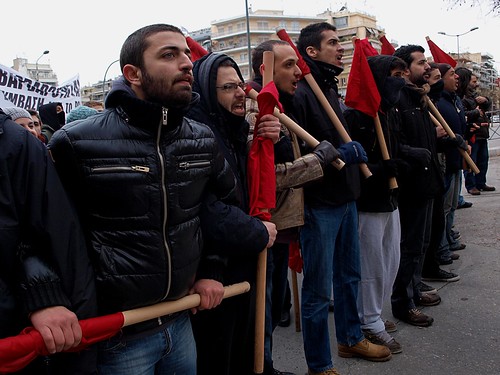
Prime minister Lukas Papademos last night warned his fellow Greeks that failure to reach agreement on the latest austerity measures in parliament today would bring disaster to the indebted nation. Such dramatic talk in perhaps hardly surprising in the country that gave the world the word, apocalypse and reflects the fear those in power feel about the possibility that the legislation will not pass, or even worse will produce a wave of protest so intense that it will stall its implementation.
For the last three days there have been a series of strikes and marches against the latest cuts and job losses, but they are just a warm up for the big event which will take place later today at 5pm Athens times when people will start to gather for a series of nationwide rallies.
For over two years Greek voters have been told that austerity will save the country and yet all people have seen is a huge drop in living standards as the economy has collapsed and prices have soared. Caught between these two pincers many have despaired that will be able to survive financially as bills pill up and incomes from pensions and wages keep on falling.
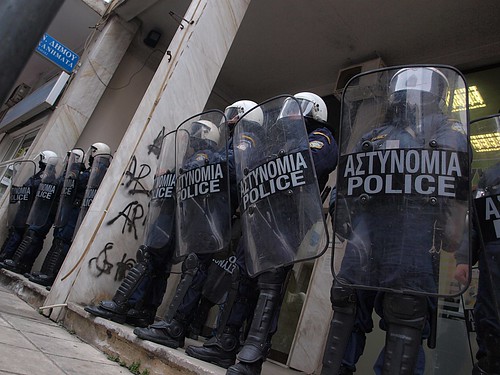
The situation has not been helped by a political system that is widely despised as being both inept and deeply corrupt. This has been reflected not only in the falling poll figures for those parties in power but also the seemingly endless clashes between riot police and protesters that occur whenever government members are spotted in public.
Those who call upon Greeks to make more sacrifices are exactly those most unwilling to give up the priviledges they have accrued whilst in power, a fact that few outside parliament have failed to notice.
The reality is that Greece has ceased to be a sovereign nation in anything but name, it's economic policy, spending decision and hence the vast majority of decision usually made in the name of the nation state are being dictated by the country's creditors who have demanded a heavy tribute in return for their intervention.
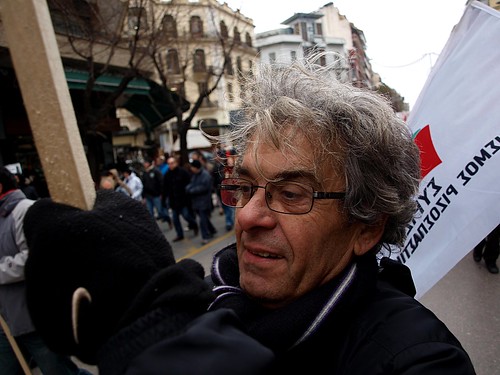
The fiscal policies being imposed have slashed GDP, pushed up unemployment and all but destroyed any real chance of the economy recovering for the forseeable future. In such a situation using talk of bankruptcy to scare people into supporting yet more of the same is simply not going to succeed as so many have, to all intents and purposes already been bankrupted.
What is left for the government and its supporters in the the media, (which to a large extent is controlled by domestic oligarchs heavily invested in the banking sector) are a series of crude threats warning of massive shortages in food and other basic goods should the country renege on its debt agreements.
Tonight in Athens's Syntagma Square we will see if the riot police can contain the groundswell of popular anger now building up. It will be a scene repeated in towns and cities across the country as people gather once more to say no to a future which holds nothing but poverty and decline for the next decade.
Wednesday, February 08, 2012
As Greece drifts towards disaster, what happens next?
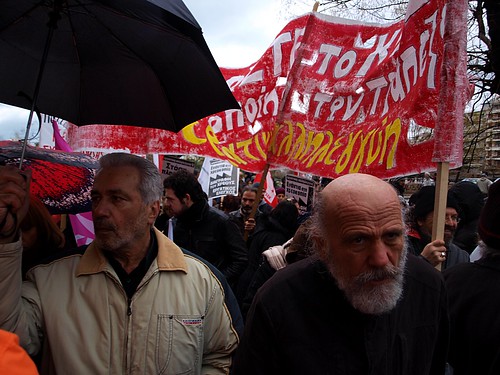
Protest march in Thessaloniki, Greece in support of nationwide general strike, a photo by Teacher Dude's BBQ on Flickr
As the negotiations between Athens and the country's creditors over the terms of the next austerity measures wind up there is a growing sense on the internet and in the streets that Greece is tipping over into disaster. While it's easy to get carried away by the hyperbole and hysteria that accompanies much of the reporting of the present situation the reality may indeed be living up to the feverish imaginations of headline writers.
Unemployment has continued to climb as the number of businesses going under increases, in part the result of falling incomes and a series of crushing demands by Athens for more and more tax revenue. The irony is that each increase in either direct taxation such as that on properties or indirect via VAT has brought less and less money into government coffers. Yesterday's Greek Finance Ministry report showed that instead of an expected rise in revenue Greece's income has dropped by 7%.
At every single turn price hikes have resulted in fall of consumption, even for items as basic as heating oil, as people either do without or turn to alternative sources such as wood often illegally logged from the country's forests.
Yet despite all evidence to the contrary, the European Union and in particular the German political leadership is insisting on yet more cuts in public spending on pensions and health, more job losses and a drastic cut in the minimum wage. Hardly surprising, given this and the years of vilification the German right wing press Greeks are becoming more open to anti-German feeling, as witnessed by the burning of a German flag outside parliament during yesterday's demonstrations in Athens. While many have been quick to condemn such actions such sentiments are the exception rather than the rule as anger, frustration and indignation replace calmer analysis.
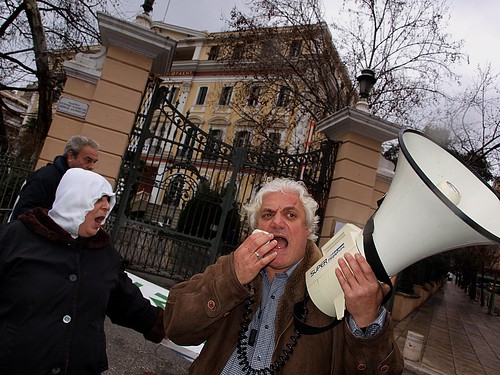
In response to the latest cuts trade unions called a general strike for Tuesday with limited results, many public sector employees carried on working while the turnout for marches was low, with just a few thousand participating in Athens and Thessaloniki. Some argued that the last minute nature of the call combined with unusually low temperatures were to blame. However, I believe there is a growing despondency which has taken hold of people, the conviction that whatever they do nothing will change, feed by the fact that after two years of austerity and four years of economic decline marches, strikes and other protests have not succeeded in halting the malaise.
This, however, should not be mistaken for acceptance, no matter how grudging, of the new economic measures, anger over those and disgust with the current political system is greater than ever. It's is now an article of faith that no member of government can appear in public without presence of riot police units to protect them from their own voters, sometimes even members of their own party. What people lack is a focus for their frustration and the possibility that they can change the present situation.
With the dissolution of established forms of protests and dissent there is a growing danger that popular anger will explode in ways that cannot be directed or contained in the traditional way and with unpredictable consequences. With money drying up and families resources dwindling more and more people will be open to any suggestion, no matter how radical or extreme that offers them even a glimmer of hope for the future.
Wednesday, January 18, 2012
Which side are you on ?
Last summer at the height of the Indignant movement in Greece I want down to Athens with fellow demonstrators to take part in the anti-austerity protests outside parliament. The video is probably as accurate an account of what happened next as anything I have seen anywhere. Please remember this when you see the next clash in Greece in order to understand why people fight so fiercely for what they believe in.
Subscribe to:
Comments (Atom)