Showing posts with label Athens. Show all posts

Thursday, January 12, 2017

The winter crisis in Greece - refugees left in limbo as those in charge pass the buck

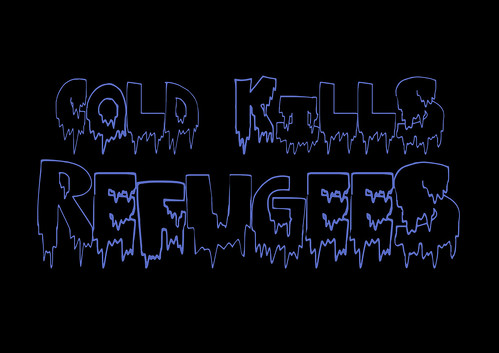
Cold Kills Refugees

After days of anticipation, the Ariadni cold wave finally hit Greece a few days ago bring polar temperatures and heavy snowfall across across the country. Not only was this spate of bad weather predicted days in advance, it was the butt of many jokes and sarcastic comments on Facebook and Twitter as the full force of the front hit nearly two days later than had been originally forecast. So why the Greek authorities and the large international NGOs who help run many of the camps were taken so completely by surprise by the event is something of a surprise in itself. While many ordinary Greeks were left without water and electricity by the extreme cold, those worst hit were many of the 60,000 refugees still living in tents and abandoned industrial buildings in makeshift camps.

On the Greek islands of Lesbos, Chios and Samos some refugees were left to spend days in unheated tents enduring temperatures as low as -5C , Nor was it only the islands that saw such squalid neglect of people in dire need.  Despite repeated assurances by Greece' Migration minister, Yannis Mouzalas that, with a few minor exceptions that those on the mainland were already in properly "winterised" accommodations (see his interview in the Turkish daily Hurriyet) photographs and video soon appeared on both Facebook and Twitter from volunteers and aid workers on the ground showing freezing families in snow covered tents and freezing warehouses struggling to survive polar temperatures.

Once the story was picked up by the international media the Greek government's response was to first ban photography and filming in the worst effected camps (refugee camps are under the control of either the Greek army or police force and access to them is strictly regulated) and then slowly place a minority  (500 out of nearly 6,000) of the most vulnerable in more suitable housing, at least until the worst of the winter weather abated.

While the severity of the cold spell is unusual for Greece, it is not unprecedented, Greek winters especially in the north are shorter than those in northern Europe but are often quite severe due to the mountainous topography of the region, so much so that the nation has over 25 ski resorts that people flock to every year. Even on the islands winter temperatures are often no more clement than those in some parts of northern Europe such as southern UK and Ireland, even in a mild winter. Forcing people to live in tents and abandoned buildings for months in such conditions is nothing short of criminal.

As is so often the case, finding the villain of the piece is a complicated, frustrating process with all the major players, Greek central government, local authorities, EU and UNHCR Greece busily blaming each other for this easily avoided fiasco. In the meantime many refugee still find themselves in cold, squalid camps waiting for a plan to improve the situation that no one in a position of authority seems willing to provide.

Friday, November 21, 2014

Monday, May 19, 2014

Greek Elections: Round One


With the first round of Greece's city and municipal elections over the government coalition parties and the opposition have being trying to persuade the public that they were the winners in yesterday's vote. However, unlike parliamentary or EU elections the conclusions that can be drawn are not so clear cut for a number of reasons.

First and foremost, local election results in Greece, as in the rest of the world are just as likely to be influenced by local issues such as rubbish collection, state of the roads etc. as they are by the party affiliations of the candidate. This mean clear comparisons between these results and national ones cannot be made so easily, for example in Greece's two largest cities, Athens and Thessaloniki independent candidates came first, but in Crete PASOK retained its lead in the municipal elections and conservatives aligned with New Democracy did very well in Macedonia.

Also the fact that many candidates stood as independents or as members of parties that have no clear affiliation with the national ones also makes more general conclusions difficult to make. While in the big urban areas the candidates favoured by the parties are easy to pick out, in other regions the connection, if any between local political groups and candidates and the national parties is less clear to many voters.

Finally, only one fifth of the contested positions have been decided, the rest will have to wait for the second round next Sunday.

The Guardian talked about an anti-austerity backlash and In Athens and Thessaloniki mayoral elections the candidates supported by New Democracy and PASOK fared badly, though how much of that was due to anti-government sentiment and how much was due to less than stellar contenders is hard to say.

However, all these caveats aside a picture does seem to be emerging that confirms recent opinion polls that SYRIZA is gaining strength and that candidates identified with parties that make up the coalition government. are losing support. The fact that the party has made gains in the urban areas is more proof that its is no longer just a raggedy band of protesters and stands poised to replace PASOK as the main opposition party on a permanent basis. Once PASOK loses its stronghold in local government then its ability to keep intact a party machine that depends more on patron client relations than it does on ideology is severely compromised.

New Democracy's position also seems to be under threat, not only from SYRIZA on the Left but Golden Dawn on the right. Despite the fact that much of leadership is behind bars facing criminal investigation, the neo -Nazi party's level of support was back to 2012 levels. Even in chic upmarket neighbourhoods such as Kolonaki in central Athens, they won 13.7% of the vote, in other poorer districts it topped 20%.

The prime minister's campaign strategy of pulling to the Right and co-opting the rhetoric and policies of Golden Dawn seems not to be paying off. Nor has the anti-Golden Dawn media coverage in the pro-government press seemed to have driven away voters.

The May 25th EU parliamentary vote will give a clearer picture of where Greece's parties stand in the eyes of the electorate when the contenders will be standing on party tickets for the 22 MEP seats. In 2009 PASOK and New Democracy won 15 of those, but this time around they'll be lucky to get half that number and there is a good chance that PASOK will get just one seat.

Already SYRIZA is promoting the idea that the EU vote is a referendum on austerity itself and that a poor showing by the government will mark the end of its popular mandate and so be the reason to hold new national parliamentary elections. On the other hand both prime minister Antonis Samaras and deputy prime minister, Evangelos Venizelos are calling upon supporters to vote for the coalition in the name of stability and so as to save a fledgling economic recovery.

My prediction for next week's EU vote is;

1 SYRIZA 20-25%
2 New Democracy 18-23%
3 Golden Dawn 8-10%
4 Potami (River)  6-8%
5 KKE (Greek Communist Party) 4-5% and Olive Tree (PASOK) 4-6%

Saturday, June 22, 2013

ERT - Greek prime minister's plan for a surgical strike turns into war of attrition

Protests against government's closure of public broadcaster, ERT continue in Thessaloniki, Greece. by Teacher Dude's BBQ

Like so many plans that go badly array, it must have seemed a great idea, at least in the beginning. With a bold move, the Greek prime minister, Antonis Samaras would at once show the country's lenders that his flagging reform program was back on tracks and appeal to his conservative base by getting rid of a symbol of public sector extravagance. What could go wrong?

Unfortunately for the Greek government just about everything. The decision 11 days ago by the ministry of finance to announce the immediate closure of Greece's public broadcaster, ERT set in motion a series of events that is now threatening to bring down the uneasy coalition that has been in power since last summer's elections. The departure of the Democratic Left from the three party coalition yesterday in protest over the handling of the ERT affair has seriously weakened the PM's hand  and revealed  that just how unstable the partnership with PASOK has become.

This is just one in a series of political miscalculations that has turned a political gamble into a political nightmare for Samaras, both at home and abroad, garnering yet more criticism and negative publicity for the country at exactly the time the leadership has been boasting to any media outlet who would listen of its success in turning the economy around.

Protests against government's closure of public broadcaster, ERT continue in Thessaloniki, Greece.

The live TV images of ERT reporters warning of impending police action only to be replaced by a black screen shocked many Greeks, especially among the older generation who had witnessed similar media black outs during the Regime of the Colonels (1967-1974). For foreign observers such as The European Broadcast Union and the Head of the BBC the sudden cutting off of a public broadcaster whilst on air was unprecedented in post war Europe and a direct attack on democratic values and freedom of the press.

Instead of a few days of protests by the employees of ERT which could easily be ignored by pro-government private media the government was faced with a media insurrection as journalists and technicians defied threats by the authorities to continue broadcasting, using internet live streaming, unused analogue signals, satellite etc. This, along with the social media storm created meant that thousands turned up outside state run studios in Athens, Thessaloniki and other cities to protect   those inside from the riot police units that quickly deployed around such facilities.

Instead of stifling the voice of those working in ERT these actions encouraged people to find their signal in any way they could and demand via the live streaming channel provided by the EBU grew so rapidly it overwhelmed the site's capacity.

Protests against government's closure of public broadcaster, ERT continue in Thessaloniki, Greece.

The quick surgical strike that New Democracy advisers had promised was now turning into a long drawn out and very public shouting match in which the government was being viewed as bullying autocrats rather than bold reformers taking on an arrogant publically funded elite. The decision by the Council of State that ERT be allowed to go back on air via its normal broadcast facilities was ignored so adding to the sense that Samaras was acting as if he and his ministers were above the law, a point the opposition SYRIZA party seized upon in order to appeal to disillusioned PASOK supporters, increasingly frustrated with their own party leadership.

Now the authorities are on the horns of a dilemma, if they back down over the ERT closure, then this will likely re-ignite anti-austerity opposition and provide a template for future battles over the sale off of publically owned power and water utilities. On the other hand a swift, police raid to empty the occupied broadcasting facilities would be a PR disaster, both at home and abroad as well as possibly shattering the fragile alliance with  the PASOK party.

So, probably the government will be forced to play the long game, hoping that as time goes by ERT employees can be bribed or coerced into agreeing to a watered down version of the original closure plan

Sunday, February 17, 2013

Life on Mars

Life on Mars by Teacher Dude's BBQ
Life on Mars, a photo by Teacher Dude's BBQ on Flickr.
Life On Mars - David Bowie

It's a god-awful small affair
To the girl with the mousy hair
But her mummy is yelling "No"
And her daddy has told her to go
But her friend is nowhere to be seen
Now she walks through her sunken dream
To the seat with the clearest view
And she's hooked to the silver screen
But the film is a saddening bore
For she's lived it ten times or more
She could spit in the eyes of fools
As they ask her to focus on

Sailors fighting in the dance hall
Oh man! Look at those cavemen go
It's the freakiest show
Take a look at the Lawman
Beating up the wrong guy
Oh man! Wonder if he'll ever know
He's in the best selling show
Is there life on Mars?

It's on Amerikas tortured brow
That Mickey Mouse has grown up a cow
Now the workers have struck for fame
'Cause Lennon's on sale again
See the mice in their million hordes
From Ibeza to the Norfolk Broads
Rule Britannia is out of bounds
To my mother, my dog, and clowns
But the film is a saddening bore
'Cause I wrote it ten times or more
It's about to be writ again
As I ask you to focus on

Sailors fighting in the dance hall
Oh man! Look at those cavemen go
It's the freakiest show
Take a look at the Lawman
Beating up the wrong guy
Oh man! Wonder if he'll ever know
He's in the best selling show
Is there life on Mars?

Saturday, October 13, 2012

Merkel in Greece - An analysis


I was hoping that my trip down to Athens would allow me two visits in a row when I wasn't tear gassed and up till late in the afternoon of Tuesday it seemed that was exactly what was going to happen. Despite the massive crowds that turned up in Syntagma Square to mark the visit of German chancellor, Angela Merkel the mood of the people was peaceful if not calm.

Despite draconian security measures which included a ban on any form of gathering or assembly along the planned route from Athens airport to the centre between 60,000 and 80,000 turned up to voice their anger and frustration not only with EU - IMF imposed austerity but also their own corrupt government coalition.

As the day wore on groups of stone throwing youths started their ritualised attacks on the riot police units that had lined the square. It's hard to express the surrealistic nature if such clashes as they seem to serve little purpose with both sides acting out a pre-arranged script which they've failed to share with the rest of us. To add to the sense of the unreal the small army of photographers and camera operators present gave the  scene the feel of some alternative sports match.

Of course, the tear gas and the chunks of marble which often filled the air were real enough and at one point I was forced to retreat as I had not brought any protection. Fearing the possibility that I'd be stopped by the police I'd left my gas mask at home rather than face a day in police custody while they checked out my ID.

At any point the police could have used their overwhelming force to clear the place in just a few minutes, but instead they chose to play a bizarre game of cat and mouse with masked protesters. Even when they managed to catch someone the crowds immediately swarmed around them hurling every kind of vile insult in the Greek language to show just what they thought of them.

True to form the Greek police managed to foul up their image once more, this time by using a woman detainee as a human shield against stone throwers in a narrow back street, an action which ensured the story went global.

Later on, like children bored of playing the same old game for hours on end the police entered Syntagma Square in force using batons, pepper spray and tear gas to clear the area, once gain using their doctrine of casual brutality in the name of restoring public order.


The same absurdist script was also playing out for the cameras in the streets behind parliament as Greek prime minister, Antonis Samaras and Angela Merkel strolled through the tree lined streets on the way to a joint press conference. I assume the images were intended to show that contrary to foreign press reports the PM could walk freely in public without fear of attack.

What the TV pictures did not show were the seven water canons parked just up the road and 1000's of heavily armed riot police that separated the leaders from the seething demonstrator in Syntagma. With security measures as tight as these even Barack Obama could happily spend a carefree morning window shopping in down town Kabul or Baghdad.

It hard to fathom what was the point of the whole expensive exercise since Merkel said little of substance and merely repeated her position that Greece needed to stick to the terms of the bailout deal and press ahead with yet more tax hikes, public spending cuts and lay offs. Instead of strengthening Samaras's position within Greece's shaky coalition government, Merkel underlined just how little real power Greece's political leadership has in its negotiations with the EU/IMF/ECB troika.

On the other hand the hardware stores in Monestiraki which do a roaring trade in improvised gas masks and marble wholesalers who regular replace the smashed stone work in Syntagma had a great day.


Monday, October 08, 2012

Merkel enters the lion's den

Zombie nation, Merkel nation . Stencil on the wall of a building in Thessaloniki, Greece

After much consideration I've decided that I'll be going down to Athens to cover the protests planned for the arrival of German chancellor, Angela Merkel to Greece. It's not a decision to be taken lightly as angry protesters are unlikely to be throwing rose petals and messages of good luck tomorrow. Already political organisations from across the entire political spectrum have said they will be calling upon supporters to take part in anti - austerity demonstrations on Tuesday in the centre of the Greek capital.In addition both public and private sector trade unions will be also part of the mix with marches set for 1 pm in Syntagma Square*, opposite parliament and the scene of the many violent confrontations.

For their part, the Greek police has announced, depending on which media source you use, that 6000, 6500 or 7000 officers will be on duty including the notoriously violent riot units known as the MAT. Also 4 water canons will be on standby, marking an escalation in the arms race between police and protesters in Greece.

As far as the foreign and local mainstream media is concerned the visit by Merkel is being hailed as a diplomatic triumph for Greek PM, Antonis Samaras and proof that Germany is determined to keep Greece within the Eurozone. On the internet and in the streets and cafes the arrival of the German leader has provoked a reaction of anger and dismay, being viewed as an arrogant act of provocation at a time when the nation's poorest are being hammered by an public service cuts and tax hikes during an economic downturn unprecedented in modern Greek history. 

Last week's policing fiasco when demonstrating shipyard workers stormed the grounds of the ministry of defence unopposed means the law enforcement authorities and the government will be determined to show that they are in charge of the situation on the streets. In operational terms that means the gloves will be off and a repeat of the violent clashes that marked the mass Indignant rallies last year is a distinct possibility.  


For photographers covering the events tomorrow this list of tips may prove useful.

If you feel you can help out financially (every bit helps, believe me) you can contribute via Paypal using cpwefl2003@hotmail.com

*UPDATE Greek trade unions have announced that the government has banned assembles in Syntagma Square and told them to choose another spot.

Friday, August 31, 2012

Austerity storm clouds darken Greek government's future

Greece's Indignados continue protests for sixth day - Sign says "We have a voice. Real democracy now!"


After months of official government announcements and newspaper headlines, Greece's latest austerity programme has been made public with anger and disbelief coming from all corners, including the country's usually supine media. The news that salaries,pensions, disability benefits and aid to the unemployed will be included in the the 11.9 billion euro package of cuts is likely to spark off a yet more protests as will the likely 40,000 state sector lay offs .

Police officers were the first to react with demonstrations in Athens after the government said that their wages and bonuses would not be exempt from the budget measures being demanded by creditors in return for another cash injection. The Greek language blogosphere was alive with angry responses from police related blogs angry that pre-election promises had not been kept and promising a series of protests over the decision.

The first hurdle facing Greece's fragile three party coalition government is how to persuade their restive backbenchers to voter for measures their supporters violently disagree with. On the one hand many rank and file MPs from New Democracy, PASOK and Democratic Left have said they are opposed but how much of this is principled protest and how much is just a PR ploy designed to keep voters back home sweet is hard to say. During the last two round of cuts much was made of potential backbench revolt which eventually failed to materialise.


The $64,000 question is how such cuts, if they are passed will be enforced without the support of the police. With resentment against yet more austerity rising after a summer lull, police officers are being used ever more frequently to end protests and labour disputes. If they decide that this is not their public function, as one police leader intimated last night during an interview on MEGA TV then what other means of persuasion does the government have? Even the feared quasi - military MAT riot units cannot be everywhere.

The first test of Greek prime minister Samaras's ability to impose his will on a recalcitrant nation will come in September with the opening of the Thessaloniki International Trade Fair which traditionally marks the start of the new political year. The presence of the prime minister and much of the government is also a signal every year for massive protests and last year's event proved no exception with football fans, taxi drivers and anarchists fighting pitched battles with 8000 police officers outside the fair,

Samaras has already announced that this year's attendance at the fair will be a brief one and will not include the traditional state of the nation address which coincides with the most intense of protests. However, even if the Trade Fair passes off without major incident Greece's political calender will provide plenty more opportunities for police and protesters to make their respective stances known

Friday, April 06, 2012

Yet another Greek photojournalist hospitalised by riot police in Athens

Marios Lolos (far right in the photograph taken on 25th March), president of the union of Greek photojournalists is currently being treated for serious head injuries in the Central clinic in Athens after being attacked by riot police units in Syntagma Square, Athens during protests following the suicide of a 77 year old man yesterday outside the Greek parliament.

Lolos will undergo surgery for his injuries tomorrow.

Κρίσιμη χαρακτηρίζεται η κατάσταση του προέδρου της Ένωση Φωτορεπόρτερ Ελλάδος, Μάριου Λώλου, που νοσηλεύεται με βαριά κρανιοεγκεφαλική κάκωση στην Κεντρική Κλινική Αθηνών, μετά από χτύπημα που δέχτηκε στο κεφάλι από αστυνομικό, κατά την διάρκεια επέμβασης της αστυνομίας στο Σύνταγμα.

Ο τραυματισμένος άνδρας μεταφέρθηκε στην Κεντρική Κλινική Αθηνών, και αφού του παρασχέθηκαν οι πρώτες βοήθειες, κρίθηκε αναγκαία η παραμονή του στο νοσοκομείο.

Αύριο θα υποβληθεί σε χειρουργική επέμβασης

www.enikos.gr/society/31051,Twra-_Se_sovarh_katastash_o_F...

Monday, March 26, 2012

Greek government under siege

Most Greeks in Athens were deeply unhappy with how their Independence day parade was held this year by Teacher Dude's BBQ

I was wrong. I had thought that the Independence Day parade in Athens yesterday would act as a catalyst for the ground swell of popular anger with the Greek government's deeply unpopular austerity measures. Instead of turning up to jeer and boo their leaders Athenians stayed away from the parade in droves. Just a fraction turned out to cheer the military units that made their way passed parliament and senior government figures.


The reason had less to do with acceptance of the government's policies than the overwhelming police presence and draconian security measures that meant that no one except carefully screened visitors would be allowed within 500m of the VIP stands set up near Syntagma Square.Along the rest of the route place lined both sides of the road with riot police units literally waiting on every corner. In terms of keeping the peace the event was a complete success as no one was allowed to demonstrate anywhere near the parade, let alone bring it to a halt. All that was needed was the transformation of the centre of Athens into an armed camp with seemed to have more in common with Pyongyang than any EU capital.


Greek media reported that anywhere between 4,500 and 13,000 police and security personnel were needed to police the parade.

Greek riot police use shield to move protesters away from VIP stands


In other parts of Greece, less favoured by central government a very different story was playing out. In Patra, Larissa, Kozani and many other smaller towns the police were unable to muster overwhelming numbers with the result that protests went ahead leading to wide use of tear gas and clubs against people during what is meant to be a national celebration attended by all the family.


However, since nothing happened in Athens the media and the government are happy that all is well in the state of Greece. They believe that that tensions can be kept in check and that come the elections, whatever party wins the most seats it will be business as usual with a PASOK - New Democracy coalition continuing to implement the terms of the troika agreements signed recently. 


On the ground the worsening economic crisis which shows no sign of halting is pushing more and more people to the wall as unemployment and income cuts bite even deeper. Few believe that the parties in power will do anything other than continue polices that have brought about widespread poverty and misery. Although opinion poll show a rise in support for PASOK following the election of Evangelios Venizelos as party leader and a firming up in New Democracy's numbers the results owe more to wishful thinking than a reflection of the situation in the street. According to an article in the Paron newspaper, 7 in 10 people refuse to take part in phone polls so rendering the results unreliable.


Being in Syntagma Square yesterday left me with an belief that the present government is both terrified of and utterly indifferent to the opinions of its own electorate. Perhaps they really believe their own propaganda or maybe it's just the belief that if push comes to shove they have the power to impose their will, no matter how unpopular upon people.


Friday, March 23, 2012

Greece's government fears an orange revolt


With Greek Independence day almost upon them the country's political elite has decided to put on its bravest face and take part in the military parade that marks the event. However, the rare public appearance by so many government officials is a security nightmare as the authorities are faced with the possibility that enraged voters will take the opportunity to once more attack politicians as happened a few weeks back on the Greek island of Rhodes.

As a result nothing is being taken to chance in the run up to this weekend's parades in Athens. Local media reports on the number of police and secret service personnel on duty vary from 4,500 to 13,000, with anything up to 3000 riot police on standby ready to intervene with tear gas in case of trouble.

Evacuation plans for government officials have been drafted and the orange trees that line boulevards of central Athens are being stripped of their fruit lest they be used to pelt cabinet members. The police have warned that they will be carrying out random bag checks and anyone found in possession of eggs, tomatoes or yogurt could face arrest.

Even the media have come under closer scrutiny as the Greek government has demanded that only those accredited by Athens city council be allowed access to the parades, an unprecedented move.

The draconian security measures are designed to avoid a repetition of the PR debacle suffered by the previous Papandreou government during 28th October military parade in the northern port city of Thessaloniki when the president was forced to flee the VIP stand after angry protesters temporarily shut down the parade.

While no one knows how Sunday will play out the potential for conflict is extremely high as an angry electorate, feeling betrayed by its political rulers comes face to face with those they feel responsible for their present plight. darker voices even talk of deliberate provocation, with the idea that scenes of violent clashes will allow the present government to put off elections and so avoid a humiliating defeat at the polls.

I will be present in Syntagma Square on Sunday and whatever happens I will try my best to record it both on video and in photographs.

Thursday, March 22, 2012

The Greek dairy producer FAGE is proud to sponsor this year's Greek Independence Day parade.

Throwing yogurt is a traditional way for Greeks to show dissatisfaction with their leaders. Given the rising levels of anger that ordinary people feel with the government in Athens, I predict dairy producers will have a field day during the annual Greek Independence day (25th March) parades this year as public officials make a rare public appearance.

Jokes aside, this year's parade in Athens is going to be policed by 13,000 police officers and security service personnel who will be doing random bag searches to prevent the government from being pelted with yogurt, eggs or tomatoes. In addition 3000 riot police will be on standby in case of trouble. The authorities are seeking to avoid a repeat of the PR debacle on 28th October when demonstrators temporarily closed down the military parade in Thessaloniki and forced the president to flee. Less than two weeks after that event the Greek prime minister, Giorgos Papandreou resigned leading to the formation of a new coalition government led by unelected banker, Lukas Papademos.

Sunday, February 12, 2012

Waiting for the Greek Götterdämmerung


Prime minister Lukas Papademos last night warned his fellow Greeks that failure to reach agreement on the latest austerity measures in parliament today would bring disaster to the indebted nation. Such dramatic talk in perhaps hardly surprising in the country that gave the world the word, apocalypse and reflects the fear those in power feel about the possibility that the legislation will not pass, or even worse will produce a wave of protest so intense that it will stall its implementation.

For the last three days there have been a series of strikes and marches against the latest cuts and job losses, but they are just a warm up for the big event which will take place later today at 5pm Athens times when people will start to gather for a series of nationwide rallies.

For over two years Greek voters have been told that austerity will save the country and yet all people have seen is a huge drop in living standards as the economy has collapsed and prices have soared. Caught between these two pincers many have despaired that will be able to survive financially as bills pill up and incomes from pensions and wages keep on falling.

Greek riot police outside finance minister's political office - Thessaloniki, Greece


The situation has not been helped by a political system that is widely despised as being both inept and deeply corrupt. This has been reflected not only in the falling poll figures for those parties in power but also the seemingly endless clashes between riot police and protesters that occur whenever government members are spotted in public.

Those who call upon Greeks to make more sacrifices are exactly those most unwilling to give up the priviledges they have accrued whilst in power, a fact that few outside parliament have failed to notice.

The reality is that Greece has ceased to be a sovereign nation in anything but name, it's economic policy, spending decision and hence the vast majority of decision usually made in the name of the nation state are being dictated by the country's creditors who have demanded a heavy tribute in return for their intervention.

Greek protester on anti-austerity demonstration in Thessaloniki, Greece

The fiscal policies being imposed have slashed GDP, pushed up unemployment and all but destroyed any real chance of the economy recovering for the forseeable future. In such a situation using talk of bankruptcy to scare people into supporting yet more of the same is simply not going to succeed as so many have, to all intents and purposes already been bankrupted.

What is left for the government and its supporters in the the media, (which to a large extent is controlled by domestic oligarchs heavily invested in the banking sector) are a series of crude threats warning of massive shortages in food and other basic goods should the country renege on its debt agreements.

Tonight in Athens's Syntagma Square we will see if the riot police can contain the groundswell of popular anger now building up. It will be a scene repeated in towns and cities across the country as people gather once more to say no to a future which holds nothing but poverty and decline for the next decade.

Wednesday, January 18, 2012

Which side are you on ?


Last summer at the height of the Indignant movement in Greece I want down to Athens with fellow demonstrators to take part in the anti-austerity protests outside parliament. The video is probably as accurate an account of what happened next as anything I have seen anywhere. Please remember this when you see the next clash in Greece in order to understand why people fight so fiercely for what they believe in.


Thursday, October 06, 2011

Reporters Without Borders issue alarm over police violence against media professionals in Greece

Reporters Without Borders issue alarm over police violence against reporters in Greece by Teacher Dude's BBQ
Reporters Without Borders issue alarm over police violence against reporters in Greece, a photo by Teacher Dude's BBQ on Flickr.

Following a series of attacks on photographers and other journalists covering anti-government protests in Athens, Reporters without Borders has issued an alarm over the Greek police's treatment of reporters. Below is an extract from their damning report on lack of press freedom in the country.

"Working conditions during demonstrations are nowadays rather like in a war-zone, which is both surprising and deplorable in an EU member-state. press photographers and camera-operators are by far the worst affected. Few protesters make a distinction any longer between media owners and journalists just trying to do a job.


Photojournalists and camera-operators are scapegoats for all the bitterness and violence. to the police, they are undesirable witnesses of often harsh and illegal repression. “Our images show that the police don’t know how to do their job,” says Aristotelis Messinis, a photographer in Athens for the french agence France-Presse news agency. “We show up their poor training and their abuses and excesses.


The police also consider the pictures taken of them as an invasion of their privacy. It’s weird but true. For activists and extremists, we’re a similar problem, as undesirable witnesses of their activities that don’t belong in such demonstrations. To them, the media is an arm of the government, so they attack us."

en.rsf.org/IMG/pdf/greece_2011_eng.pdf

Sunday, July 17, 2011

Welcome to Athens

Welcome to Athens by Teacher Dude's BBQ
Welcome to Athens, a photo by Teacher Dude's BBQ on Flickr.
Dedicated to the Greek riot police who have done so much lately to promote Athens as a premier tourist destination.

Friday, July 15, 2011

Embedded with Greece's Los Indignados


Occasionally, things happen that takes time to process or require distance to filter them through memory till they start to take on the contours of anything that can be explained in a meaningful way.

It has been over two weeks since I went to Athens to take part in the anti-government rally on the 29th June. Tagging along with a group of 400 "indignant" as the Greek protesters call themselves I found myself waiting at midnight outside the White Tower in the centre of Greece's second largest city, Thessaloniki with a bunch of people who resembled less a group of serious demonstrators than over aged participants in a school trip. The joking and jostling for position, who sits next to whom, brought back memories of similiar journeys as a kid.

Arriving in Athens the next morning we wasted no time and no sooner had we clambered off the coaches than a banner was unfurled and people took to the road to march and shout out chants, announcing to all who cared to listen that the northern contingent was in town and looking to join their big city counterparts in Syntagma Square. The Square which faces the houses of parliament has, for much of modern Greek history been the focal point of clashes between disgruntled citizens and their rulers.

As soon as we entered the square than many of us were overwhelmed with tears, though this was less to do with any emotion than the residue of tear gas that had been used the previous day and which still coated much of the area. Luckily for us, one of the leaders knew exactly where we could equip ourselves with gas masks and goggles that later would prove so vital for anyone who wanted to stay in Syntagma.

In the crowd that was massed in front of the parliament the atmosphere was a strange mix of carnival and demo, on the one hand people were in a upbeat mood with some present dancing to music played by drummers yet the underlying feeling of tension and anger was apparent to anyone familiar with Greeks and Greek culture.

Another interesting point was the "ideological" composition of the rally, which seemed to embrace a wide, if not contradictory range of political opinions. In the centre where trouble would later start were the "patriots" as I termed them, who were convinced that the entire Greek debt crisis was the result of American born prime minister, Giorgos Papandreou's collusion with the Jewish banking nexus, with a measure of masonic conspiracy theory thrown in for good measure.

On the other hand every shade of left wing opinion including the anarchists also had their own blocks. In the middle, a mass of others who identified with none of the available political choices but were convinced that the austerity law being debated was a disaster for the country and wanted send a message to those inside parliament.

The real panic began at 1.30pm when news that the austerity vote had passed became known, leading to a group of about 100-200 next to the barriers outside parliament to rush the police. The charge was quickly stopped when riot police units started firing tear gas and the demonstrators quickly retreated. Taking this as a cue a group of about 50-100 youths started pelting police lines from nearby the Grand Bretagne hotel and and the police intervened effectively the violence would have probably been over within a few minutes.

However, riot police units then took the attack as an excuse to lauch a concerted assault on the rally from five different directions, using thousands of tear gas cannisters, flash grenades and other weapons. The result was a generalised onslaught on anyone still remaining in Syntagma who were all perceived by the police as rioters, even though the vast majority were protesting peacefully and had nowhere to flee to.

Assualts by the police continued inside Syntagma and throughout much of the centre of Athens for the rest of the day, with hundreds being hospitalised with breathing problems or the result of beatings by the police who in many situations acted more like football hooligans than the agents of law and order.

How to describe the horror of seeing a pack of 10 officers kick and beat a man in front of my eyes, or the anger generated when a protesters who talked back to a policeman was repeatedly punched in the face by a another cop. It was scenes like these that infuriated many present and created a much wider circle of people, many older men and women willing to throw stones and other objects at the police.

I repeatedly saw demonstators plead with riot squad units to stop attacks and who intervened to calm down fellow protesters but often their attempts to play peacemaker were thwarted by the police themselves who lashed out at anyone who approached them or grabbed people, seemingly at random.Each time this happend yet another wave of anger rippled through those nearby.

This pattern of violence and over reaction repeated itself through the day and lead me to the conclusion that the violence of the police was not simply a lack of self control but part of a plan by the authorities to empty the square and put down the Indignant movement at all costs. I doubt if anyone in government uttered those words but I'm pretty sure that the police leadership was left with no illusion about what their political masters wanted done about the situation.

Another infuriating aspect of the day's events was the foreign coverage of the rally which seemed to misunderstand the gravity of the situation, For most of the foreign press crews the story as yet another clash between Greek "anarchists" and the police so ignoring the wider implications of a massive police surpression of a mainly peaceful protest movement.

I'm not sure if this was simply journalistic laziness or the result an agenda that much of the mainstream media often bring to news stories.I remember arguing with some smug US TV anchorman next to me who was waffling on about how futile the protests were as if it was a tired theatrical show that has outstayed its welcome rather than the desperate fight by ordinary Greeks for a viable future. This unwillingness or inability to look beyond the dramatic images to get to a deeper truth has marked much ofthe reporting from Syntagma and the Greek crisis in general.

Later as the day wore on my nerves and stamina dwindled the constant threat of attack by the police or injury by flying objects from both sides plus the experience of being tear gassed took its toll and even the adenaline jolt of being in a highly charged conflict wasn't enough to keep me going . So I went to a cafe to send off pictures and comment to Demotix. yet even there the atmosphere was heavy with tear gas and I ended up sitting at a table in a mall wearing a mask while tapping out my story.

Towards midnight I carefully made my way back  to Syntagma Square which now resembled a war zone with fires burning and the much of the surrounding area looking as if it had been used for target practice to get to the subway station to meet up with the other protesters from Thessaloniki who were going back by coach from Monestiraki.Even inside the station the regular thud of flash grenades going off near the entrance gave the impression that we were in an air raid.

Even though I have seen lots of upheaval in Greeece, including the violent uprising in December 2008 the level of violence I witnessed in Syntagma was of a new order of magnitude and it seemed that it was ushering in a violently different relationship between the Greek government and the people they are supposed to represent.