Wednesday, March 02, 2011


Tuesday, March 01, 2011
Occupying army - Thessaloniki, Greece

Taken during Greek riot police assault on marchers taking part in anti-government protest on February 23rd 2011.
There are moments when you cover a tense situation when the lines and boundaries and for a few brief moments you can move freely as a photographer from one side to the other. On the other the fluidity of these moments is also dangerous as you have to be aware of the possibility of attack from any angle.
Monday, February 28, 2011
Spokesman for the 300 immigrant hunger strikers in Greece addresses rally.

Spokesman for the immigrant hunger strike enters 35th day, originally uploaded by Teacher Dude's BBQ.
300 immigrants in Athens and Thessaloniki have entered their 35th day of a hunger strike aimed at securing residence papers.
From today onwards they will be refusing the sugar solution whicg they have been taking till now. With several hunger strikers hospitalised doctors have warned that they now risk the threat of permanent organ damage.
Greece currently grants asylum to less than 0.1% of applicants and has been repeatedly condemned by the UNHCR, Amnesty International and the governments of Sweden, Germany, Holland and Norway for its treatment of immigrants.
For more on the background to the situation check out these blogs (written in a variety of languages, including English).
hungerstrike300.espivblogs.net/
allilmap.wordpress.com/
Saturday, February 26, 2011
Photographs and video from Greek anti-government march on 23rd February 2011 - Thessaloniki.


More pictures and video from the marches that accompanied the general strike last week. The person taking the video was also attacked by police officers who often employed batons and tear gas indiscriminately to break up the march. In addition to this the riot police also made extensive use of military grade ordinance which is intended for special forces anti-terrorist operations in the form of the N591 stun grenade. This is the third occasion (I've witnessed this in the last year alone. See here and here for the previous two instances).
At 8 mins 20 sec you can see footage of the police attacking the camera operator as they tried to film the arrest of a demonstrator. I also saw uniformed officers clubbing marchers on Tsimiski Street who had not been involved in any acts of violence and clearly posed them no threat.
The video was originally posted on the We Are Change Greece website which has a description of the events shown in Greek and English.
Another video from the Antipliroforisi (Anti-misinformation) site from the same demo showing police using tear gas, flash greandes and motorcycles to stampede demonstrators along the main street in Thessaloniki.
Thursday, February 24, 2011
Greek police use tear gas to break up anti-government march - Thessaloniki, Greece

Greek police use tear gas to break up anti-government march - Thessaloniki, Greece, originally uploaded by Teacher Dude's BBQ.
The police in Thessaloniki used tear gas, clubs, flash grenades to break up the march after anarchist groups started smashing windows and tearing down bank security cameras. However, the riot units concentrated their attention on leftist groups not involved in acts of vandalism, attacking trade unionists and members of left wing groups along the length of the central Tsimiski Boulevard..
The police also used motorcyle units to chase and intimidate marchers in scenes remininscent of the unrest that followed the re-election of Iranian President Mahmoud Ahmadinejad.
Clashes continued later when groups attacked the Ano Poli police station when rocks and Molotov bombs.
Monday, February 21, 2011


Papandreou's credibility gap widens at home.
Yet the idea of paying millions at a time of major financial readjustment seems odd, especially considering the Greece has virtually no automobile industry and the vast majority of the money will go abroad. Also the fact that subsidies are designed so that the larger the car the greater the money returned (in effect, a tax break for the better off) is particularly galling when poorer Greeks are being faced with public transport price rises of between 40% and 180%
Although prime minister Giorgos Papandreou likes to give the appearance of being more ecologically minded than his predecessors the policy of promoting more car sales whilst making bus and tram use much more expensive is hardly the greenest way forward. However, such contradictions are emblematic of the ruling PASOK party's often schizophrenic policies.
Last week junior minister for education Fofi Genimata announced that introduction of a new 2.2 billion euro package designed to promote life long learning yet at the same time lecturers in Greek polytechnics (TEI) were occupying campuses nationwide in protest over the fact that they have not been paid since November. Likewise angry parents demonstrated the decision by school bus drivers in Greece's second largest city, Thessaloniki to suspend work until they have been paid money owed .
Time and time again the government announces new programmes or introduces legislation without checking whether the funds are available in the vain hope that such policies will, at least in the short term divert voters attention from the fact that the economy is in free fall and no one, least of all politicians have the slightest idea how to fix the problem .
Whilst everyone agrees the answer to Greek woes is "development" the policies being promoted to encourage it are not working. Cuts in the public sector have reduced government spending but at the same time disrupted the national economy and lead to spiralling unemployment and the closure of hundreds of thousands of small businesses. Likewise falling wages are crippling Greek families who are also facing huge rises in costs of utility bills, transport and food. Even consumption of bread has been hit with bakers reporting drop in turn over of 30%.
Much has been made of the fact the Greek wages have outstripped rises in productivity over the last two decades but what foreign economist fail to realise is that the cost of living has steadily risen as well, especially after the introduction of the Euro which saw the price of goods and services double or triple. As a result higher salaries have not been translated into higher standard of living but rather greater profits for the cartels and monopolies that control much of the Greek economy. (In the case of bread the cost of loaf has risen from 50 drachmas (15 cents) to 80 cents, an increase far in excess of even the most generous pay rises)
The most blatant contradiction between Papandreou's stated aims and the government's day to day running concerns political corruption. Although the country has been rocked by revelation after revelation over the bribes paid to government ministers and other high level officials belonging to both PASOK and its main rival New Democracy not one MP has been charged nor spent a day in jail. On the other hand when faced with a campaign of civil disobedience over increases in bus fares and road tolls legislation was quickly passed that make such actions criminal offences.
It's hardly surprising given this background that the government faces an ever growing credibility gap with fewer and fewer people believing that those in charge have either the will or the ability to drag Greece out of its present slump.
Wednesday, February 16, 2011
Back to the future for Greece.

I suppose it is natural when faced with new and unsettling situations to turn to tried and tested solutions. This certainly seems to be the case with the Greek government who are in a historically retrospective frame of mind.
Recently, the ruling PASOK party decided that the private sector would be better suited to the job of collecting tax, an idea almost as old as civilisation itself. In Ottoman times it was named Iltizam with the state auctioning off taxation rights to the highest bidder (any connection between and the current greek system of road tolls is purely coincidental). A similiar set up known as the Ferme Générale was also used to great effect by Louis XVI, well, at least until outraged tax payers helped liberate the Sun King's head from the rest of his body during the French Revolution.
Also dating from this period the Greek government headed by the son of a political refugee and immigrant is in the process of restoring the18th century prison hulk for immigrants entering the country via Turkey. Αccording to the Vima newspaper 300,000 euros per year will be spent on renting a Dutch owned prison ship which will be anchored off the coast near the northern city of Alexandroupoli. The fact that such a vessel can be towed out to sea means that it is far away from such interfering busy bodies as the UNHCR and Amnesty International who have regularly condemned the conditions under which immigrants in detention are held.
As with the idea of privatised tax collection the prison ship has a long and glorious history which does it credit. Just ask the Nazis and Chile's Pinochet regime who made use of this wonderful innovation. Add a touch of malnutritian and a case or two of scurvy and the glory days of the 1800's are once again yours.
Those of a more modern turn of mind might be able to see similarities between Athens handling of public protests over the building of a landfill site in the Keratea region near Athens and those that followed the Japanese government's attempts to extend the Narita airport from the late 60's till the 70's. In both cases the government believed that the best way to promote devlopment was through the liberal apllication of riot police, tear gas and violence. In this case Giorgos Papandreou is no slouch and has employed the quasi - military MAT special police units with an elan that would make his fellow members (well, till last month) of the Socialist International Hosni Mubarak and Ben Ali green with envy.
Like the Narita example, villagers and local inhabitants of towns in the area have been fighting long and bitter battles with the authorities for other 70 days. While the government insists that the rubbish dump is necessary for the future of waste deposal in the capital the type of facilities it is promoting is due to be phased out in the EU within two years according a blog written by residents.
The reality of the situation is the current administration is clutching at straws, left staggering from a series of politically damaging gaffes and losing supporter at an ever increasing rate the PASOK leadership is desperately attempting to claw its way out of the hole which it has dug for itself by promoting even the most improbable of policies in the hope that voters will be convinced that it is doing something positive for the country.
Monday, February 14, 2011
Greek PM feigns shock over EU-IMF reform plans

On Friday the IMF, EU and ECB (known locally as the Troika) announced their joint proposals concerning the future of the Greek economy and actions needed to reduce the country's massive debt load which is set to exceed 150% of GDP this year. The most controversial element of the plan is the privatisation of 50 billion euros of public assets over the next three years and was protrayed in much of the media as a sell off of the family silver at bargain basement prices. Only the rabidly pro-PASOK Ethnos newspaper dared to present the news that troika representatives had issued an apology as a victory for the government.
In the face of such stiff opposition Greek Prime minister Giorgos Papandreou claimed to have blind sided by the EU-IMF saying that the press conference had given the impression that the Greek government was simply following the orders given it by the country's creditors.The reality of the situation is that the so-called argument is a rather crude PR trick designed to spin the fact that the ruling PASOK party have already agreed to carry out the measures demanded and is attempting to sell the public the idea that they are still in charge and not just acting as locally recruited management representatives.
The ploy has failed to convince even ardent government media supporters in the privately run SKAI channel who condemned it as a cheap theatrics. Indeed it is hard to believe that after months of negotiations the head of the Greek government was unaware of all the details of the EU-IMF strategy and was taken by surprise.
Saturday, February 12, 2011
Civil disobedience in Greece's second largest city

The PASOK minister for transport, Demtrios Reppas responded by calling those taking part "freeloaders" while the government hastily passed legislation making failure to pay bus tickets a criminal offence.It is ironic that Reppas who has, as a member of Greek parliament since 1981 been entitled to free travel for three decades is now accusing those who refuse to pay fare and toll price hikes of ranging from 40% to 300% of being unreasonable.
For more on the aims and actions of the organisation (in Greek but tyou can use Google Translate).
http://epibates-thess.blogspot.com/
Employees of the Agelioforos and Makedonia newspapers protest wage cuts in Thessaloniki, Greece

Employees of the Agelioforos and Makedonia newspapers protest wage cuts in Thessaloniki, Greece, originally uploaded by Teacher Dude's BBQ.
The newspaper industry in Greece is, like so many other places in crisis with falling sales and an uncertain future. However, unlike other countries the main problem is not so much competition from the internet as with falling advertising revenues caused by a shrinking economy.
On the other the quality of journalism in many papers is poor and people are less and less willing to pay for reporting that is often little more than rehashed party political PR and overly reverential interviews with those in power. The media in general is viewed by many as being unreliable and beholden to powerful political and business interests (see here for survey carried out by GPO) . Less the fourth estate than the propaganda wing of the PASOK and New Democracy parties along with those businessmen who support them.
Tuesday, February 08, 2011
Vodafone can go to hell

It wasn't just that, of course the massive tax evasion by Vodafone in the UK, phone tapping scandals in Greece and the fact that that the company offers a poor service at exorbitant prices proved to be a fatal combination.
Monday, February 07, 2011
Is Greece the next Egypt?

It seems that Greek farmers are getting ready to protest following the break down of talks with the government. If this does take place then they will become yet another group that has decided that the only way Athens will listen to their demands is to take action and in the case of the farmers this usually means blocking highways.
More and more employees are refusing to buckle down and accept the bitter medicine prescribed by the IMF, European Central Bank and the EU. Doctors are currently on strike and have been occupying the Ministry Of Health offices, public transport employees in Athens are continuing their strikes, teachers and chemists are also following the same route. Whilst the protest movement against massive price hikes in road tolls and bus ticket prices grows ever stronger and despite villification in the mainstream press remain popular.
On the other hand the ruling PASOK party has been reduced to fighting this growing tide of civil disobedience with a mixture of police crackdowns and slurs which are dutifully repeated and amplified by pro - government TV stations in their news bulletins. The reality, however, is that support for Giorgos Papandreou is at an all time low and the loathing that ordinary Greeks feel for their politicans is so intense that PASOK cabinet members travel only under conditions of strictest security whereby itineries are often not announced till the last minute and public apperances are almost impossible unless those present are carefully vetted. Even then they are accompanied by hundreds of the quasi - military riot squad, known as the MAT in Greek.
While both PASOK and New Democracy parties have once more swept the Siemens and Vatpoedi corruption scandals under the carpet they insist that many of the protests are illegal and that the law should be applied. One can't be helpthink that if that were the case a large portion of Parliament would either be in prison or in exile with Tunisia's Ben Ali.
There is such a huge disconnect between rulers and ruled in Greece that I wouldn't rule out Egyptian style mass demonstrations before the year is out. In both cases corruption, nepotism and incompetence can no longer be tolerated by people whose living standards are being depressed by those who live in the lap of luxury. It is a bitter irony that Greek MPs whose income is often more than 10,000 euros a month are demanding those who do not earn that in a year make sacrifices in the name of competiveness.How long this massive inequalities can be sustained is a matter of debate and given the intense feeling of anger and disappointment it is very hard not to see Greece as parched forest in which just one spark will set off a wildfire which will quickly rage out of control..
Friday, February 04, 2011

Vodafone: Keeping dictators in touch


"In a press statement, international mobile operator Vodafone said that Egyptian authorities have ordered the network to send pro-government messages.
“Under the emergency powers provisions of the Telecoms Act, Egyptian authorities can instruct the mobile networks of Mobinil, Etisalat and Vodafone to send messages to the people of Egypt,” read the message posted on Vodafone’s website on 3 February."
Thursday, February 03, 2011

Hosni Mubarak welcomes peaceful democratic change


Over the last 24 hours I have been following the tragic events in Cairo and other Egyptian cities as ordinary people try to rid themselves of a truely corrupt and violent regime which has ground them into the dirt for decades. Yet despite endless abuses by Mubarak and others in the government the USA still finances them to the tune of nearly $2 billion per annum ($1.3 billion going to the military), making Egypt the second largest recipient of American foreign aid. Just how much blood do such large amounts get you?
Wednesday, February 02, 2011
People Power in Egypt


Photographs of the protests in Cairo by photographer, blogger and journalist Hossam el-Hamalawy. For more pictures click here to see his Flickr page.
Monday, January 31, 2011
Beyond the Border - Pictures by Mathias Depardon
"In 2010, the Turkish border with Greece became the main entry point for people attempting by irregular methods to reach member states of the European Union, with some 128,000 arrivals. While some entered as migrants with the simple wish of finding a better life, a significant number fled violence or persecution in countries such as Afghanistan, Eritrea, Iraq and Somalia. The journey is perilous, with many reports of drowning when people board flimsy vessels and try to cross the Mediterranean Sea or the River Evros on the border between Greece and Turkey.
The many deficiencies in the Greek asylum system are exacerbated by the pressure of tens of thousands of people awaiting asylum hearings. Reception facilities for new arrivals, including asylum-seekers, are woefully inadequate. Last year, UNHCR visited a number of overcrowded facilities where children, men and women were detained in cramped rooms with insufficient facilities. UNHCR is working with the Greek government to improve its asylum system and has called upon other European states to offer support."
Sunday, January 30, 2011
Angry consumers in protests against rising prices - Thessaloniki, Greece

Angry consumers in protests against rising prices - Thessaloniki, Greece, originally uploaded by Teacher Dude's BBQ.
For more information (in Greek)
epibates-thess.blogspot.com
Thursday, January 27, 2011
ΚΑΡΤΑ ΜΕΛΟΥΣ ΖΙΜΕΝΣ - PASOK/Siemens Party membership card

ΚΑΡΤΑ ΜΕΛΟΥΣ ΖΙΜΕΝΣ - PASOK/Siemens Party membership card, originally uploaded by Teacher Dude's BBQ.
Monday, January 24, 2011
Public trust in Greek politicians falls even lower following Siemens scandal report


Yesterday the Greek parliament released its long awaited report on the Siemen bribery scandal. According to the authors of the report the German electronic giant poured millions of euros into the party coffers of both PASOK and New Democracy when they were in power. In return the Greek government granted Siemens lucractive contracts which are said to have incurred additional costs in the region of two billion euros.
As expected report has become a political football with parties making five different sets of recommendations over who is to blame and which poiliticians should be investigated further. The reality of the situation is that whatever happens there is little or no chance that anyone will go to jail. Once again the political leadership has proved that it is unwilling or unable to police its own no matter how how serious the charges. Instead it is reduced to playing power games which are convincing fewer and fewer voters who believe that the country is run by a deeply corrupt, moral bankrupt elite. The report coming just after one concerning the Vatopedi land swap scandal will do little to convince many of the honesty of politicians whose popularity rating are reaching record lows.
"ΤΑ ΦΑΓΑΜΕ ΜΑΖΙ" - "WE'RE ALL TO BLAME"

Saturday, January 22, 2011
Greek consumer groups condemn second round of price rises for bus passengers

Greek consumer groups condemn second round of price rises for bus passengers, originally uploaded by Teacher Dude's BBQ.
In contrast with most other EU countries there are no reduced ticket prices for pensioners, the unemployed and other low income groups.
For more on the ongoing protests check out the their blog
epibates-thess.blogspot.com/
(You can use Google Translate to read the page in English and other languages)
Friday, January 21, 2011
Δεκάδες Ελληνες υπουργοί συνιστούν την Siemens - Dozens of Greek ministers recommend Siemens

Δεκάδες Ελληνες υπουργοί συνιστούν την Siemens - Dozens of Greek minister recommend Siemens, originally uploaded by Teacher Dude's BBQ.


Αυτόματη αναγνώριση όλων των κομμάτων
Launder your money in half the time or less!
Automatic recognition of all parties.
Yet another political scandal gets swept under the carpet by the Greek parliament. Today it was the Siemens corruption case involving accusations that the company spent millions in bribes to PASOK and New Democracy party officials in return for contracts for the 2004 Athens Olympics.
Thursday, January 20, 2011


Wednesday, January 19, 2011
Greek pharmacies go on three day strike

Pharmacies will also be closed Wednesday through Friday next week. During those days, only a handful of pharmacies will be open in each major city for emergencies. Details are available by calling 14944. Lawyers will also be on strike from today until the end of the week in protest at the measures drawn up by the government to open up their profession to more competition."
Kathimerini
Unveiling of a controversial new statue in Thessaloniki, Greece

Unveiling of a controversial new statue in Thessaloniki, Greece, originally uploaded by Teacher Dude's BBQ.
The statue has been a source of controversy for a number of reasons not leαst being the price tag of 250,000 euros at a time when the local council is 126 million euros in debt and does not have enough money for basics such as fuel and spare parts for the rubbish collection vehicles.
Saturday, January 15, 2011

Friday, January 14, 2011
Photographs stolen from my Flickr stream on the walls of the Terkenlis cafe - Thessaloniki.

Photographs stolen from my Flickr stream on the walls of the Terkenlis cafe - Thessaloniki., originally uploaded by Teacher Dude's BBQ.
www.flickr.com/photos/teacherdudebbq2/574462083/
I went to the cafe and spoke to the person in charge who said that he would speak to his superiors but that was two days ago and there has been no reply since. Any advice?
Greek politician, Theodoros Pangalos makes a new statement concerning civil servants - Νέα δήλωση του Πάγκαλου για τους δημοσίους υπαλλήλους

"But why so many?"
"Participation was on a voluntary basis."
Thursday, January 13, 2011
Ολι Ρεν: Εύσημα και συστάσεις για την Ελλάδα. Oli Rein: Praise and recommendations for Greece
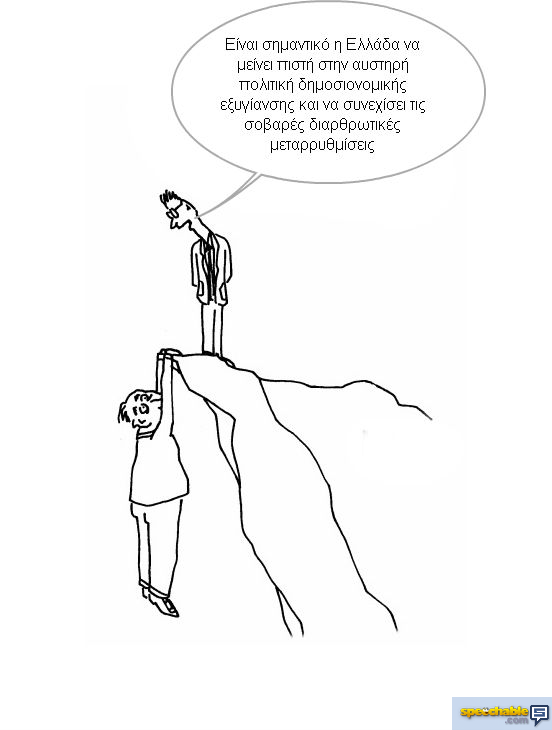
"«Είναι σημαντικό η Ελλάδα να μείνει πιστή στην αυστηρή πολιτική δημοσιονομικής εξυγίανσης και να συνεχίσει τις σοβαρές διαρθρωτικές μεταρρυθμίσεις" - Ολι Ρεν.
"It is important for Greece to remain faithful to its policy of strict fiscal consolidation and to continue serious structural reforms" Olli Rehn
Tuesday, January 11, 2011
Greek politicians shun public appearances without police protection

Mayor of Thessaloniki attending education conference under watchful eye of Greek riot police, originally uploaded by Teacher Dude's BBQ.
Despite press announcements that the conference woud be open to the public, the authorities refused entry to anyone without an invitaion, including university students who wished to take part in the discussions about their future.
Monday, January 10, 2011
Bus passenger reads leaflet during a ticket boycott

On Saturday consumer groups organised rode buses in Thessaloniki, Greece's second largest city and encouraged passenger not to buy tickets. The action was organised in response to ticket price increases that range from 33% to 160%.
Sunday, January 09, 2011
Angry Greek consumers take over road toll booths in protest over price hikes

Angry Greek consumers take over road toll booths in protest over price hikes, originally uploaded by Teacher Dude's BBQ.
Truck drivers, pensioners, students as well as more seasoned political activists passed out leaflets and encouraged road users to refuse pay tolls in a new form of grassroots activism which is being fed by popular anger at the government's repeated attempts to raise revenues through indirect taxation and cut public spending.
Already between 20and 30% of highway users are not paying toll charges on a regular basis, a figure which is set to rise in the wake of proposed 50% increases.

Greek consumer groups organise bus ticket boycott

With the Greek government anxious to cut public spending and raise revenue Athens has announced large cuts in public transport subsidies and increases in the cost of road tolls, trains ticket prices and other utilities such as electricity. However, with incomes plunging, the economy shrinking by nearly 5% and unemployment spiralling out of control such moves have angered Greek voters who are facing the most difficult financial conditions in a generation
Tomorrow activists have announced that they will direct their attentions to the country's motorway toll system which has also announced massive increases which have made the cost of travelling by road prohibitively expensive. It is currently cheaper to go from Athens to the country's second city, Thessaloniki by air than to drive.
More photographs can be found on the Demotix news service website.
Friday, January 07, 2011
Fire next time - Greece on the edge

With 2011 underway there seems little in the way of good news to cheer most Greeks. Repeated increases in VAT, road tolls, ulitility and fuel bills, public transport combined with spiralling unemployment and shrinking wages have made people both angry and weary. The list of social and economic changes being pushed through parliament by the ruling PASOK government has left voters dazed.
Yet as anyone who has ever lived here knows the difference between the political leadership announcing policy changes and those actually being implemented is often huge and in many cases such reforms end up being ignored. On the other hand the massive increases in indirect taxation on basic goods and services are having a real effect on lower income groups who are being pummelled financially to such a degree that many are no longer able to pay basic bills such as electricity and phone.
I predict however, that in the next few months the sense of numbness and helplessness that Greeks feel at the speed and scope of the changes wears off there is going to be a massive groundswell of resistance against the government. Already the first signs are apparent, it is estimated that 20% of road users are now refusing to pay motorway tolls and despite government officials promises to clamp down that figure is set to rise as non-payment becomes more widely percieved as an act of resistance rather than just a way of saving money.
Indeed the threats by PASOK officials to come down hard to offenders is another sign of the weakness the government has in putting into action promises made to the country's creditors. It's almost a law of nature that whenever Athens announces the latest harsh punishment for tax evasionand other violations the amount of revenue collected drops. In the absence of a reliable tax system politicians are reduced to making ever more grandiose threats of punishment, knowing full well that the are likely to be ignored.
In its quest for tax euros the Greek state has been forced to adopt tactics that sound like a page out of the Sheriff of Nottingham's playbook. Grab whatever you can from whoever you can. In such a chaotic situation non-payment of tax and other obligations makes everyone feel a little like Robin Hood rather than an errant knave.
Which support for government at an all - time low Athens is using the police force more and more to deal with the fallout from its reforms, a policy that is fraught with risk and the potential for re-igniting the large scale violence that Greece witnessed in December 2008 when a 15 year old was shot by a police officer. Already the Keratea region in Attica has been the centre of widespread and violent clashes between inhabitants and police for over three weeks. Villagers in Ovriokastro have fought standing battles, blocked roads,beseiged the local police station and set fire to patrol cars in an effort to block the construction of a rubbish dump in the area. In reply riot police units have repeatedly employed tear gas, plastic bullets and water canon in an attempt to allow building to go ahead.
It is just a matter of time before another such clash between protesters and police in another, more urban part of Greece acts as a spark to set off wider confrontations between Greeks at the end of their tether and the authorities. Unlike 2008 though the spectrum of those unhappy with the status quo is much wider and the stakes much greater. The issues are no longer better wages and jobs but survival as money starts running out for whole families and those without work become ever more desperate.
Prime minister Giorgos Papandreou may cut a convincing figure on the international stage while in Brussels, Washington or Berlin but his ability to convince fellow countrymen to accept painful changes is dropping rapidy and he is faced with a hostile population that would quite happily lynch many member of the government given half a chance. The savage beating by marchers of ex-minister Kostas Hatzikdakis before Christmas was widely seen as an attack of the whole political set up rather than just a single politicians. With the social contract in tatters and the authorities relying more on force to get things done the potential for serious social disruption is growing exponentially.
Unlike the monetarist policies implemented by Margaret Thatcher and Ronald Reagan in the early 80's there is no widespread support from any sector of Greek society for the changes which are seen as unfair and deeply destructive. Whereas Thatcher could rely upon electoral support of Southern England and large sections of the working class, disgruntled with the Labour party Giorgos Papandreou's PASOK has no such mandate and has alienated virtually all the party's natural allies since taking power in 2009. What is left is spin which is propagated by a suppine local media and blunt police force, a recipe for instability as at some point neither will be sufficient to contain the growing sense of unjustice over what is happening to the Greek economy.
Tuesday, January 04, 2011
Citizens’ Protection Minister Christos Papoutsis announced that authorities plan to build a fence along Greece’s 206-kilometer land border with Turkey

Citizens’ Protection Minister Christos Papoutsis announced that authorities plan to build a fence along Greece’s 206-kilometer land border with Turkey, originally uploaded by Teacher Dude's BBQ.
In comments made to the Athens News Agency on Saturday, Papoutsis said the government was determined to harden its stance. He also expressed dissatisfaction with the contribution of other European Union countries in the fight to curb illegal immigration despite the mobilization of dozens of guards from the EU’s border monitoring agency Frontex along the Greek-Turkish border in November."
Monday, January 03, 2011

Sunday, January 02, 2011
The swearing in ceremony of Yiannis Boutaris, mayor of Thessaloniki, Greece

The swearing in ceremony of Yiannis Boutaris, mayor of Thessaloniki, Greece, originally uploaded by Teacher Dude's BBQ.
Bishop Anthimos, the city's most senior cleric swore that he would do everything in his power to prevent Yiannis Boutaris from becoming mayor of Greece's second largest city, Thessaloniki during the country's recent local elections.
Greek butcher in the run up to New Year's eve celebration

Greek butcher in the run up to New Year's eve celebration, originally uploaded by Teacher Dude's BBQ.
Although Greek celebrate Christmas day like everyone else the real big celebration is New Year's when families get together and often eat lamb or kid goat.
This was taken in the Kapani central market just hours before stores closed for the holidays and shoppers were looking for last minute bargains. Of course, most Greek do their shopping in supermarkets but many still prefer places like this as the prices are lower and the produce fresher. Still, if you are not used to seeing meat presented in this manner it can come as a bit of a shock.
With the protest in its second month more than 78 of the participants have already been hospitalised and doctors treating the remainder warn that unless the strike ends immediately those taking part run the risk of permanent damage to vital organs. As of Sunday hunger strikers also decided to stop taking the salt and sugar solutions. Protesters also hung banners saying "The Papandreou government kills" from the balcony of the ex-Ministry of Northern Greece.
In Athens where 250 of the 300 immigrants are based Greek riot police broke up a press conference organised by human rights groups supporting the demands of the immigrants for legal residence papers.which was due to be held outside parliament.