Showing posts sorted by relevance for query "blog and new media". Sort by date Show all posts

Monday, October 20, 2008

Citizen Journalism and the Traditional Media

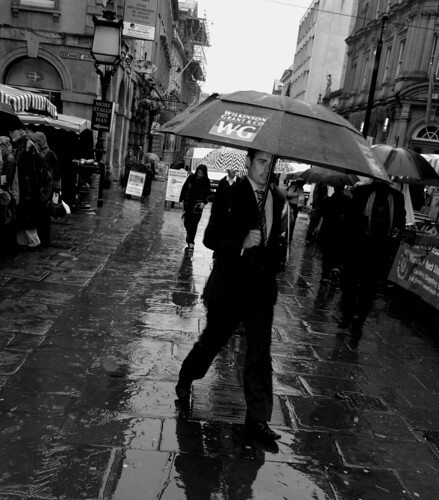
"Participatory Journalism: Blog and New Media"

I'm currently at the media conference here in Thessaloniki on citizen journalism and I feel that I'm in the lion's den. Thankfully there are a few other bloggers around to give me moral support in this luddite stronghold.

Here are a few notes I made during the first few talks. They are a rough draft so please forgive any typos and the like. I'll tidy them up later.

With a delay of over an hour and wi-fi non-existent the 2008 conference on participatory journalism started. In the old days they used to say that money was the root of all evil, now it seems it is blogs. The conference so far seems to be a celebration of self-congratulation with a strong dose of fear mixed in, reflecting the traditional media's sense of terror over new means of communication.

A call for the incorporation of the new forms into the ancient regime. The problem is that like a dying empire the newspapers have a future no more assured that that of the Romanovs or the Hapsburgs. They desperately seek to define the coming changes in the vain hope that by naming the beast they can somehow control it.

At last something I agree with. The difference is not between new and traditional channels but between good and bad journalism, in that respect both sides have lot to answer for.


The issue of the reliability of sources was raised. The point was made that bloggers, in contrast with regular journalists do not check sources or cross check information. Once again we come up against the idea that print journalism is the gold standard to which all others, including bloggers should aspire.

In one way their argument would be perfectly valid if the world of newspaper reporting was filled with Woodwards, Bernsteins and Pilgers. Yet even the quickest of glances show that this far from being true. The reality is that much of print journalism is little more than gossip, political PR and life style musings. In that respect, bloggers, beholden to no one for either their living or their future career are given the freedom to utter blasphemous truths that may not find a place in traditional media.

Access to power corrupts, complete access corrupts completely, to paraphrase Acton’s famous maxim.

In Greece, page after page in the newspapers is devoted to political coverage. However, a closer look reveals much of this is simply the thoughts, words and programs of those involved spewed onto the page with little or no criticism or analysis. the paper follows blindly the political line set down by the owner and the journalist is reduced to little more than a rancid mix of cheerleader and stenographer.

In such an environment to talk of integrity and professionalism borders on the ridiculous. The traditional media, through the compromises they have made either with the political administrations or vested economic interests have left the moral high ground and headed for the swamps.

The old charges are once again dusted off and brought out. Like old war horses they are are paraded to show that the new means of communicating are part of why the world is going to pot. Too much information, nobody is listening anymore, we don’t live our lives we record them, blah, blah blah.

Like old men bemoaning the morals of the young they refuse to see that anything good in the new world emerging. Their minds go back to fabricated pasts, beautifully crafted histories in which uncertainty, compromise and painful truths are airbrushed out with all the care and attention of a Stalinist propagandist removing Trotsky from photographs of the October revolution.

I look around at the room, at the young journalism students bored and restless, fidgeting while they wait for the talk to end. Some are taking notes, only a couple have a laptop or any other electronic means to record what is being said.


I have the terrible feeling that they are being trained by the professors speaking to be typewriter technicians, with a body of knowledge long outmoded, desperately waiting for history to be reversed, for some golden age to be restored. "Just you see the quill is set for a come back, believe me."

The blogger next to me asks the students behind me;

“Do you study journalism?”

“Yes, we do.”

“Where is your laptop?”

“They didn’t tell us to bring them.”

There you have it. Sheep led by donkeys.

The subject of anonymity on the internet has come up in the discussion with the idea that it allows people to express themselves in ways that are not acceptable in other situations. Their almost total technical ignorance is frightening. They seem to be totally unaware of the role of IP providers or the existence of an IP address. They are seemingly unaware of the opposite arguments concerning the suppression of free speech in countries such as China and Iran. They are terrified that somebody may say something nasty and so scream for control.

For the reaction of other Greek language bloggers who followed the event click on the links below.

- Τα ΓΙΑΤΙ και τα ΔΙΟΤΙ των ΗΜΕΡΙΔΩΝ και των ΣΥΝΕΔΡΙΩΝ
- Ανέκδοτο περί συνεδρίου συμμετοχικής δημοσιογραφίας
- Όταν τα παραδοσιακά μέσα κάνουν έφοδο στα νέα…
- Συνέδριο; Δημοσιογραφία;
- Συμμετοχική Δημοσιογραφία: Blog και Νέα Μέσα
- Δημοσιογραφία και πολίτες ΙI ή ένα συνέδριο γι’ αυτά
- Livestreaming από τη διημερίδα
- What is journalism?
- Λα-λα Λόλα να ένα blog- New Media Conference συμπεράσματα
- Social Media Tales: ένα συνέδριο κι η σφαγή των αμάχων
- Οι δικές μου εντυπώσεις από τη “διημερίδα”

For updates on the conference click here and here.

Thursday, May 28, 2009

Greek riots 2008 - Using social media to tell a different story

Yesterday I gave a talk, along with Asteris Masouras on social media and activism for students of the school of journalism at the Aristotelion university of Thessaloniki. The presentation was part of the course, Blogs and the New Media: legal matters and ethics organised by professor Elsa Delagianni. It was a nerve wrecking experience speaking in front of an audience in Greek and I'm sure that I garbled my grammar on more than one occasion. Still, both my and Asteris's presentations on the uses of blogs, Twitter, Delicious and the like were well received.

As promised here is the slide show presentation I used along with a brief summary of my talk in English and a list of the sites mentioned. I will also post the video of the event as soon as it becomes available.


Greek riots 2008 - Using social media to tell a different story

The presentation is divided into three sections:

Finding out what was happening

The internet provided me with invaluable tools to find out about events during the riots and protests that followed the death of 15 year old Alexandros Grigoropoulos on 6th December 2008. The killing of the teenager by a police officer sparked off a wave of violent responses that last nearly a month.

By using Twitter, blogs, Indymedia Athens, Technorati and Google's Blog Search I was able to find information on what was happening both here in Thessaloniki and across the country. In the beginning these were virtually the only sources of reliable information available as the mainstream media were at a loss to explain what was happening and limited their coverage to long distance shots of burning streets and interviews with self - proclaimed experts who had no direct connection with the events happening in Athens and other cities.

Getting your story out

For most December I went out onto the streets to cover the marches, demonstrations and riots that were taking place daily in Thessaloniki and then going home to publish the pictures I had taken and write article to explain the story behind the images. I used participatory journalism sites sites such as CNN's Ireport, Nowpublic and Guardian weekly to submit stories and also wrote on my blog, put photos on Flickr and added video to Youtube.


As a result within days I was giving interviews to CNN, BBC, Sky news as well as French and Egyptian news outlets. The paradox was that foreign media services half a world away were better informed about what was happening here than their Greek counterparts who literally were just a kilometre or two away from what was happening.

The difference being that reporters in Paris, London and New York had taken advantage of the opportunities that social media sites such as Twitter and blogs offer in getting out a story and decided to interview those directly involved. By contrast Greek TV stations limited themselves to endless footage of burning cars and "analysis" by politicians who were at a loss to understand what was going on and just used that opportunity to peddle their own conspiracy theories. I don't think I saw an interview with anyone under 40 till nearly two weeks after the riots had kicked off.

A personal impressions of what happened


At one point I wrote in my blog that I felt like I had lived six months worth of experiences in six days. The more I look back at my blog entries from that period the more I believe that. December proved to be one of the pivotal moments in my life, a period of intense excitement, mixed in with large does of fear and exhaustion. The routine of going out and photographing, the often violent protests, researching and writing articles as well as trying to fit in my day job as a teacher meant that by the day Christmas came I was on the verge of burning out.

On the other hand I felt I had embarked on a hyper intensive journalism course in which months of tuition were compressed into a matter of days. In addition the huge gulf between what I witnessed and what the mainstream media reported confirmed many of the suspicions I had felt before about the role of TV in creating a consensus about how stories are defined.

I felt that I was in a position to explain the background to what was happening to a non - Greek audience. That what we were seeing was not simply a bunch of hooligans out to cause mayhem just for the hell of it. I wanted to bring to light wider set of causes such as police brutality, political scandals, unemployment and lack of faith in the present system which were fuelling the protests.

For more on using social media in general and the influence it had on the Greek riots check out these links:

A beginner's guide to citizen journalism

Social media - How to get started


Social media and the Greek uprising

Wednesday, December 30, 2009

2009 - looking back

I thought that in keeping with tradition I'd look back over the last twelve months, choosing one image for each month. Not that life fits into such neatly packaged units of time but as an organisational principle it's a somewhat better than a "top ten". Like many here in Greece 2009 has been a tough year on many levels. For me personally, it has seen tragedy and loss of people close to me and a growing realisation that I, too am not immune to the passage of time and all that entails.

January

Manolis Glezos

This was a terrible time, full of anger, guilt and regret. My mother had been diagnosed with cancer a few weeks beforehand and died just one day before I could get back to England to see her. As you can imagine this was an awful shock and something I am still struggling to come to terms with. The fact that this happened during one of the most turbulent periods in my life and modern Greek history just added to the emotional weight of my memories.

Riots, demonstrations and almost daily clashes between protesters and the police which I covered as much as I could for various citizen journalism sites.

February

Sony kai kala

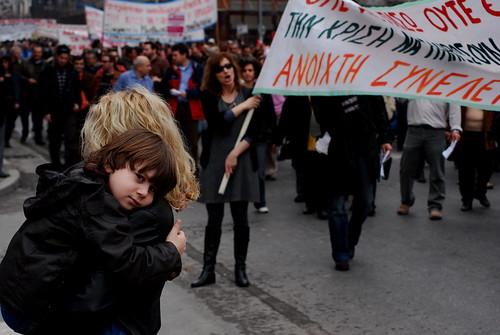
The month proved to be a lot less eventful than the previous ones and despite strikes and protests seemed much calmer allowing people to enjoy traditional celebrations such as Tsiknopempti - the start of Greek Orthodox Lent - with barbeques and fancy dress parties. Though even then there were echos of the previous upheavals with riot police deployed against boisterous teens in the centre of Thessaloniki (see video here).

On a lighter note various news stories both here in Greece and abroad allowed to to sharpen my satirical talons. The escape of Vasilis Paleokostas and Alket Razai from the maximum security Korydallo prison Athens by helicopter for the second time produced response that mixed cynical humour and disbelief. (click here for my take on this). Also Ryanair's decision to consider introducing pay toilets on their flights gave everyone a rich source of possible jokes

March

Greek general strike 2009 - γενική απεργεία 2009

More of the same; government scandals, police brutality, riots and bomb attacks in Athens. The ruling New Democracy party and prime minister Karamanlis barely had to time to talk down one politically catastrophic gaffe before another popped up freshly minted in the news. As well as reading about such events I also wrote about them for citizen journalism sites such as Nowpublic.

I also attended the Thessaloniki Documentary Film Festival and followed debates about about the differences between New Media and more traditional forms. All I can say is that most of the mainstream media here in Greece are polishing the brasswork on the Titanic. "Iceberg,what iceberg?" seems to be their motto.

Already they are being badly hit by the downturn in the economy and fall in advertising revenue. Their reply so far has been to cut costs and reduce the quality of what is, to a large extent aready a pretty poor product. Wooden language, worn out formulas and a phobic fear of change is not going save them and few will mourn their demise.

April

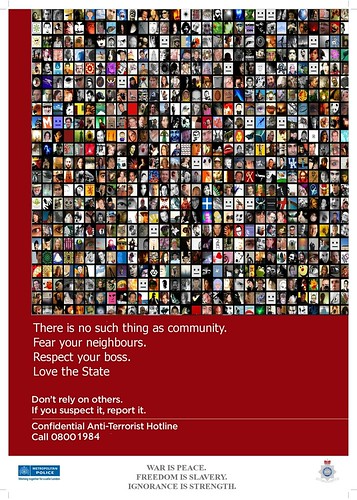
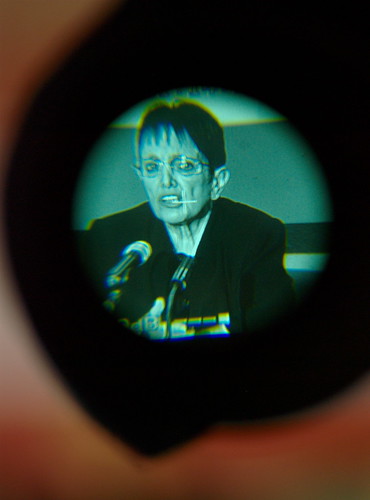
Mass surveillance: We spy because we care.

For me the major event of the month was the G20 meeting in London and the killing of Ian Tomlinson by a British police officer. Even though I was at the other end of Europe the internet allowed me to follow this story in a way that would have been unthinkable, even a decade ago. Sites such as Twitter, blogs, even streaming video allowed those there to get out their story, unfiltered by the mainstream media, who seemed happy to unquestioningly lap up what the authorities had to say. So, as the saying goes,I became the media rather than just ranting about it with posts on my blog and stories elsewhere.
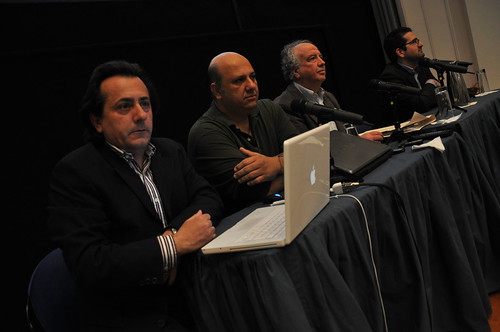
Thankfully, the circumstances surrounding Ian Tomlinson's tragic death following an unprovoked attack came to light despite a concerted effort by the London Metropolitan Police surpress the story. The video taken by onlookers published on the Guardian website along with several eyewitness accounts forced the authorities to backtrack in the face of evidence which called into question their version of events.

May

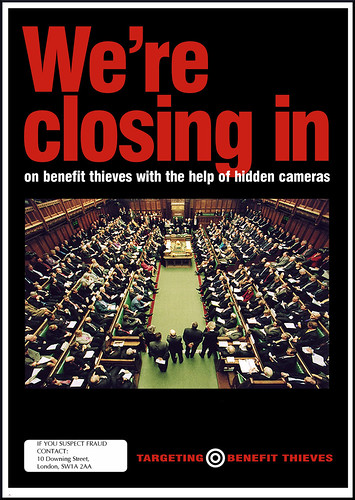
Average (UK) MP's expenses cost taxpayer £118,000

As the passed by I became more and more interested in the satirical possibilities offered by altering pictures and adding my own twist. After much hair pulling and not-infrequent pleading to the gods of computer coding I managed to become more proficient with GIMP (an open source version of Photoshop). My first target was the UK MP's expenses scandal which was breaking. Tales of politicians claiming the cost of everything from moat cleaning, to 42 inch plasma screens as legitimate expenses provided enough raw materials to keep an army of satirist in work for a lifetime. Click here for more examples.

With European parliamentary elections looming there was also ample chance to satirise targets closer to home, namely the two most important parties here in Greece, New Democracy and PASOK who were both embroiled in Siemens Athens Olympics games security contract scandal.

June

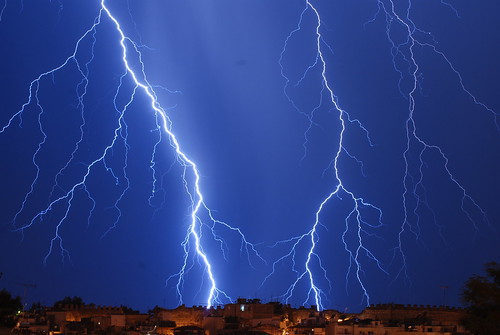
Thessaloniki lightning storm - Taken now

Although most of my lessons were finishing for summer there was plenty of other things happening to keep my busy. Election campaigning for the European elections, street parades, anti - racism festival and a semi-naked bike ride amongst other things meant that there was plenty to photograph and report about in Thessaloniki.

July

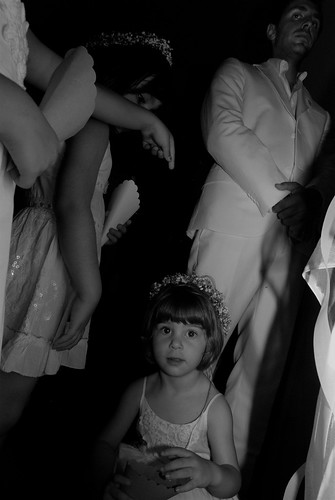
Alice in Wedding Land

July saw my first wedding as a photographer and to say I was nervous is an understatement. Still. I managed to get the job done without being sued or maimed.

I decided to continue improving my photoshopping (sounds better than GIMPing) skills to make fun of targets such as the BNP and use my access to citizen journalism sites in order to expose the terrible conditions and abuses of immigrants here in Greece. Although there had been some international media coverage of what was happening, much of it lacked local knowledge or looked at the wider political context in which such ill-treatment was taking place.

Still, the month was not without excitement as I reminded myself when being hunted by police using motorbikes as they were chasing down protesters following a trial in the centre. The exact same tactics as are being used in Iran now. Draw your own conclusion.

August

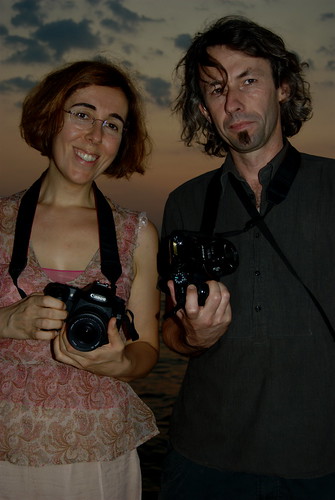
Eleni and Orhan

Usually a month were most people leave the cities and head for the beaches, yet for reasons too dull to discuss at length I was stuck here in Thessaloniki. However,l not wanting to do nothing I, and friends Eleni and Orhan started a project to photograph 1000 people in the city. We still haven't finished it yet but that's just a matter of time.

Also I continued writing about the kind of stories that the mainstream media don't bother with such as police injustics, ill - treatment of immigrants and just about anything that doesn't involve party politics, sport or celebrities.

September

Greek communists kick off election campaign

Once again party politics took centre stage as the country went to the polls for the second time in six months, this time to vote in a new national government. In contrast with previous election campaigns this one was very low key as the ruling New Democracy party went through the motions of contesting the vote, knowing full well that it had managed to severely damage the credibility of the country by massively under reporting public debt load.

At the beginning of 2009 Kostas Karamanlis's conservative administration stated that public borrowing would be less than 4% of GNP. In the end the figure was over 14% yet another concrete demonstration of their inability to do much other than put up a slick PR front.

The campaign, however, did provide a chance to take more pictures and see the leaders of all the major political parties in the flesh. Once again a smile and a confident air proved more effective than any form accreditation.

October

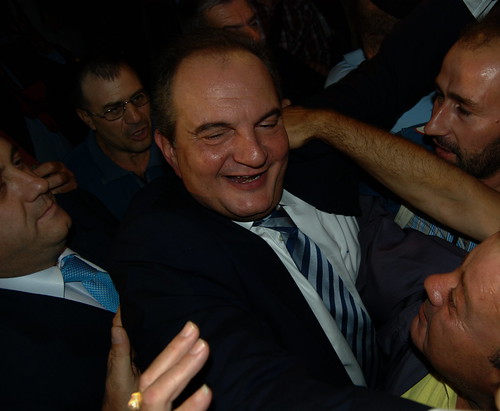
Κώστας Καραμανλής - Costas Karamanlis. Prime minister of Greece

Elections came and with them the crushing defeat of New Democracy by the left wing PASOK party led by Giorgos Papandreou, son and grandson of previous prime ministers. The conservatives's scandal ridden second term lasted just two years before voters finally showed that they were no longer willing to put up with graft, ineptitude and influence peddling.

On a more painful note a very good friend of mine died after struggling with liver disease and I will always miss his humour and friendship.

November

50th Thessaloniki Film Festival - opening night

Thessaloniki's Film Festival brought a much needed touch of glamour to the city and I enjoyed the experience of going to parties and openings. On the other hand the ongoing clashes between the police and the city's youth once gain came to the fore during the annual 17th November demonstrations, though this time the authorities decided to implement their new "get tough" policy with liberal use of tear gas, mass arrests and motorbike riding officers all employed to deal with the slightest hint of violence on the streets.

December

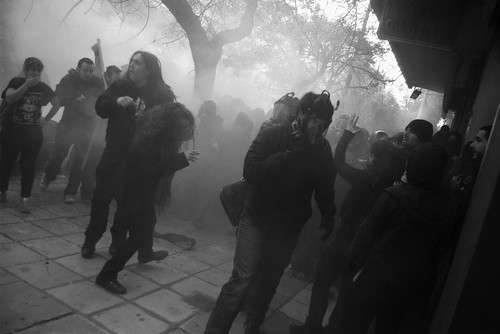
Kettled and tear gassed - Thessaloniki Greece

2009 decided to go out with a bang and not a whimper. Riots in Greece, turmoil in Copenhagen, aid covoys to Gaza and mad bomber taking hostages in a local school were just some of the events that caught my attention. A busy end to a busy year.

Like, many I am worried about what 2010 has in store for us. The economic crisis has started to hit hard and many are struggling to make ends meet even while prices keep on shooting up and jobs, even badly paid, insecure ones become harder and harder to find. The sight of old people begging or rooting through garbage bins is no longer rare or shocking. The streets ofthe city are littered with empty shops and For Sale signs, further indication that there is less and less money around. Whilst cafes and bars in the richer areas may still be full of people enjoying over priced coffee these are becoming the exception rather than the rule.

On a brighter note and despite the fact that the year started with a tragedy it ended with some great news when I learnt that my brother and his wife are expecting twins.

Friday, October 24, 2008

Blog wars

It seems that the conference on Monday here in Thessaloniki on participatory journalism and blogs has sparked off a mini-war between bloggers and the more the traditional media’s supporters.

I think that inadvertently the conference organisers have given us a text book example of how the new channels for collecting and desseminating news can run rings around older forms not just in terms of speed of response but in quality of reporting.

The two day event which started in Thessaloniki on Monday and moved to Athens on Tuesday was billed as a discussion on the influence of new media on old media and vice versa. Present were member of the Greek media establishment and academics from the Journalism and Mass Media department of the Aristotelion university of Thessaloniki as well as bloggers from the city.

So far, so good. The event was also to be webcast live and those following at home were invited to comment and send in questions to the panel.

However, the reality of the situation proved to be a mite different. Technical delays meant that the first panel started an hour and a half late and that the much vaunted wi-fi coverage proved as elusive as it was erratic. That alone would have been unfortunate but the problems with basics such as microphones, projection screens, lighting etc. meant that quite soon the whole situation descended into farce.

To add insult to injury the lack of technical preparation which matched by the lack of knowledge shown by many of the academics and older journalists invited. Yet it was their voices that dominated the debate at many points. Apparently, bloggers are insecure, psychologically unbalanced, vindictive souls only too willing to be used as puppets of the CIA and other like minded organisations. We don’t check our sources, we say nasty things, we don’t write properly and we are deeply disrespectful of our “betters” in the media. Well, at least that is something I agree with.

The first and last panel discussions were often little more than diatribes aimed at nasty bloggers (who by the way weren’t invited). Those who did turn up to this luddite slug fest spent the day wondering whether to laugh or cry at the level of discussion. Later we did decided to both and blog about it.

To say the response from those bloggers who followed the debate either on the internet or on the spot was scathing would be an understatement. They quickly and mercilessly dissected the thoughts, ideas and vanities of those taking part.

On the other hand the other side in this particular turf war took their time about responding to these comments. They ate in their fancy restaurants and patted themselves on the back for being so bold as I guess they had not bothered to follow the debate on the net. As a result the speed and vehermence of the criticisms must have come as a shock.

I think that fact that most of those present were a captive audience of journalism students, not about to upset their future grade point average with untoward criticisms lulled the academics into a false sense of security.

Slow they may have been, but they did get the message. This post on the official conference blog in Greek entitled 48 hours After (lovely title, just about sums up what they don’t get about instant access and response) in which they or one of their minions most probably, decried the awful way in which the bloggers wrote about the event and patted themselves on the back for being so very up to date.

Pleaseeeeeee the 90’s are over. They even had the nerve to say that the event was the culmination of five months preparation. Five months!!!!!! Please, not so loud people may hear you.

I looked at the 20 odd comments on the post and just one was critical. Most seemed little more that congratulations from the students to those organising the event. I actually posted a comment but mysteriously my thoughts on the conference didn’t make it pass the censors.

Actually, I think that attitude was indicative of the whole event. There was little attempt to reach out and engage in any meaningful dialogue. I don’t think that people had the chance to ask more than a dozen questions during whole event. Indeed the only meaningful exchange of ideas happened at the very end when guest speaker, Dan Gillmor chatted with the few students who didn’t scurry off to get their attendance certificates and us bloggers.

Instead this was a grandstanding event designed by those at the university to show how hip and web 2.0 they were. Unfortunately. the whole thing blew up in their faces when they realised that they didn’t control the direction of the debate outside the conference and that their ignorance of the subject would be exposed to a wider audience.

Wednesday, December 31, 2008

2008 in pictures

I thought I'd continue with an idea I had last December - my year in photographs, one for each month. It's a way of looking back over 2008 and taking stock of what has been happening in my life.

January

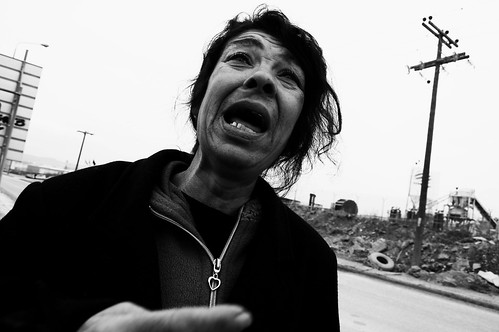
Cry for help

I had an hour to kill between lessons and for some reason I decided to see where the Fates would take me and I came across a huge warehouse complex that had been abandoned even before it had been finished. Trudging through the mud and dumped rubbish I took a lot of very boring pictures then noticing the time decided I had better make tracks if I wanted to be in school on time.

Just as was about to leave I saw this woman walking in my direction. I don't know why but something in me said that there was a good picture in this so I kept my camera turned on and went to my Vespa. Sure enough, she approached me and asked me to give her two Euros to buy heating oil.

February

Today's anti-government protests - Thessaloniki, Greece

A wave of 24 hour general strikes hit the country as many people decided that plans to change the present pension scheme were unacceptable. Amidst more scandals the Greek government tried desperately to persuade people that such an overhaul was necessary.

March


The strikes and protests continued into March and at the other end of the political spectrum there were ultra - nationalist gatherings that were attended by high ranking members of the church and politicians in search of an issue to get them back into the media spotlight. A frightening mix of V for Vendetta and Nuremburg rally.

The Olympic flame also came to town on its way to China, protected, it seemed by everyone with a badge and a club the local authorities could find. The month also saw me take up citizen journalism as I started to contribute to NowPublic.com, in doing so I was learning a whole new raft of skills concerning how to research and write news articles. Skills that would stand me in good stead later on in the year.

April

Mondiano market

April meant Easter, holidays, lamb to excess and relaxation after a very long term lasting 17 weeks. In addition I had the chance to go to exhibitions such as the one by Duane Michals, the American photographer whose retrospective was on show in the museum of photography here in Thessaloniki.

May

Generation 700 - Γενια 700

More strikes, more scandals, the government fighting for its political life. May brought more of the same. I also wrote about and photographed members of G700 generation who would play such a decisive role in the protests in December.

June

Semi - naked bike ride Thessaloniki

This was taken during a demonstration by local ecological groups to raise awareness of the problems caused by excessive car use in the city. The original idea was for the participants to ride their bicycles naked through the centre. However, the local authorities nixed that idea and the police said that anyone not wearing clothes would be arrested for indecent exposure.

So as to comply with these demands the cyclist compromised and wore beachwear and body paint so that less flesh was on display than your average Saturday at the seaside. Despite this the police still insisted on confronting the 100 or so peaceful protesters with the kind of tactics and manpower usually associated with football riots. After clashes and arrests the people were allowed to continue.

July

"Rain, rain go away...."

Leaving one of the hottest summers on record I went to England to enjoy one of the wettest. It was a time to relax and see my family again. Lydia had a chance to see my side of the family and taste the delights of English cuisine!!!!

August

Bristol Harbour Festival 2008

Instead of demos, marches and clashes, I photographed festivals, concerts and street life. In the beginning I was more apprehensive about doing this but I quickly overcame my inhibitions. Later on I also managed to see other sides to life in England which are not so obvious to the casual visitor. Poverty, drug use, violence and the like were also there, if you cared to look just a little deeper.

September

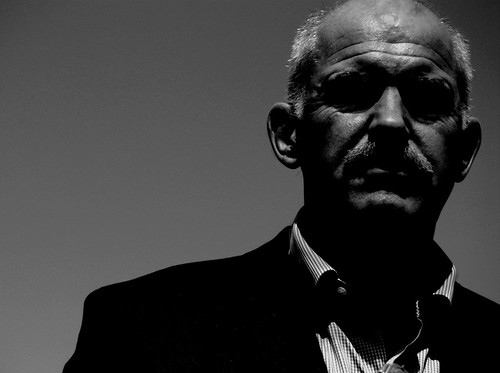
Giorgos Papandreou -  Γιώργος Ανδρέα Παπανδρέου

Back to the heat in every sense of the word. The temperatures remained high and s the annual trade fair approached the city became the centre of political and media attention.As a result there were marches, strikes and clashes with the police. I managed also to write about the Vatopedi graft scandal and get pictures of many of the major players in Greek political life as they pressed flesh and kissed babies.

October

"Participatory Journalism: Blog and New Media"

October proved to be a busy month with lots to write about and photograph. Hundred of high schools under occupation, mass protests, conference on blogging and media, more - run ins with the cops over the right to take photographs meant I was rushed off my feet.

November

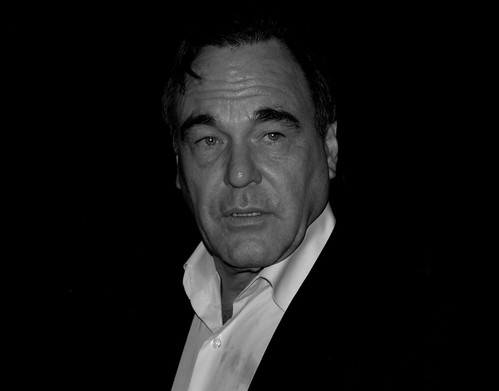
Dude on Oliver Stone

The city had its shot of glamour as the film festival opened and movie types from all over the world came to ply their wares. I managed to wangle my way into many of the gigs even though I couldn't get an official invite. Never mind its more fun that way.

December

The battle of Thessaloniki


December proved to be one of the most intense periods of my life on so many levels. The riots and protests that followed the death of 15 year old Alexis Grigoropoulos sparked off a maelstrom of anger that lasted for weeks. I tried to follow the events here in Thessaloniki in order to explain what was happening to the outside world. As a result I found myself being interviewed by CNN, BBC, Sky News and a host of other new outlets from all over the world.


Looking back now over the year it seems that the events of the last few weeks were not so unexpected after all. Although the intensity and duration of the protests took everyone by surprise the roots of the problem were obvious to anyone who was willing to look. Frustration with the hopeless job market, rising prices, disgust with corruption and incompetence in the political system, a sense of injustice generated by endless cases of police violence meant the causes of the revolts have been there in plain sight for a long time.

Unfortunately, none of those ills are about to change soon. Those with their hands on the leverages of political and economic power are not about to give up their privileges any time soon. Nor, given the growing economic crisis will they be in a position to buy off protest in the form of sham jobs in the civil service.

Thursday, June 14, 2012

What's next for Greece?

Anti-government protests during Thessaloniki Trade Fair, Greece

Greece's latest round of elections has been, paradoxically, its most important in decades and its most low key. In contrast to previous votes, there has been a a conspicuous lack of campaigning on the part of most parties. Few public rallies, little canvassing and even less leafleting. This is, in part due to lack of funds and partly due to the fact that PASOK and New Democracy, the two parties that dominated Greece's political scene for four decades are just a shadow of their former selves, victims of their support for pro-austerity measures over the last three years.

Instead the most likely winner of Sunday's elections will be SYRIZA (Radical Left Coalition) who will most likely see their share of the vote exceed 30%. This is nothing short of a revolution in Greek politics as until recently the party (or rather a coalition of a diverse band of smaller leftist groupings) was seen as a marginal player, rarely polling more than 5%. Similarly, on the right, Independent Greeks, a newly minted right of centre party created by New Democracy defector Panos Kammenos has also risen from nowhere to become a major factor in the domestic political scene. Despite their ideological differences, both have benefited from their unwavering opposition to the austerity packages foisted upon Greece by its EU, ECB and IMF creditors.

However, with the chance of SYRIZA coming first in the polls and therefore winning the extra 50 seats guaranteed by the constitution, the media war against the party both at home and abroad has ratcheted up, with daily stories attacking its leader Alexis Tsipras for putting Greece in mortal danger. For most of last week the mainstream media in Greece, which is with few exception extremely hostile in its reporting of SYRIZA, accused Tsipras of having links with terrorists, using as evidence a Youtube video by former SYRIZA candidate, Ifikratis Amiras calling upon Greeks to take part in an armed struggle. The fact that Amiras no longer has any formal links with the party did not stop the media taking the story through several news cycles. Even eccentric Slovenian philosopher, Slajov Zizek who shared a panel with Tsipras recently in Athens was accused of promoting extremism amongst SYRIZA ranks during a news report by the state run NET TV channel who stopped just short of accusing him outright of being him a terrorist.

On the other hand the fact that leading New Democracy supporter, Panagiotis Psomiadis called the neo-nazi Golden Dawn, " a brother party" and suggested that parties develop closer ties in a radio broadcast in Thrace this week  went unremarked in the media. Nor did the fact that party leader, Antonis Samaras was promoting a deeply divisive anti-immigrant program designed to wean voters from the far right by taking on board many of their policies

Of course, dirty tricks, spin and flagrant misrepresentations of the truth are part and parcel of Greek electioneering which may be one of the reasons that despite this barrage voters remain unconvinced that the world will end on Sunday if SYRIZA comes first. After two years of the media telling them that the sky is about to fall down ,many have either stopped paying attention or welcome an alternative to the slow, painfully drawn out process of social collapse that has gripped the nation.

So what happens next?


Although Greek law forbids the publication of polls in the two weeks leading up to elections the last ones published showed that new Democracy and SYRIZA were neck and necks, with one exception. a GPO poll commissioned by the conservative daily, Kathimerini  which put SYRIZA well ahead at 31.5% and this is what I believe the will get (For an excellent blog post on how many Greek polling companies played fast and loose with last elections predictions see here). My hunch is based on the consistent under - reporting of SYRIZA support (about 6-7%) and the conviction that the currently media onslaught shows that the Greek establishment is fighting to limit damage caused by a SYRIZA victory.

So let's put my money where my mouth is.

Syriza willl get about 30%, New Democracy, 25% and PASOK 10%. I think that the recent attack by Golden Dawn MP on fellow politicians during a live TV show will affect their share but they will still get enough votes to pass the 3% threshold which guarantees them seats in parliament. As for the other parties I believe that their share will stay more of less the same as the previous elections.

However, being the largest party will not automatically mean that SYRIZA will be in a position to form a government, since the Greek Communist party have ruled out any form of coalition that means Tsipras will have to approach either The Democratic Left party who are lukewarm about co-operation or perhaps disgruntled PASOK MPs, which will not play well internally as many are already portraying SYRIZA as a new PASOK in sheep's clothing.

On the other hand, political gossip has it that the remains of the old regime have already accepted that SYRIZA will come first but believe the PASOK, New Democracy and a third party will be able to keep them out of power by forming their own administration in the name of national salvation. How much legitimacy such a move would have and how long such fragile alliance will last is anyone's guess.


Supposing Tsipras does form a government then the real battle will begin and all the ugly scenarios that the international press has so gleefully propagated may turn out to be true. The EU has absolutely no interest in allowing a successful rejection of its economic program and will do everything in its power to force Athens into a compromise. Most likely this will take the form of shutting off all further financial aid which will quickly cause chaos in Greece's weakened economy as wages, pensions and benefits will not be paid. In addition the health system will grind to a halt as hospitals run out of supplies (though that particular problem has been around for over six months).

Without money Greece will also no longer be able to import staples such as oil and that will lead to panic buying, queues and the kind of scenes usually associated with times of war. Faced with this, Athens will either have to knuckle under or, as it seems the Germans are hoping, exit the Euro and re-adopt the drachma.

On the other hand the sight of Berlin and Brussels wrecking havoc with a fellow EU member will have immense ramifications for the image of European Union across the continent and will lead to searching questions about what exactly European unity means. The political costs for Brussels may be far greater than they could possibly imagine in the long run. In the short run the markets may also respond to Greece's economic demise, not as a one-off acts but the taste of things to come as other southern EU countries such as Spain slip deeper and deeper into recession and stop reaching their austerity imposed targets. In such a case the outflow of capital from the Eurozone may prove unstoppable.


Tuesday, January 20, 2009

Social media - How to get started.

"This machine kills facists"


An introduction


Citizen reporter, blogger, independent volunteer journalist. You know that you’re at the start of a major change in the way things work when the new phenomenon spawns a whole raft of names. Although the buzz over the Internet and especially the whole web 2.0 phase has died down the fact that the technology has ceased to be cutting edge or even unusual means that the really interesting changes in the way people use it are probably happening as we speak.

One of the most visible signs of this is the changing role of the public in the way news is created and disseminated. Wider access to the Internet, dropping prices in digital cameras and the emergence of a range of ways of putting material on the net easily is transforming the way people interact with the media.

Of course, this is not a new idea as as long as the media has been round there have been those who have sought to get their story out to a wider audience without recourse to traditional channels. The difference today is the entry level and the potential number of people who can be reached.

Up till recently media meant heavy investment in equipment, be it the printing press or the TV studio. In addition there was also a similar need for highly trained technicians to use the tools involved. As a result those capable of bearing this financial burden was limited to a lucky few.

All that is changing the cost of putting out a story has effectively dropped to zero. Even the possession of a computer is no longer a pre-requisite as access to the Internet either through Internet cafes or say, public libraries means that nearly everyone can compete on even terms.


What equipment do I need?

At the most basic level nothing more sophisticated than a notepad, pen and cell phone with a camera.

If you have the resources then I would recommend a video camera, a DSLR and a light Wi-Fi equipped sub - notebook. Looking at the prices here in Greece all this would cost you around about 700 euros.

Remember spending a whole bunch of money is not going to help you get your story out. The perfect image, a wickedly edited video clip or state of the art laptop is not what citizen journalism is all about nor can it replace your single, most important advantage - local knowledge.

What sites should I join?

There are a number of news sites that allow people to upload stories to the Internet. This is just a selection of the more popular ones rather than a definitive list. Look out for similar sites in your own area and/or language.

Indymedia (there are branches all over the world, so look for your local one)

Nowpublic.com

ireport (part of CNN)

Globalvoicesonline

Also many news sites such as the BBC allow people to upload pictures and ask for written contributions form people affected by news stories. this is often a good way to get in contact with the mainstream media.

Video

If you want to upload video then opening up an account with Youtube and Google Video is a must. Just remember that Youtube’s free account limits videos to just 10 minutes, however, longer videos can be sent to Google Video.

By posting video on these sites you make it a lot easier for people to post them on their own sites. Instead of having to upload videos to each site you contribute to you can do it just once and then embed them wherever you like.

Photographs

Both Flickr and Photobucket allow you to upload pictures onto the net, to form groups and find the latest pictures taken by people involved in breaking news stories around the world.

Blogs

Having your own site on the Internet is a great way of increasing your credibility and offers another way for you communicate your stories to a wider audience. In addition the act of keeping a blog updated is a great way of learning writing and presentation skills.

Remember also that the personal nature of blogging means that you can express more personal views or yourself in a more impassioned way.

Here are some of the most popular blog providers;

Blogspot

Wordpress

Livejournal

These are great ways to get in contact with others;

Facebook

Myspace

Hi5

What do I report about?

This is perhaps the most difficult hurdle to overcome as it requires more than learning a few technical skills and there is no simple answer as everyone is motivated by different things.

However, it is a good idea to start with what you know best, i.e your neighbourhood, profession, social networks you belong to etc.

Alternatively, you could start commenting on what you are most passionate about no matter where it takes place. On the Internet we are free to roam anywhere and learn from many different sources.

Where do I find out about news stories that are not covered in the mainstream media?

As well as our networks of friends and family there also other places on the Internet to find out what is happening in our local area. Look up your town, region in Technorati or Google blog search for the latest developments in the blogosphere. In addition check out what is happening via Twitter search. Twitter is a great source for finding out what is happening now.

Also if there a Indymedia site for your area, check out the latest events and activities.

The most important thing though is to be there. When legendary street photographer Weegee was asked the secret of his success, he replied, “F8 (referring to the camera setting) and be there”. Being on the spot is often the most important thing you can do. All the rest is detail.

How to start writing?

The first thing to remember is that writing is not necessary. A video with you speaking to camera is just as effective as an article and so allows those who do not feel comfortable with the written word to produce insightful reports which can be shared with others. However, some thoughts scribbled down and a couple of practice run throughs will make your ideas a lot easier to follow.

If you do wish to write your stories don’t let the fact that you have not had training in J-school put you off. The style used in newspapers etc. can be picked up quickly if you want to practice. Blogging is a great way of doing so without having to get everything right straight away.

Remember that writing something is infinitely preferable to nothing and people will forgive any imperfections.

On the other hand if you want to be credible then there are some journalism skills that you absolutely have to respect. Accuracy, checking sources and honesty are essential no matter who you are and where you write if you want to be taken seriously. It is not enough to be passionate if you want to reach a wider audiences. Simply repeating or accepting sources simply because you agree with their opinion or point of view will not get you taken seriously.

Double check as far as possible claims you see made in blogs, Twitter etc, go to the original sources, official accounts etc when you can. Do not blindly accept one person’s version of events no matter much you agree with them. If this is not possible then make it clear than the readers know that this story may not be 100% accurate.

Distinguish between opinion and fact. Too often people present their ideas on a story as fact and seem to assume that others will share their view. On the Internet this simply is not true as most of those reading will be neutral and so your impassioned accounts may come over as a rant. A dispassionate tone is more likely to get you the kind of coverage you want.

Of course, if you wish to post to your personal blog and not a news site then you have more flexibility in the way you approach a story.

How to catch people’s eye?

Content is the most important thing. You should aim to make your stuff as interesting as possible. This can be done by using a mix of different media; video and pictures accompanied by text is the ideal combination.

Link to people. If you blog then link to sites that the think other should read, ask them to reciprocate. If you mention other sources in your posts make sure you link to them. This also means that you ranking on Google’s search pages will increase.

Tag everything. Tags are the key words that help others find your stories so whenever you add text, pictures or video make sure you add tags that let others know what is being talked about.

Use RSS. Most sites now allow you to use RSS automatically, it means that people can follow your blogs, Flickr page etc far more easily.

Post widely. If you have a story to tell then post it on as many different sites as possible. Don’t just leave it languishing on your blog. Also join blogging aggregating sites such as Technorati, Icerocket and Del.icio.us. These allow others to find you more easily.

Post regularly. People will quickly stop turning up if you post infrequently and your ranking in Google’s search engine will suffer accordingly. Once a week if you can.

Be credible. If you prove to be a reliable source people will search you out to find out the latest updates on a story.

Be sociable. Join groups on the Internet which share your views and interests. They will help get your message out as well.

Thursday, November 06, 2008

Disruptive technologies


Over the last few weeks I have had the chance to see the way technology is being received here in Greece in two very different areas. Just over two weeks ago I attended a conference on participatory journalism (blogging, citizen journalism etc) and its connection with more traditional media (click here) and currently I'm following an interesting SEETA online course on applying new technologies in the classroom held by Gavin Dudeney.

At first there seems to be little in common with teaching and journalism yet the interesting thing was seeing how the internet is starting to make itself felt in Greece and how that growing influence is being fiercely fought against by the old guard and its young supporters.

In the case of teaching the internet is marginal in Greek education. Although schools have been linked up to it for some years the quality of the infrastructure is so poor in most cases that it is practically non-existent. In addition the use of internet and IT in general has yet to break out of its computer lab ghetto. Quarantined, lest it infect the serious business of learning from books.

Similarly, EFL/ESL (teaching of English as a Foreign/Second language) classrooms have, for the main part, struggled successfully against the menace of technology to a such an extent that we still use audio and VHS cassettes. They have resisted the siren call of such diabolical distractions such as the CD and DVD.

Even when such heresies have been permitted every effort has been made to neutralise the effects by treating the new innovations as little more than an electronic book or a simple 80's style arcade game.

Wikis, Moodles, blogs, Ning, podcasts, vlogs, Second Life, Skypecasts are virtually unknown here in educational circles. When they somehow get raised in conversation or discussion they are roundly denounced as mere distractions, or worse. The critics trot out a collection of well - worn cliches that have been polished to perfection by an endless stream of moral panics seen on TV or published in newspapers. You know the ones; the internet isolates people, we need teachers not machines in the classroom, the internet is too dangerous for young people etc.

Hidden behind the obvious technophobia lies, I think I deeper, more worrying cause. The rise of the internet and the ability to not just access information but add our own thoughts and ideas to a global debate has as a consequence the questioning of the authority of the teacher and school book as sole arbiters of what is right and wrong in the classroom. With a few minutes on Google we can double check any claim made.

Of course there are still many who claim that on the net anyone is free to write anything and so we never sure of how accurate our sources are. True, but even school books are not without this problem Indeed the latest high school ones published here in Greece included whoppers such as the Second World War ended in 1949(!) and that one of Greece's leading writers, Stratis Tsirkas published work at the age of three (pushy parents, I guess).

A healthy skepticism towards all sources, including officially sanctioned ones is, however,a deeply subversive idea and especially so in educational systems which reward conformity, and view knowledge as a never changing list of facts to be remembered but not questioned.

I saw exactly the same attitudes displayed at the Participatory Journalism: Blog and New Media
conference held at the Aristotelion university here last month. The same ideas concerning validity of sources, the same fear that if you give people a chance to reply, they will, the same distrust of people in general. Underneath all the cliches the lurking terror that the professor's / journalist's role will be undermined and that their days of being able to monopolise debate are drawing to a close.

The interesting thing is that none of what they say matters. Like passengers on the Titanic arguing over who gets to dine at the captain's table they cannot stop what is about to happen. The changes brought on by the internet are already taking hold with those Greek teenagers who are going online now for the first time. They are the first generation of digital natives swimmingly effortlessly through a sea of data and information.

How long will the old guard be able to teach or report using the technology from the forties and ideas from the nineteenth century? In the end the next generation will exercise their power to simply tune them out.

Here is a TED Talk video by creativity expert, Ken Robinson which challenges the way we're educating our children. He champions a radical rethink of our school systems, to cultivate creativity and acknowledge multiple types.

Wednesday, October 22, 2008

Thoughts on "Participatory Journalism: Blog and New Media" - Thessaloniki


I thought I'd write a little more about the conference held in Thessaloniki and Athens on the role of citizen journalism, participatory media and more traditional forms of news coverage. I spent most of Monday listening to the different debates going on between bloggers, journalists and academics (see here for my first reactions). The debate then moved to Athens on Tuesday but unfortunately, I wasn't able to follow it on the internet as I had work to do and some citizen journalism of my own (click here) as Greece was in the grip of a wave of strikes and protests.


In the meantime I checked out what the Greek language blogosphere had to say about the subject. Reactions to the organisation and handling of the debate range from the cynically bemused to the scathing. A lot of criticism was aimed at the hosts of the event for the seemingly endless technical problems which effected everything from microphones (working, not working, δεν γνωριριζω/δεν απανταω) to the wi-fi coverage which seemed to disappear almost as quickly as it appeared.

In addition the hostile reaction of many of the Greek academics and older journalists in the first panel (see here for participants) combined with an ignorance of what is meant by participatory journalism didn't add to the quality of the debate. Instead they seemed to fixate on blogging and the supposed problems it causes. They totally ignored other channels such as Facebook, Twitter, cell - mobile phones and Youtube. If they had been students they would have got D- for preparation.


Instead there was a lot of time spent of the problems of anonymity in blogging and its lack of quality control. This theme was repeated again and again during the two other panel discussions and I was lead to the conclusion that many of these guys would be far more comfortable working in say, China or Iran where the authorities know how to deal with any pesky bloggers who write anonymously. On the other hand some of the mainstream journalists taking part such as Nikos Xydakis, who tried to give a more nuanced take on the topic.

Thankfully, in the second debate the bloggers invited, Asteris Masouras and Vasillis Sotiropoulos had the chance to argue the case for the benefits that a more democratised, internet media might offer.


The highlight of the day was the talk by Dan Gillmor (click here to see a talk he give on citizen journalism at the University of North Carolina) who came to the conference at his own expense!!!!!!! and managed to raise the tone of the day's debate. I particularly enjoyed his view that now was a great time for someone to start a career in journalism as the cost of tools for actually producing and desseminating news had fallen to the point that anyone can do it. On the other hand he added that traditional journalistic values such as objectivity, thoroughness and accuracy would not go out of date.

One comment that he made that I found particularly pertinent was that journalists need to listen. A real irony in an event that lasted a whole day and in which the audience were permitted no more than ten questions. The organisers were more interested in grandstanding than in engaging and exchanging views with anyone but themselves.

I think the saddest part of the whole day was looking at the audience made up mainly of journalism students. As far as I could see only one had a laptop (on which he played Solitaire for the duration of the debates) and nobody seemed to be using any video or other recording device. They sat, bored, occasionally scribbling down notes whenever their professor spoke.


The few bloggers present stood out like a sore thumb not simply because they were using technology invented after the advent of the combustion engine but also by the enthusiasm they showed. Unlike the soon - to - be mainstream journalists, they did not rush for the doors at the end of the day to pick up their certificate of attendance but rather hung around chatted and asked Gillmor about his views on a variety of subjects.

Update. I managed to find this talk on Google Video which is basically the same talk as the one Gillmor gave yesterday. Actually, it is probably a fuller version as he had to cut down as his original talk at the last moment when the organisers couldn't get the translation equipment to work.

Thursday, April 15, 2010

Yesterday's conference on blogging and journalism - Thessaloniki, Greece

At the conference on blogging and journalism here at the Olympion cinema – first presentation was research on how Greek internet users view blogs in general and a source of news in particular. It seems that those on the internet (70+%) visit blogs regularly and many of them just under ¾ a reasonably accurate source of news.

Looks like the idea of anonymity will be discussed again, the idea that putting your name on a story is automatically better than remaining anonymous, the argument being that newspapers and other media are constantly faced by the threat of being sued for writing something that maybe be considered untrue.

However, there has been a number of cases in which newspapers and TV stations have quite happily spashed the images and names the six people arrested, allegedly involved in recent terrorist attacks. Defying the country's established codes of ethics the names and pictures of the detainees have been shown repeatedly on the country's TV screens and newspapers. Reporters have even dispensed with words such as “alleged” and “suspects” and simply referred to them as “terrorists”. Without trial, in some cases without even being charged the major TV channels had already decided that those detained were indeed guilty.

The overage has been so one sided that according to the Active media blog many journalist are demanding the Greek Press Council condemn these practices.

The mainstream media has simply broadcast, without any form of critical analysis the police's official reports or leaks concerning the case. In the UK or USA such coverage would be deemed enough to cause a mistrial as any kind of competent trial lawyer would argue that his/her clients would not receive a fair trial.

Thomas is speaking in defence of blogs, his main argument is that while many blog are indeed full of inaccuracies and groundless rumours the mainstream media is rife with such “news items”. If their beef with blogs is their level of professionalism and attention to details they are skating on thin ice. One only has to recall the case of the “visit” of Turkish PM to Greece last year. Despite the fact that the visit was called off on a Friday the Sunday newspapers Vima, Ethnos etc covered the event in great detail in their Sunday editions complete with pictures, quotes and analysis.

On the other hand we have Wikileaks, which Thomas is talking about now, as an example of how anonymity is sometimes necessary to cover stories governments and large, powerful organisations want to keep secret.

According to Thomas the most important thing is credibility in that just because a story or accusation appears on a blog means nothing unless that site has established itself as a credible source. He also argues in many respect TV news has lost ground in that it has ceased to be a trustworthy news source, at least according to the survey with just 1% of internet users considering TV the most reliable medium.

Once again none in the audience, myself excepted, seemed to be utlising any form of technology invented after the ball point pen. Instead they all just scribbled down notes on paper and seemed to havea particular weakness for any kind of stat.

Update

I enjoyd the debate even f I didn't agree with much of what was said, though saying that the criticism made by the panel were well thought out and not just knee - jerk reactions to change. Unfortunately, I can not say the same of the Q&A session which followed. The questions pitched ranged from the inane to the incoherent. It seemed many of those budding journalists present had a hard time putting together a coherent utterence, god knows how they're going to cope with whole paragraphs.

Bloggers who write anonymously were even compared with masked hoodies who attack and firebomb banks in that they wished to hide their identity, which gives a pretty good idea of how low the intellectual content of much of the audience's contribution. It was a shame as there are plenty of serious issues concerning the changing role of the media and The People Formerly Known as the Audience.

It's a brave new world forming on the internet but anyone who believes that the sins and faults of the past will magically disappear with the advent of mass participation in the creation of the news is likely to be disappointed.


Monday, October 20, 2008

Dan Gillmor


Dan Gillmor, originally uploaded by Teacher Dude's BBQ.

I decided to stay till the bitter end of the "Participatory Journalism: Blog and New Media" conference, despite the near constant griping of the New Stone Agers who teach journalism at the university here in Thessaloniki. What kept me hanging in was the presence of other bloggers who with their passion, wit and enthusiasm made the whole day a wonderful experience.


In addition, I really wanted to hear Dan Gillmor's take on the whole citizen journalist phenomenon. I wasn't disappointed by his talk which was both insightful and inspiring.

For the reactions of Greek language bloggers click on the links below.

- Τα ΓΙΑΤΙ και τα ΔΙΟΤΙ των ΗΜΕΡΙΔΩΝ και των ΣΥΝΕΔΡΙΩΝ
- Ανέκδοτο περί συνεδρίου συμμετοχικής δημοσιογραφίας
- Όταν τα παραδοσιακά μέσα κάνουν έφοδο στα νέα…
- Συνέδριο; Δημοσιογραφία;
- Συμμετοχική Δημοσιογραφία: Blog και Νέα Μέσα
- Δημοσιογραφία και πολίτες ΙI ή ένα συνέδριο γι’ αυτά
- Livestreaming από τη διημερίδα
- What is journalism?
- Λα-λα Λόλα να ένα blog
- New Media Conference συμπεράσματα
- Social Media Tales: ένα συνέδριο κι η σφαγή των αμάχων
- Οι δικές μου εντυπώσεις από τη “διημερίδα”