This is a Photoshopped image. Satire and parody.
Showing posts with label greek prime minister. Show all posts
Showing posts with label greek prime minister. Show all posts
Saturday, November 16, 2013


Wednesday, September 04, 2013
All the fun of the fair
Mussolini must be in town. The streets are full of cops, traffic is flowing freely through the city's central thoroughfares and rumour has it that the trains are once again running on time. However, to add a more modern touch to the scene police helicopters circle overhead constantly. For at least once a year the authorities pretend that they run Thessaloniki and at least for a few days most of the rules of the road are obeyed.
It is Trade Fair week and once again Greece's second largest city hosts either the annual international trade fair or a riot police convention, as the days count down to the grand opening on Saturday the difference between the two shrinks to nothing. Already flocks of scooter riding cops roam the city headed by officers on larger machines leading the way, like a mother duck leading her brood to water. Inside the trade fair itself workers hammer away setting up the stalls and stands that will host the 78th Thessaloniki International Trade Fair.
Traditionally, the fair has marks the end of summer, at least politically and the start of a new parliamentary session. it also marks the annual expedition by Greek government up north to see how folks in the provinces are doing. It gives the prime minister the chance to give the nearest thing Greece has to a State of the Union address and trade unions, political groups and anyone else with a beef the opportunity to march and show their discontent with present policies. Sometimes it goes off peacefully, other times the centre can be turned into war zone for the space of the evening.
In years gone by the political leadership would take the chance to make lavish promises and announce grand public works in the city. Indeed this approach proved so popular that five PMs in a row announced that, unlike their tardy predecessors, they would ensure that Thessaloniki's promised subway would start the following year.
Despite the fact that the country has yet to reach budget targets and is faced with the prospect of requesting yet more bail out cash, government officials and their friends in the media have once again started making promises that public works project, long stalled for lack of cash will resume, a minimum guaranteed income will be introduced and the country will be flowing with milk and honey before the month is out.
On the other the list of those unhappy with New Democracy and PASOK's austerity measures continues to grow and after five years of economic contraction, broken promises and despite claims that the worst is over few believe that Athens is in a position to say no to its creditors demands for yet more cuts.
So the stage is set for a potentially violent showdown on Saturday when the prime minister will give a speech surrounded by anything up to 8,000 police and the streets fill with angry Greeks.
Saturday, June 22, 2013
ERT - Greek prime minister's plan for a surgical strike turns into war of attrition
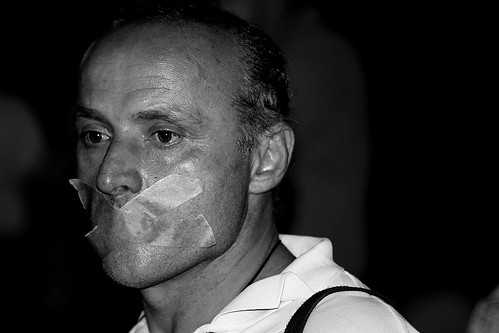
Protests against government's closure of public broadcaster, ERT continue in Thessaloniki, Greece., a photo by Teacher Dude's BBQ on Flickr.
Like so many plans that go badly array, it must have seemed a great idea, at least in the beginning. With a bold move, the Greek prime minister, Antonis Samaras would at once show the country's lenders that his flagging reform program was back on tracks and appeal to his conservative base by getting rid of a symbol of public sector extravagance. What could go wrong?
Unfortunately for the Greek government just about everything. The decision 11 days ago by the ministry of finance to announce the immediate closure of Greece's public broadcaster, ERT set in motion a series of events that is now threatening to bring down the uneasy coalition that has been in power since last summer's elections. The departure of the Democratic Left from the three party coalition yesterday in protest over the handling of the ERT affair has seriously weakened the PM's hand and revealed that just how unstable the partnership with PASOK has become.
This is just one in a series of political miscalculations that has turned a political gamble into a political nightmare for Samaras, both at home and abroad, garnering yet more criticism and negative publicity for the country at exactly the time the leadership has been boasting to any media outlet who would listen of its success in turning the economy around.
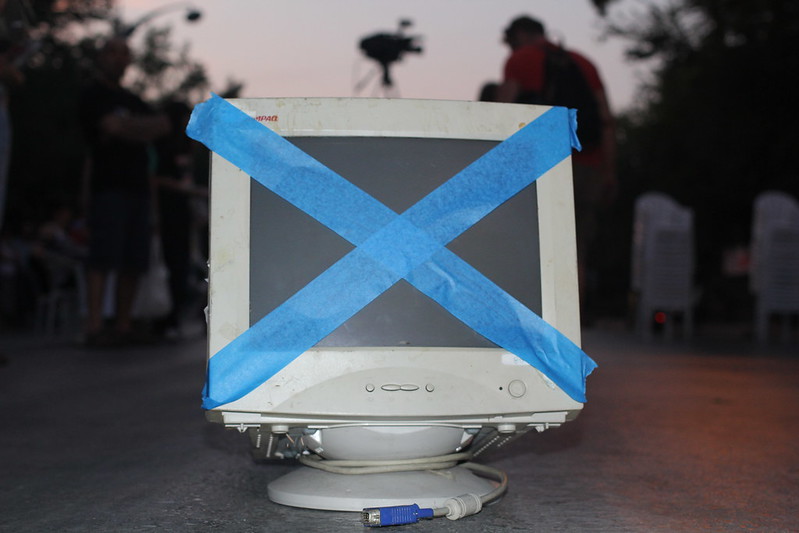
The live TV images of ERT reporters warning of impending police action only to be replaced by a black screen shocked many Greeks, especially among the older generation who had witnessed similar media black outs during the Regime of the Colonels (1967-1974). For foreign observers such as The European Broadcast Union and the Head of the BBC the sudden cutting off of a public broadcaster whilst on air was unprecedented in post war Europe and a direct attack on democratic values and freedom of the press.
Instead of a few days of protests by the employees of ERT which could easily be ignored by pro-government private media the government was faced with a media insurrection as journalists and technicians defied threats by the authorities to continue broadcasting, using internet live streaming, unused analogue signals, satellite etc. This, along with the social media storm created meant that thousands turned up outside state run studios in Athens, Thessaloniki and other cities to protect those inside from the riot police units that quickly deployed around such facilities.
Instead of stifling the voice of those working in ERT these actions encouraged people to find their signal in any way they could and demand via the live streaming channel provided by the EBU grew so rapidly it overwhelmed the site's capacity.
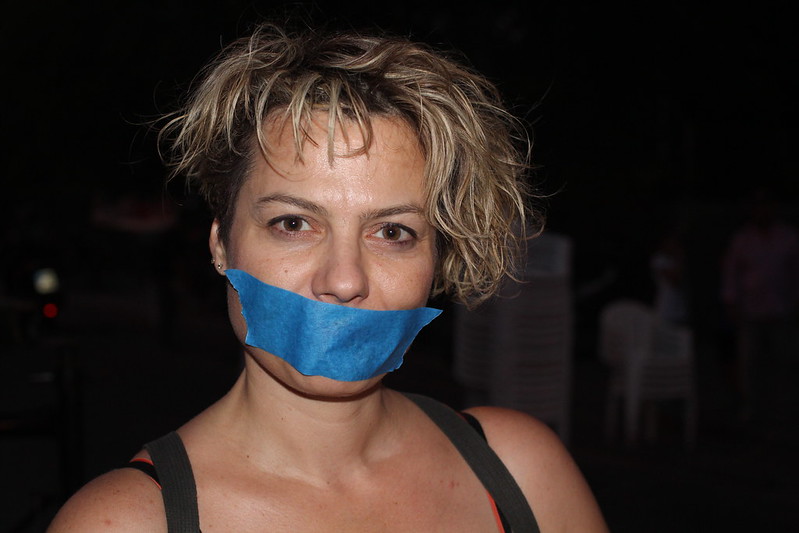
The quick surgical strike that New Democracy advisers had promised was now turning into a long drawn out and very public shouting match in which the government was being viewed as bullying autocrats rather than bold reformers taking on an arrogant publically funded elite. The decision by the Council of State that ERT be allowed to go back on air via its normal broadcast facilities was ignored so adding to the sense that Samaras was acting as if he and his ministers were above the law, a point the opposition SYRIZA party seized upon in order to appeal to disillusioned PASOK supporters, increasingly frustrated with their own party leadership.
Now the authorities are on the horns of a dilemma, if they back down over the ERT closure, then this will likely re-ignite anti-austerity opposition and provide a template for future battles over the sale off of publically owned power and water utilities. On the other hand a swift, police raid to empty the occupied broadcasting facilities would be a PR disaster, both at home and abroad as well as possibly shattering the fragile alliance with the PASOK party.
So, probably the government will be forced to play the long game, hoping that as time goes by ERT employees can be bribed or coerced into agreeing to a watered down version of the original closure plan
Sunday, June 16, 2013
ERT - Greek government embroiled in very public showdown with state run broadcaster.
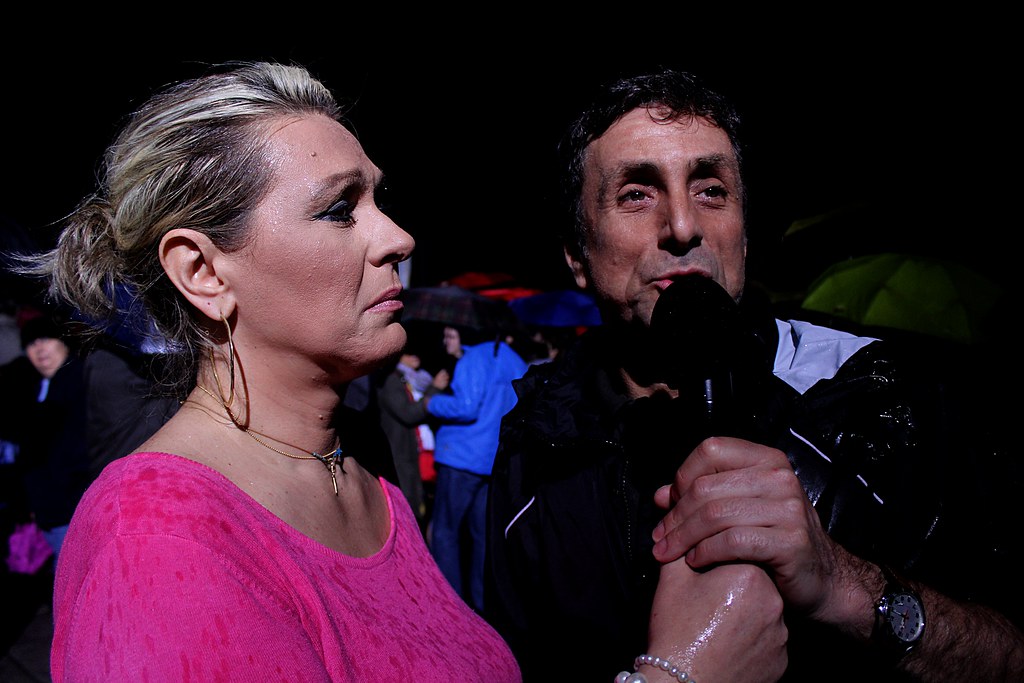
Sitting in the foyer of the ET3 studios, now being occupied by its own journalists and technicians the strangest thought crossed my mind; those who were part of the groups protecting the building included some of the station's most bitter opponents. The same people that have been so critical of the willingness of public broadcasters to toe the government line and allow politicians such a free hand in domestic affair were now willing to stay there day and night and risk injury in the event of a riot police raid. The irony of the situation was not lost on them.
The sudden decision by the Samaras government to shut down ERT on Tuesday took even insiders by surprise, no one I talked to, be they journalists or political activists had expected that such a move would happen so quickly. That the government was looking to subject ERT to the same kinds of cuts as suffered by other areas of the public sector was obvious but the swiftness of the closure left everyone wondering what was really behind the action.
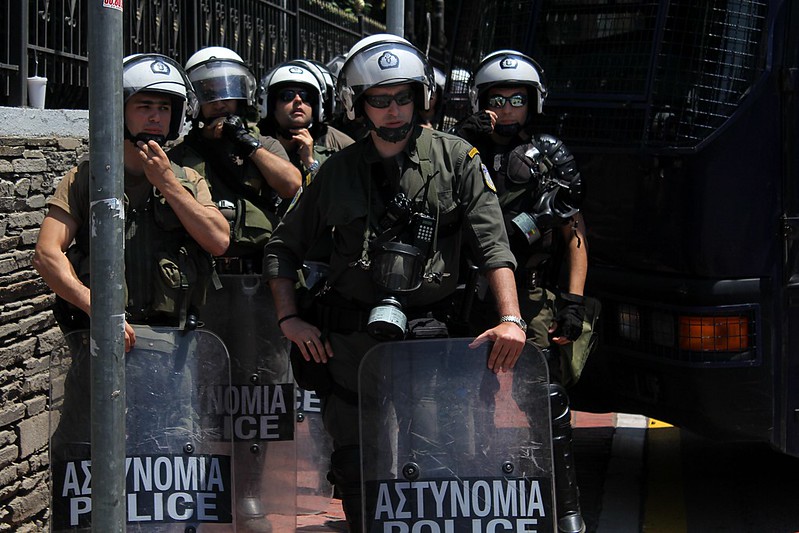
However, no one in the government, I suspect realised the the scale and determination of the reaction both from within Greece and abroad. Within hours technicians and journalists had stopped normal programming and were providing news and updates of the situation within the studios and suddenly, most miraculously of all, reporting on what was happening and not what they been told by the government party leadership to cover.
It was this change in reporting which most probably prompted the Greek prime minister, Antonis Samaras's decision to send in the riot police to shut down transmission facilities across the country and the privately run DIGEA service to threaten other TV channels when they attempted to re-broadcast ERT's signal. The idea of journalists who has been privy to so many of the back room deals, dirty political tricks and acts of censorship going public with their knowledge must have terrified politicians used to always getting their way whenever they appeared on the state run channels.
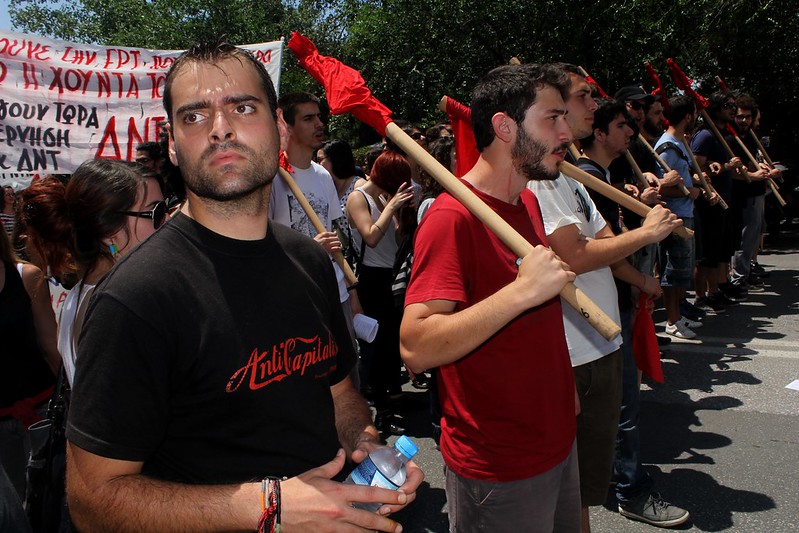
For many older Greeks the announcement by NET TV presenter that the riot police were on the move followed by a black screen brought back memories of the Regime of the Colonels that ruled the country with iron fist from 1967 to 1974. Like Spain, and Portugal the experience of living under a dictatorship is still a vivid part of Greek popular memory and not simply a footnote is a school history book.
Unlike the 1970's the shutting down of the ERT signal has proved more problematic and technician have defied the crackdown using internet broadcasting, satellite signals (provided by the European Broadcasting Union) and resurrected analogue frequencies to ensure that NET in Athens and ET3 in Thessaloniki are still on the air. In its turn the authorities have tried to thwart these moves, shutting off telephone and internet connections to ERT facilities and in many parts of Athens and Thessaloniki, platoons of riot police have been stationed just a few hundred metres from ERT facilities.
As many Greek Twitter users repeatedly wrote; support of ERT was about defending democracy and not the status quo, so even groups opposed to the idea of a state run broadcaster were willing to stand shoulder to shoulder with sacked journalists in the demonstrations, marches and concerts that have been taken place in Athens, Thessaloniki and other Greek cities over the last five days.
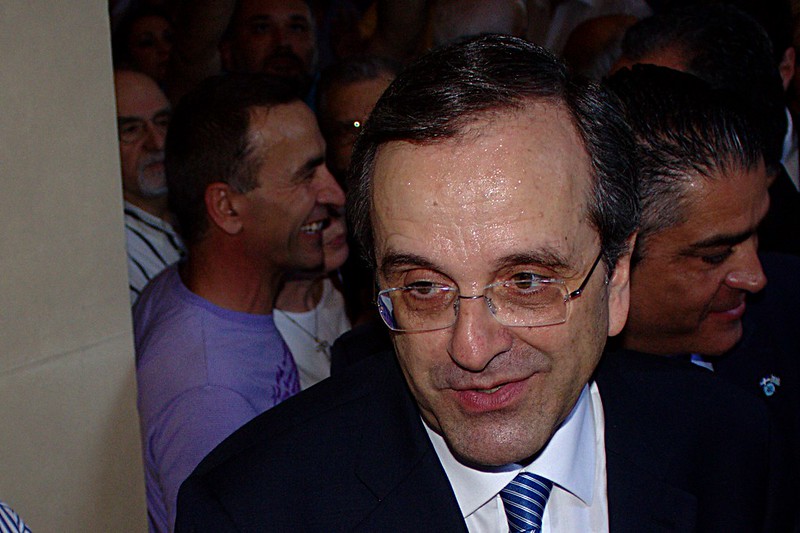
The reason and timing behind the ERT closure has been a source of speculation for many political analysts in the media and beyond. For some the closure was a diversionary tactic designed to draw attention from the failure of the Greek - Russia GAZPROM deal that the prime minister had hailed as a "success story".. For others the move is the opening shot in a new round of elections that will allow New Democracy to dump both PASOK and Democratic Left coalition partners who are both doing badly in the polls in order to form a new government that will allow them top act more freely.
For what It's worth I believe that the closure of ERT is a political gamble by Samaras, who sees it as a way to kill several bird with one stone. In firing 2,600 public employees in such a swift and dramatic manner he thinks that he'll win point abroad with the Troika (ECB, EU and IMF) who have repeatedly criticised Greece for dragging its feet over public sector reforms.
Domestically, Samaras feels he can still sell the idea that he is a bold reformer taking on a corrupt, wasteful public organisation that is a burden to the tax payer. And finally, the the loss of so many media outlets will play well with the local oligarchs, upon whose support he relies upon more and more. Their own media wings are hemorrhaging cash as the economy continues to shrink and ad money dries up.
However, the gamble may not have paid off, international reactions from have been far greater and far more critical than Athens had probably expected and even local popular support for ERT is much higher than Samaras had anticipated, with 65% of those questioned in recent VPRC poll saying they disagreed with the decision to shut down the broadcaster.
So what happens next? Hard to say, on the one hand the PM has acknowledged that the loss of the so many stations was hasty and has offered to re-instate a limited number of ERT employees to run a skeleton service yet in this mornings speech he vowed to shut down the public broadcaster.
As with so many aspectsof current Greek political policy decisions change from day to day, with political opportunism being more of a guide than any grand plan or ideology.
More on this story via Asteris Masouras at Global Voices.
Saturday, November 27, 2010
Wikileaks reveals secret talks between Washington and US embassy in Athens

Wikileaks reveals secret talks bewteen Washington and US embassy in Athens, originally uploaded by Teacher Dude's BBQ.
This is just a piece of satire, not to be taken seriously. Basically, its a parody of ex Greek PM Kostas Karamanlis who was widely ridiculed for his immense appetite and laziness.
Tuesday, October 12, 2010
Fiddling while Athens burns - Greek media's love affair with the political establishment shows no sign of ending
It's a measure of how far the Greek political system and its supporters in the local media are out of touch with the rest of the country that the recent uproar over the remarks by Jean Claude Juncker, head of Euro Group that been the subject of some much air time and print columns during the last few days. According to an off the record remark made by Juncker in Washington a Greek prime minister told him that Greece was a country of corruption, a revelation on par with learning that the French eat rather a lot of cheese or that it can get awfully cold in Russia.
The fact that Greece has one of the highest corruption indices in the European Union or that the present PM, Giorgos Papandreou made much the same comment after taking power in 2009 seems to have been ignored by the Greek political establishment and the country's media who went into a feeding frenzy in their attempts to identify which Greek PM had made such an outrageous statement. Kostas Simitis, head of the 2000-2004 PASOK run administration, Kostas Karamanlis, PM from 2004 till 2009 and finance minister Giorgos Papankonstantionou on behalf of current PM Giorgos Papandreou all rushed to say that they had said no such thing. (Juncker later made a statement saying that it was Giorgos Papandreou)
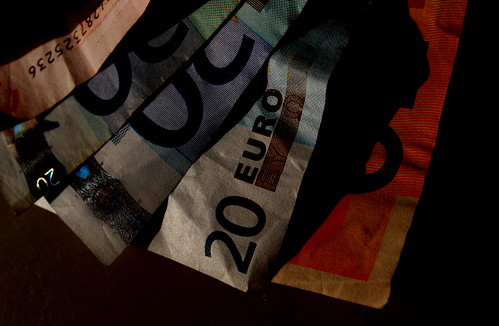
And so it has gone on, with endless speculation in the press as to exactly let the cat out of the bag. The fact that the Greek state is corrupt, of course comes as absolutely no surprise to anyone living in the country. Indeed Transparency International calculated that Greeks spent an average of 1355 euros in bribes in 2009.
Actually, the problem is not that the Greek political establishment turns a blind eye to corruption (see the Vatopedi land swap scandal) but rather everyone now knows. Worst of all, foreigners know just how venial Greek politicians are. How embarassing when one is putting one's best foot foward in Brussels, Strasburg or Washington that the rest of the world sees you as little more than a robber baron. For people as image conscience and ego driven as Greek politicans in power this comes as a terrible blow.
Perception, rather than reality is everything which is one of the reasons why the country is in such as mess. Why bother attempting to make difficult political decisions when all you need is a handful of IOUs and promises which you may or may not honour. Even now the opposition New Democract leader, Antonis Samaras is touring northern Greece in the run up to November's local elections giving his word to open factories, fund development and the like knowing full well that he would have no more financial freedom than the current PASOK administration to act. (The fact he was a cabinet minister in the previous government which ran up such huge debts seems to have slipped his mind at present).
Such a cavalier attitude to the truth also explains the chronic distrust of the average Greek concerning any promise politicians make. Indicative of this is the refusal of truck drivers to end recent industrial action despite promises by the government to discuss their demands. It wasn't until the proposals were put in writing that truckers agreed to stop strike action. Of course truck drivers know that even written reassurances mean little to politicians but it does give them a little less wiggle room.
But while the country's TV talking heads and their partners in crime and print have talked endlessly about what Juncker's statement means the country slides ever deeper into depression (both financial and psychological) with schools unable to pay fuel bills, hospitals running out of medical supplies and and an angry electorate bracing itself for a winter with 30% hikes in heating costs. For many patience is running out with the endless self - referential charade of the current political setup.
Just one more thing to consder, though when considering the role of corruption in the current financial debacle is that Iceland, whose per capita debt is even greater than Greece's, was ranked the world's 7th least corrupt government (Athens came in at 71) in 2008.
Subscribe to:
Posts (Atom)