Showing posts with label The Guardian. Show all posts

Thursday, February 27, 2014

Sunday, December 11, 2011

Looking back at 2011 in Greece

This week I received an email from the Guardian asking if I would like to contribute 200 words to an article on this year's events in Greece. Here is my reply.

"Greece has been through such upheavals that it's hard sometimes to separate all the different defining events, since the beginning of 2011 the country has seen changes that would have been inconceivable beforehand.

As austerity measures continue to grind the economy and population into the ground the reaction has been ferocious, with mass protests from groups as diverse as teenage would be anarchists and middle aged taxi drivers, both of whom I saw fighting riot police units in September.

On the other hand determinedly peaceful protests such as the Indignant movement which flourished in Spring were also violently put down in June, leaving people angry, confused and for the time being, without focus.

"Of all the demonstrations that took place in the last 12 months, perhaps the most decisive were those that saw politicians escaping from angry crowds nationwide during the annual 28th October No day parades. TV images of Greece's president being forced to flee in Thessaloniki, set in motion a series of events that led to the fall of the government of prime minister, Giorgos Papandreou, marking the end of a two - party system that has dominated Greek politics since the return to democracy in the 1970's."

Monday, October 25, 2010

The secret Iraqi war files - Al Jazeera


A great report by Al Jazeera on the Iraqi War Diaries which were released by Wikileaks. Be warned some of the images are very disturbing. The photographs of children covered in their parent's blood after their car was fired upon by US soldiers manning a check point are not likely to be forgotten any time soon by anyone who sees them.

Even the figure of 15,000 additional Iraqi dead is likely to be an underestimate according to professor Jacob Shapiro to the Guardian.

Monday, August 09, 2010

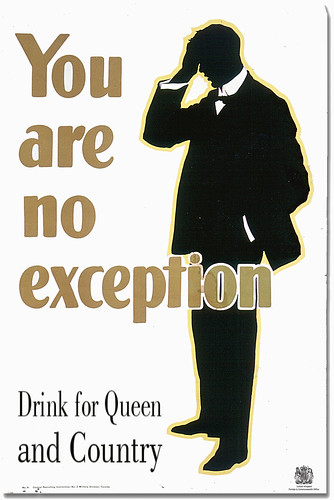
Drink for Queen and Country

Government keeps wine cellar contents under wraps

Foreign and Commonwealth Office claim full disclosure of £864,000 collection could 'influence the wine market'

Monday, July 19, 2010

The Guardian interview with Giorgos Papandreou - life style puff piece?

"He cuts through the water with agility and speed." gushes Helena Smith, the Guardian's Athens corresponent, who then goes on to describe Greece's embatted prime minister as "statuesque" and later swoons over his "Olympian stamina". Guys, get a room.

This kind of journalism was be hilarious if the story behind it was not so tragic and didn't involved the suffering of so many people. Yet, the Guardian's interview with Papndreou is yet another example of how shallow the foreign media's analysis of what is happening in Greece really is.

We find out from the hard hitting piece that, "you have to make tough decisions in politics" and that "as long as I feel I am doing what I think is right and just for my country, for the Greek people, that is enough for me." While Smith does mention the enormous problems that Greece faces, many the result of the policies adopted by Papandreou's own PASOK party when it was in power she allows many claims by the prime minister to go unchallenged.

For example Papandreou insists that he was unaware of the true extent of Greece's financial woes before taking power in September 2009, a claim that the governor of the Bank of Greece refuted in an interview with the investigative journalism TV show "Neoi Fakeloi" (New Folders) which aired on the Skai TV channel May 2010. According to Giorgos Pavopoulos both the former and present prime minister were told during the national election campaign that the country's national debt was rising fast and likely to reach 12% before the end of 2009.

On the other hand Papandreou is allowed to repeat without challenge the oft heard claims that his government will help mobilise youth to change the country through the setting up of new businesses, especially those connected with renewable sources of energy and "green" initatives. While the sentiments are admirable no details are given about such programs and how they are to be funded when money for services as basic as hospital supplies are drying up. Nor does it seem to be having effect on the growing problem of unemployment which is hitting young Greeks hardest of all with over 30% without work, a figure set to rise still further as the economy continues to shrink.

At no time is the fact that many economists belive that the current IMF/EU/ECB bailout plan is doomed to failure according to many of the world's leading economists who think that the austerity package is most likely to lead to a long term depression reminiscent of 1929. Instead the government's tired old line that the there are no alternatives to the measures is repeated and that the economy will be "reinvigorated". No wonder the interview was warmly and repeatedly quoted on the state run ERT TV news.

What we see is yet another example of how "access journalism" reduces reporters to little more than stenographers and cheer leaders for those in power and that by making so many compromises to gain access to their subject the whole point of a newspaper interview is subverted and allowed to become little more than a life style puff piece. The fact it makes its appearance in a newspaper as serious as the Guardian makes it all the more depressing.


Thursday, April 08, 2010

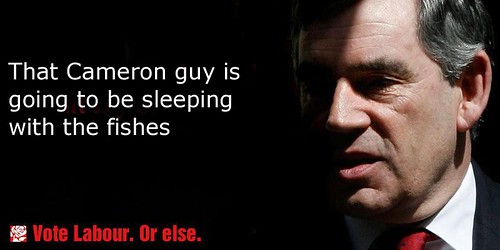
Gordon "godfather" Brown

"That Cameron guy is going to be sleeping with the fishes"

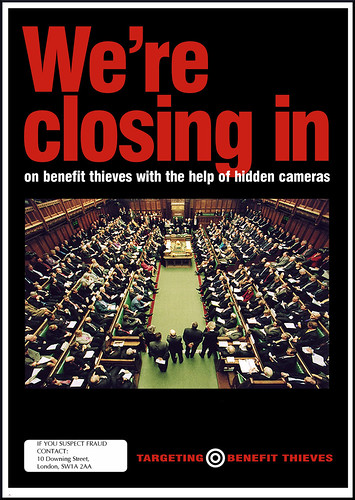
My take on the Guardian's April Fool spoof Labour campaign posters.


Tuesday, January 12, 2010

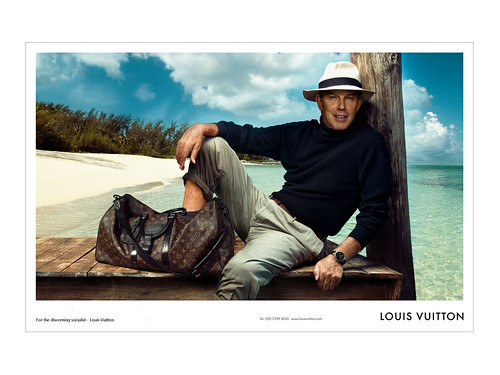
Tony Blair set to sign contract with Louis Vuitton

Tony Blair - The man, the politician, the fashion icon

"At last we have found Tony Blair's core ­principles, his true ­beliefs, the real third way. It is handbags. He is in the final stages of negotiating a job with Louis ­Vuitton Moët Hennessey. It not so much a corporation as a posh-brand pile-up on Millionaire's Row. Louis Vuitton is a shop that sells dog bags for £1,260 (breathable mesh window is included)."

Sunday, December 20, 2009

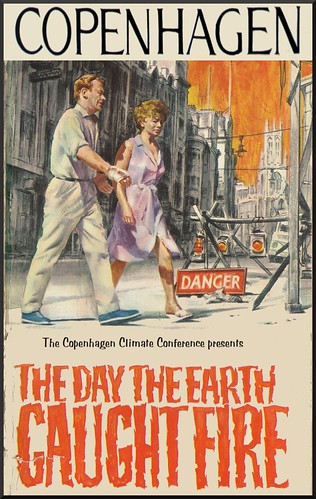
Copenhagen (COP15) - The Day The Earth Caught Fire

"John Sauven, executive director of Greenpeace UK, said: "The city of Copenhagen is a crime scene tonight, with the guilty men and women fleeing to the airport. Ed Miliband [UK climate change secretary] is among the very few that come out of this summit with any credit." It is now evident that beating global warming will require a radically different model of politics than the one on display here in Copenhagen."

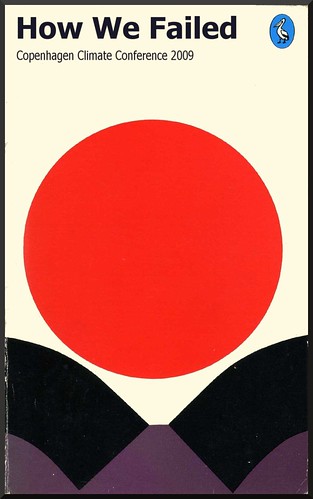
Looking back - Failure of the Copenhagen Climate conference 2009

Lydia Baker of Save the Children said world leaders had "effectively signed a death warrant for many of the world's poorest children. Up to 250,000 children from poor communities could die before the next major meeting in Mexico at the end of next year."

Wednesday, November 04, 2009

Gordon Brown accepts his ABC award for best newcomer on West Wing

Following hot on the heels of Hugh Laurie, Gordon Brown has taken the now well trodden path from British stage to Hollywood screen. Brown's guest appearance on the revival of the 90's classic TV drama, West Wing was enough to get him this year's ABC award for best newcomer.


Twitter News


How Gordon Brown paid West Wing Writers $40,000 for 'tailoring' speech


"Gordon Brown's speech to the US Congress in March earned no fewer than 19 standing ovations, a congratulatory call from President Obama and plaudits for its command of global economics and rousing call to action.

What American politicians did not know at the time was that at least some of it was the work of a Washington-based speechwriting company called West Wing Writers – which charged the prime minister $7,000 (£4,300) for its services."

The Guardian


Tuesday, November 03, 2009

Adventures in poster activism

Frontex - Libertas Securitas Justitia

"With the “road map of Stockholm” the EU and national governments go on to escalate their border regimes to a real war as Frontex’ role in militarising the borders will be strengthened once again. Many thousand people have died and drowned trying to cross the borders of Europe over the last years, hundreds of thousands have been detained and deported. Refoulement is a daily practice at all hot spots of the EU external border."


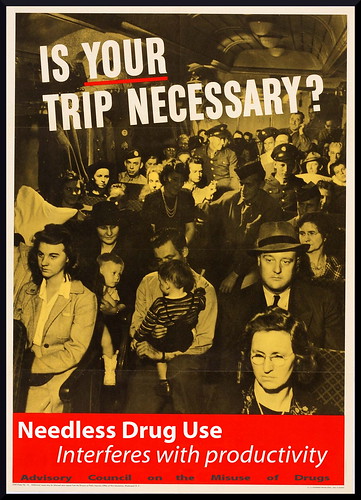
Is your trip really necessary?

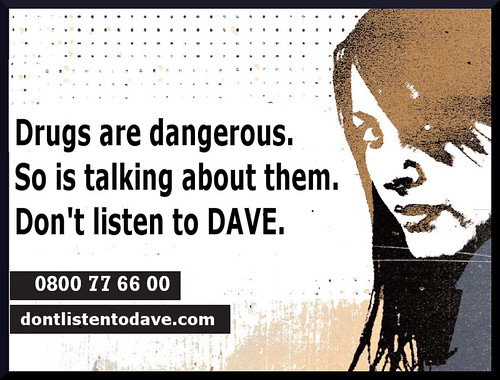
Don't listen to Dave


"The home secretary, Alan Johnson, is facing growing anger from scientists and government advisers over his decision to force the resignation of his senior drug adviser, David Nutt.

Two other senior scientific advisers to the Home Office told Nutt they were "horrified" at his treatment. The former chairman of the Advisory Council on the Misuse of Drugs (ACMD) told the Guardian that Dr Michael Rodd, a specialist in computing who sits on the Home Office Science Advisory Committee, and Professor Sheila Bird, a Cambridge University statistics expert who sits on the same committee, had written to him privately saying "they were unhappy with the way the Home Office had dealt with my case". Neither could be reached for comment."

The Guardian

All inspired by various stories that I came across during the week.

Wednesday, October 28, 2009

A. A. Gill's Planet of the Apes

It's a sad, sad day when a British upper class twit cannot massacre the animal of his choice without being criticised. I mean what did we have an empire for?

"Animal welfare groups voiced outrage today after the restaurant critic AA Gill said he shot a baboon on safari "to get a sense of what it might be like to kill."

Tuesday, October 13, 2009

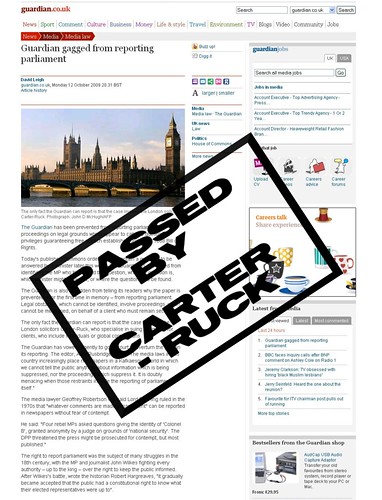
Trafigura / Carter - Ruck enter the Oxford English Dictionary

The next few months will prove to be an interesting time as far as oil trading company Trifigura and the law firm Carter-Ruck are concerned. After their failed attempt to gag the Guardian from reporting the proceedings of the British parliament, a legal action unprecedented in modern UK legal history, it seems that the Oxford English Dictionary is likely to have a number of new entries to next year's edition. Let me humbly suggest a couple of examples;

Main Entry: 1 Cluster - ruck
Pronunciation: \ˈkləs-tər - ˈrək\
Function: noun
Usage: often attributive
Etymology: derived from legal firm of Peter Cluster - Ruck
Date: 2009

1 : a collision of several unfortunate incidents happening all at once

2 : awful legal advice leading to public ridicule.

RUBAR , adj

Main Entry: 1Ru-bar
Pronunciation: \"ru-bər\
Function: adjective
Usage: often attributive
Etymology: Rucked Up Beyond All Recognition. Prob derivative FUBAR.
Date: 2009

1 : a situation caused by excessive use of legal measures in order to obtain a dubious result which reflects badly on those involved.

2 : lack of judgement leading to PR disaster.

Trafigurated, adj

Main Entry: 1 tra-fi-gu-rat-ed
Pronunciation: \ˈtra - fi - grə - atəd\
Function: adjective
Usage: derogatory
Etymology: derived from oil trading company Trifigura
Date: 2009

1 : to be publicly held to ridicule due to overweening arrogance

2 : to be in dire straits as a result of previous choices.

Carter - Ruck gag Guardian

Trafigura is proud to sponser the All New Guardian

"Today's published Commons order papers contain a question to be answered by a minister later this week. The Guardian is prevented from identifying the MP who has asked the question, what the question is, which minister might answer it, or where the question is to be found.

The Guardian is also forbidden from telling its readers why the paper is prevented – for the first time in memory – from reporting parliament. Legal obstacles, which cannot be identified, involve proceedings, which cannot be mentioned, on behalf of a client who must remain secret.

The only fact the Guardian can report is that the case involves the London solicitors Carter-Ruck, who specialise in suing the media for clients, who include individuals or global corporations."


Check out Twitter which is doing brisk business on the #trafigura trend.

Guardian gagging order backfires on Trafigura

The Streisand effect is when in trying to ban something you, in fact amplify it and bring it, inadvertently to a wider audience. Named after singer Barbra Streisand it is of course is not a new tactic as record companies from the 70's knew. Getting a record banned on radio or TV was great for business and often guaranteed top 10 sales.

In the latest example of the phenomenon is brought to us by Trafigura, an oil trading company based in London which has been trying to gag media coverage worldwide of illegal toxic waste dumping in the Ivory Coast. Despite repeated claims by the company that the waste was completely harmless Trafigura agreed to pay $100 million to 31,000 victims affected by exposure to toxic oil residues dumped just outside the country's capital, Abidjan. Since then Trafigura through it's legal representatives, Carter-Ruck has been waging a campaign across the globe to stop exposure of the incident. This has included law to gag media outlets in the UK, US, Norway and Holland. The latest round has included action against the Guardian newspaper which as it says in today's edition,

"Today's published Commons order papers contain a question to be answered by a minister later this week. The Guardian is prevented from identifying the MP who has asked the question, what the question is, which minister might answer it, or where the question is to be found.

The Guardian is also forbidden from telling its readers why the paper is prevented – for the first time in memory – from reporting parliament. Legal obstacles, which cannot be identified, involve proceedings, which cannot be mentioned, on behalf of a client who must remain secret.

The only fact the Guardian can report is that the case involves the London solicitors Carter-Ruck, who specialise in suing the media for clients, who include individuals or global corporations."

If Trafigura and Carter-Ruck hope to keep the lid on this story then I think they have sadly underestimated the new media landscape that the internet is in the process of creating. Such attempts to bury a story now produce exactly the opposite results as Trafigure already knows, finding itself at the centre of a web based maelstrom. Whatever happens in courts today the deaths and injuries caused by the toxic waste in landfills in Abidjan is likely to fill front pages for days to come.

In the time it took to write this artilce over 5000 new tweets tagged #trafigura have appeared on Twitter and has become one of the top trending topics on the micro-blogging service.

Monday, July 27, 2009

Building walls - smashing fences: the media and web 2.0

It's Ok, I'm with the Media

As many of you who read this blog know one of my passions is for citizen journalism, an amorphous term that covers any number of sins and situations but which roughly means the covering of news stories by non-media professionals. The rise of the internet and especially sites that allow people to post their own material on the web have also allowed people to not only comment on what is happening in the news but also produce the news themselves.

At the same time traditional media organisations such as newspapers have entered a period of crisis and introspection. It is clear now that In America, Europe and many other parts of the world the internet has eroded (possibly fatally?) the traditional business models on which these organisations operate.

For many this is a source of great trepidation not simply because of loss of job security but also due to the wider social and political implications of having a weakened media sector. However, recently I have come across two news stories which makes it much harder for me I find it hard to sympathise with those in the news industry .

The first is the announcement by the Associated Press news agency that it is now going to use digital rights management (DRM) technology to control who uses its material. Tom Curley, A.P.’s president and chief executive put it more succinctly, when he said that nobody would be allowed to use their material without signing an agreement. In everyday terms this means that anyone who copies even a headline or a link without permission may find themselves in court facing charges.

The aim of this measure is to claw back revenue being lost by the newspaper industry to internet sites. Somehow I feel that King Canute has returned to our wired age and instead of demanding the tides not roll back in has commanded that people do not copy and paste. I think that the results are as predictable as Canute’s efforts in the sea off Bosham.

DRM has proven stunningly ineffective in the music industry where 95% downloaded music is illegal. In addition we see whole industries devoted to the use of such illegal products. Do the nice people at Apple really believe that your average customer walks around with thousands of dollars of legally obtained music in their pocket? If that were true we’d all be mugging ipod users at the drop of a hat since their devices would be worth more, ounce for ounce than platinum.

The other article that caught my eye was this one by Roy Greenslade in the Guardian commenting on how journalism in Britain has become one of the country’s most socially exclusive professions. According to the Alan Milburn report, Unleashing Aspiration, it is becoming "one of the most exclusive middle-class professions of the 21st century"

By turning journalism into a graduate career the news industry has made it less and less accessible as an option for huge sections of the population. The demand for university qualifications and the ubiquitous use of unpaid internships means that only those from well off backgrounds can afford to the lengthy and costly process of becoming a professional journalist.

Once again education is used as an agent of social exclusion and when that fails the oiks can simply be starved out by demanding that they work without pay for years on end.

Unlike say medicine, law or architecture the growing demands for better and better qualifications in journalism seem to make little sense to outsiders. Although there is a whole raft of skills that have to be acquired by the professional reporter, the job does not require, in most cases the assimilation of a vast body of knowledge as is the case with say, medicine. Instead it depends on the ability to turn amorphous, often contradictory bits of information into readable copy. A skill most likely to be learnt through practice rather than academic study.

Indeed for most of the last 400 years this is exactly what happened since people trained on the job, most often without the need for a university education. Can anyone really say that today’s media organisations, with their news rooms full of BA’s, MAs and whatnot produce a higher quality product than ever before?

As with the case of Associated Press, the news industry has shown that it is, in fact all about exclusion. Building chain fences both socially and economically. So when media professionals complain about bloggers and others attacking them or taking jobs then it’s very hard to feel sympathy for those who have spent their whole lives trying to benefit from a system that is designed to keep others out.

Thankfully, these tactics are becoming less and less viable as the internet becomes a driving force in the way we produce and consume news. The ability of ordinary people from every social stratum to contribute means that more and more groups can take part in deciding what becomes news, what is considered important and how it is interpreted.
Thursday, July 09, 2009

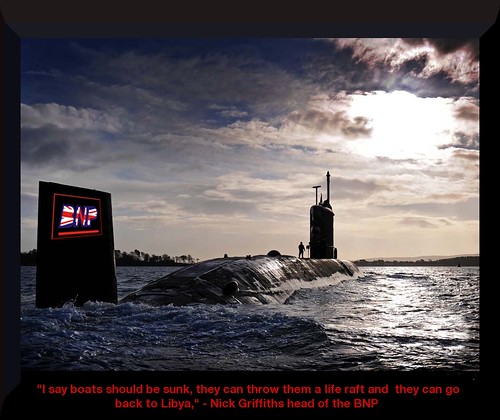
"I say boats should be sunk, they can throw them a life raft and they can go back to Libya" - Nick Griffin on immigration


"I say boats should be sunk, they can throw them a life raft and they can go back to Libya" - Nick Griffin on immigration, originally uploaded by Teacher Dude's BBQ.

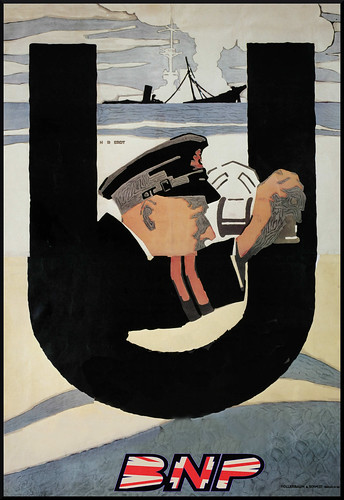
Thanks to the actions of Capt Nick and his valiant crew of white supremacists another cargo vessels containing hundreds of undesirables finds its rightful place at the bottom of the Med. It is thanks to people like Nick Griffin that Fortress Europe is safe from the unwashed hoardes who threaten to swamp our sacred homeland. Thanks Nick, the next torpedo is on us.


"Boats carrying illegal migrants to Europe should be sunk Nick Griffin, the leader of the British National party, said yesterday.

In a provocative intervention, Griffin, elected to the European parliament last month, called on the EU to introduce "very tough" measures to prevent illegal migrants entering Europe from Africa.

"I didn't say anyone should be murdered at sea – I say boats should be sunk, they can throw them a life raft and they can go back to Libya," Griffin said."


"I say boats should be sunk, they can throw them a life raft and they can go back to Libya" - Nick Griffin on immigration

Sometimes words escape you. Sometimes you read or hear something so outrageous that your mind at first fails to fully comprehend the significance of it. I read in today's Guardian that the head of British far right BNP party, Nick Griffins said that the EU should sink ships carrying immigrants to Europe.

So firing upon innocent people and leaving them to die in open seas is OK. What the hell? They're not "civilised", so they wouldn't be able to fit in with "advanced" societies that produce such morally upstanding individuals as Griffin. And to think this piece of trash was elected the European parliament last month.

"Boats carrying illegal migrants to Europe should be sunk Nick Griffin, the leader of the British National party, said yesterday.

In a provocative intervention, Griffin, elected to the European parliament last month, called on the EU to introduce "very tough" measures to prevent illegal migrants entering Europe from Africa.

"I didn't say anyone should be murdered at sea – I say boats should be sunk, they can throw them a life raft and they can go back to Libya," Griffin said."

Saturday, July 04, 2009

Blogs c1998 - 2009 RIP?

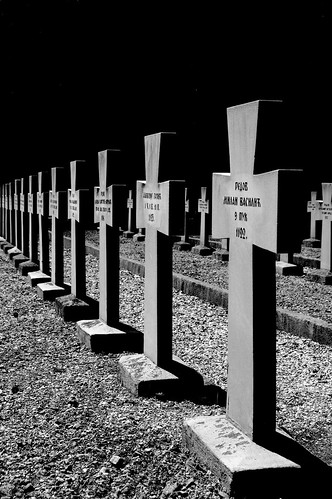
Serbian cemetry

I just finished reading an article by Charles Arthur on the Guardian website that seems to imply blogging is on its way out, the victim of its younger, flashier cousins, Facebook and Twitter. According to a Technorati study quoted in the New York Times as well just 7.4 million of the 133 million blogs in existence were updated in the three months covered. Actually, this sounds about right, as when I think of all the blogs I have set up for myself or others over the last few years most have fallen by the wayside. The result of lack of interest of my part and that of my students.

Ironically, I blog far more frequently on this blog now than in the past, usually finding time to add something most days whereas when I started I doubt if I posted more than once a week, sometimes less. I guess that blogging is not for everyone. If you are interested in keeping in contact with your friends and family then Facebook makes far more sense. Also Twitter is much easier to handle since all you have to do is write no more than a handful of sentences, if that.

I think it was inevitable that blogs, which were some of the first platforms that allowed non - technically minded folk to add stuff to the internet would cede their role to more suitable applications. One size does not fit all and for every person who wants to write a 2000 word op - ed there are hundreds who just want to know what their friends did last night at the party.

Similarly, the whole "wow" factor that goes with any new innovation also wears off and what you're are left with is a tool, which has to be used well if you want to get people's attention. So blogging has become just another way of connecting with others on the web, part of a range of ways of communicating with a wider audience. As a result the initial wave of people starting blogs was never going to be sustainable.

Also I have noticed that the way blogs are being used is changing, origially they were considered to be some kind of diary which I suppose people were meant to keep up for years. Now blogs are being set up for a specific duration, designed to get a message out and then left when no longer needed.

Actually, because we have got over the hype connected with blogs and the whole web 2.0 phase we can now think about much more fundemental questions such as what is it I want to share? Now I guess people are thinking more carefully about what they want to say as opposed to simply stating that they have a presence on the internet. Once again when the technology becomes boring the social implications become fascinating.

Friday, June 19, 2009

UK MPs: "We're not paid enough"

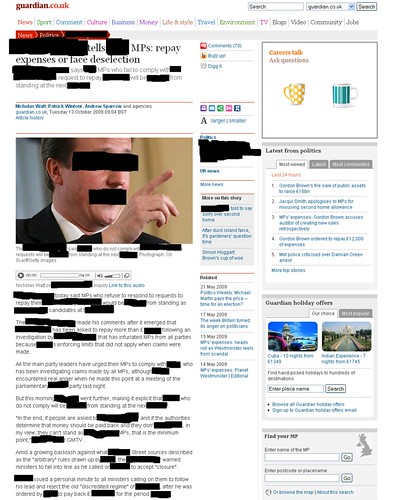
"MPs were accused yesterday of a massive cover-up of their expenses after the Commons authorities released hundreds of thousands of claims documents and receipts with huge sections of detail blacked out.

Amid renewed public anger over the scale of Westminster's spending habits, the documents contained enough fresh information to create new embarrassment for senior politicians.

David Cameron was forced to pay back an extra £947, the shadow chancellor, George Osborne, was reported to the parliamentary commissioner for standards and Gordon Brown was revealed to have charged the taxpayer almost £6,500 to green his second home in Scotland.

Even Tony Blair found himself under the spotlight after the documents revealed that he had claimed almost £7,000 for roof repairs two days before leaving office and standing down as an MP.

With MPs reeling from public anger at the extent of their claims, Bill Cockburn, the chairman of the body responsible for setting their pay, chose yesterday to suggest that MPs deserve a pay rise of up to £10,000 a year, arguing that they were underpaid by 10-15%.

It was also disclosed that 184 MPs – over a third of the Commons – have agreed to pay back nearly £478,000 in inappropriate claims, including Brown and ministers Douglas Alexander, Alistair Darling, Yvette Cooper, David Miliband, Ed Balls, Rosie Winterton, Andy Burnham and the former home secretary Jacqui Smith."


Tuesday, May 12, 2009

Average (UK) MP's expenses cost taxpayer £118,000

The average MP cost taxpayers £118,000 in allowances and expenses last year, it was revealed yesterday when the House of Commons opened its books in an attempt to counter accusations of fiddling and sleaze.

MPs are paid £57,485, but figures published for the first time show that the additional total allowances have climbed to £78m, an increase of more than £20m within two years.

Amounts paid out for housing, constituency offices, staff, travel, computers and other items, released as part of the move towards freedom of information, varied widely between neighbouring MPs in the same political parties, the figures show.

The Commons figures were made public as a report by the senior salaries review board recommended a particularly harsh deal for MPs and ministers, pegging salary rises next year to a below inflation 2% and increasing by 1% contributions to an admittedly generous pension scheme.

Peers, however, are in line for a boost of up to 20% under proposals to raise daily atten dance allowances by £11 to £75, overnight expenses from £128 to £150, and daily office awards from £53.50 to £65.

MPs have enjoyed a number of sizeable pay rises and holding down next April's award will avoid a possible controversy before an expected general election in May.

Sir Archy Kirkwood, the Liberal Democrat MP who speaks for the Commons commission which published the expenses figures, said: "This is a significant step towards openness and accountability and I welcome it. The taxpayers can really see how their money is being spent."

Sir Archy, MP for rural Roxburgh and Berwickshire, may have been relieved to discover he claimed several thousands of pounds less than the average in 2003-4.

MPs are meant to produce receipts for bills of more than £250 and publication of detailed figures follows a series of disputes over expenses claims, culminating in £90,000 repaid by Michael Trend, Conservative MP for Windsor, for a London home he did not possess. Mr Trend is to stand down at the election.

The bulk of claims cover staff costs, although MPs from the Speaker, Michael Martin, down have been criticised in the media for employing relatives.

An out-of-town allowance up to a maximum £20,033 open to all MPs except those representing inner London constituencies has also proved to be controversial, with some parliamentarians buying flats from which they keep any capital gains when they retire or lose their seats.

The £80,836 claimed by Tony Blair put him in the bottom 10 MPs. But the prime minister, who has accommodation in Downing Street and Chequers provided by the state, was still able to claim to run his Sedgefield constituency home, which doubles as an office, as were other cabinet ministers with grace-and-favour apartments, including John Prescott, Margaret Beckett and David Blunkett.

The Tory leader, Michael Howard, claimed £126,658 and the Liberal Democrat leader, Charles Kennedy, £121,630 in 2003-04.

The highest sum claimed was £168,889, by Claire Curtis-Thomas, Labour MP for Crosby, and the least, £56,657, by Mr Trend since his fall from grace.

Top of the travel claims was a Scottish MP, East Lothian's Anne Picking, with £39,744, while Siobhain McDonagh, of Mitcham and Mordern, spent more than £40,000 on paper and postage to write to her constituents.

Stephen Pound, Ealing North MP, who claimed £111,000 in 2003-04, said it was the equivalent of 3p each year for each of his electors.

"This is not about filling our boots," he said. "This is not about trousering a lot of money. This is about the money it takes to do the job."

The senior salaries review board recommended that judges' salaries go up by 2.5% and senior military officers' by 2.8%, with senior civil servants receiving up to 9%.

Both peers and MPs are to lose their generous 57p mileage allowance for their first 20,000 miles of motoring. It will be cut to 40p a mile for the first 10,000 miles and 25p a mile thereafter.

MPs' staff allowance goes up from £66,458 a year to £72,000 and to more than £80,000 for London MPs.

www.guardian.co.uk/politics/2004/oct/22/houseofcommons.uk