Sunday, November 07, 2010
Saturday, November 06, 2010
Tripe and trotters
Recipe for Patsas (Greek tripe soup) can be found here
http://www.greek-recipe.com/static/content/Tripe_Soup.html
Labels: patsas, thessaloniki greece photography, tripe soup, trotters, Ελλαδα, Θεσσαλονίκη, πατσας
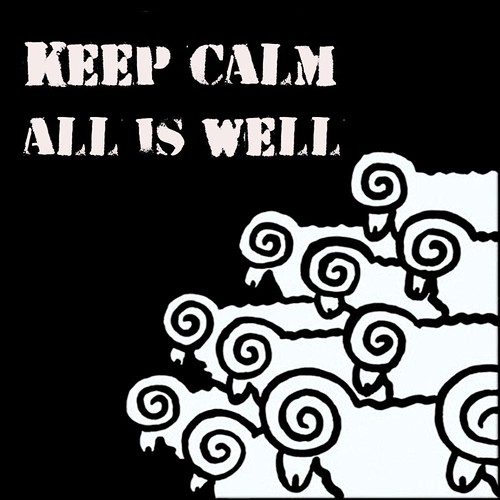
ΜΗΝ ΑΝΗΣΥΧΕΙΤΕ! Είναι η μεγάλη μας ευκαιρία να κάνουμε όλες τις αλλαγές για την Ελλάδα
"DON'T WORRY - This is our great opportunity to change Greece"
Labels: . Greece, cartoons, giorgos papandreou, greek economic crisis, parody and satire, PASOK
Thursday, November 04, 2010
Show them the money - Business as usual in run up to Greek local elections
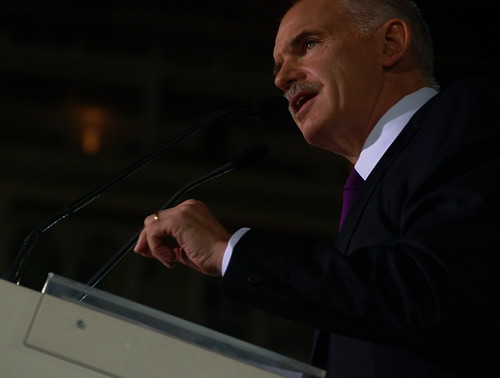
With Greece set to go to the polls on Sunday the pressure on prime minister Giorgos Papandeou to avert electoral disaster for the ruling PASOK party grows ever stronger and so the sudden slew of government promises to the unemployed, mothers and pensioners over the last few weeks. Today brought the promise of 1000 euros for every unemployed Greek in the form of coupons which can spent on training and education. In addition the state run ERT news service reported that mothers with childen under 18 who have the requisite number of national insurance stamps will be still able to retire early and comes hot on the tail of Athens promise to give retirees an extra 300 euros in December.
Of course, none of this is new and very much marks business as usual as far as election campaigning is concerned. Just as PASOK has promised to fund training through coupons Kostas Karamanlis's New Democracy administration also promised to give every school pupil entering junior high school 450 euros which could be used to buy a computer in the run up to 2009 general elections. However, such campaign pledges have been seen by much of the press and public as an attempt to buy votes by promising one - off payments in return for support on Sunday.
The coupon scheme in particular smacks of last minute panic and provides a classic example of how the Greek economy got into its present mess. Public money is desperately flung around in order to bolster support for the party in power leading to huge costs and minimal benefit for the country as a whole.
The idea of giving those out of work the chance to upgrade their skills is based on sound logic, at least at first glance but is doomed to failure for a number of reasons which the government is probably well aware of.
1 - First and foremost where is the money going to come from? Even if the EU provides 50% of the funding, with the official unemployment rate at 12% and rising fast this means hundreds of millions will be need to be spent to train the unemployed. Currently, the country is having difficulty raising money to pay basics such as medical supplies to hospitals, back wages to government employees and even heating in schools.
2 - Who is going to provide such training and under what oversight? Much of Greece's private education and training is subject to few checks and inspections (I worked 20 years in various language schools and never witnessed a single inspection). Given such lax rules the possibility of abuse and fraud is ever present. The reality is that many such institutions only survive through connections with corrupt local officials and politicians who mandate who gets sent where. In such an environment the chances of getting the high quality training most modern economies demand is limited.
3 Lack of training and education is not the cause of the present unemployment crisis.Indeed unemployment is highest amongst the young who have far more qualifications than previous generations. The problem is not lack of skills but lack of businesses that can utilise the massive pool of talent already available.Put bluntly, the economy can only absorb a fraction of the educated youth entering the job market every year.
4 The availability of coupons will push up prices for those who do not qualify and wish to do training courses. The example of the one lap top per student scheme introduced last year by the conservatives is a recent example of how the private sector raised prices of computers to make the most of the coupon scheme implemented. While it allowed students and parents to buy PCs it also pushed up prices meaning that everyone else wanting to buy such equipment paid more.
5 As with the measures promised mothers and pensioners it is a one off measure that does not deal with more fundamental issues such as what is going to happen to the present wave of people made redundant when their unemployment benefits run out in six months time.
The economy is in free fall and with two businesses closing for every one that opens the future for Greece's most vulnerable groups looks bleak with a bankrupt, mismanaged state leaving the poorest to fend for themselves. Likewise the electorate is rapidly losing faith in any political party to offer a way out of the impasse Greece finds itself in and promises of yet more money and funding is convincing ever fewer voters.
Of course, none of this is new and very much marks business as usual as far as election campaigning is concerned. Just as PASOK has promised to fund training through coupons Kostas Karamanlis's New Democracy administration also promised to give every school pupil entering junior high school 450 euros which could be used to buy a computer in the run up to 2009 general elections. However, such campaign pledges have been seen by much of the press and public as an attempt to buy votes by promising one - off payments in return for support on Sunday.
The coupon scheme in particular smacks of last minute panic and provides a classic example of how the Greek economy got into its present mess. Public money is desperately flung around in order to bolster support for the party in power leading to huge costs and minimal benefit for the country as a whole.
The idea of giving those out of work the chance to upgrade their skills is based on sound logic, at least at first glance but is doomed to failure for a number of reasons which the government is probably well aware of.
1 - First and foremost where is the money going to come from? Even if the EU provides 50% of the funding, with the official unemployment rate at 12% and rising fast this means hundreds of millions will be need to be spent to train the unemployed. Currently, the country is having difficulty raising money to pay basics such as medical supplies to hospitals, back wages to government employees and even heating in schools.
2 - Who is going to provide such training and under what oversight? Much of Greece's private education and training is subject to few checks and inspections (I worked 20 years in various language schools and never witnessed a single inspection). Given such lax rules the possibility of abuse and fraud is ever present. The reality is that many such institutions only survive through connections with corrupt local officials and politicians who mandate who gets sent where. In such an environment the chances of getting the high quality training most modern economies demand is limited.
3 Lack of training and education is not the cause of the present unemployment crisis.Indeed unemployment is highest amongst the young who have far more qualifications than previous generations. The problem is not lack of skills but lack of businesses that can utilise the massive pool of talent already available.Put bluntly, the economy can only absorb a fraction of the educated youth entering the job market every year.
4 The availability of coupons will push up prices for those who do not qualify and wish to do training courses. The example of the one lap top per student scheme introduced last year by the conservatives is a recent example of how the private sector raised prices of computers to make the most of the coupon scheme implemented. While it allowed students and parents to buy PCs it also pushed up prices meaning that everyone else wanting to buy such equipment paid more.
5 As with the measures promised mothers and pensioners it is a one off measure that does not deal with more fundamental issues such as what is going to happen to the present wave of people made redundant when their unemployment benefits run out in six months time.
The economy is in free fall and with two businesses closing for every one that opens the future for Greece's most vulnerable groups looks bleak with a bankrupt, mismanaged state leaving the poorest to fend for themselves. Likewise the electorate is rapidly losing faith in any political party to offer a way out of the impasse Greece finds itself in and promises of yet more money and funding is convincing ever fewer voters.
Labels: greek economic crisis, greek local elections 2010, New Democracy, PASOK, politics, unemployment. Greece
Monday, November 01, 2010
Will Greece go to the polls in December? The elections no one wants to win.
In contrast to previous years the run up to the local elections in November is a lacklustre affair without the usual frenzy of electioneering that marks Greek politics. In the streets few people are particularly riveted by the choices on offer and despite a concerted effort by the media to inject drama into the event many have turned their back on politicians, and instead are concerned with more immediate worries such as paying the bills and making ends meet.
No one in the present political set up, either on the left or the right set up has been able to turn an intense feeling of voter dissatisfaction into concrete electoral support. Obviously, the great loser in all this is the centre left PASOK party led by prime minister Giorgos Papandreou whose popularity has nose dived in the wake of the austerity measures imposed at the behest of the EU, ECB, IMF troika. However, the main opposition party, the conservative New Democracy has been unable to made much headway in the polls tainted as they are by their role in the country's economic meltdown. Even their newly elected leader Antonis Samaras's populist rhetoric has failed to convince many other than the party faithful.
On the other hand smaller parties of the left and right of the two main parties are also struggling to generate voter interest. On the far right LAOS, led by Giorgos Karatzaferis has failed to poach votes from New Democracy in the numbers it was expecting, the result, in part of its parliamentary support of the PASOK in passing the legislation and measures demanded by Greece's lenders.
Nor is the picture much better on the left with people wary of the Greek Communist party's old school ideological stance and its unwavering allegiance to the state run socialist economic model favoured by the Soviet Union in its heyday. The other reformist left wing coalitions languish in the polls, internally divided and struggling to get their message across in the media.
Underlying the growing indifference of Greek voters to the choices on offer is the realisations that whoever is in power their ability to change the present economic climate is limited as virtually all major economic decisions taken have to be okayed in Brussels, Strasburg and Washington. In addition an even deeper feeling of distrust of those in power comes from the deeply rooted idea that the country's rules are above the law and so free to abuse their position. This is hardly a new innovation and one that is central to modern Greek mindset but what has changed is the fact that the political caste's greed and incompetence has brought the nation to the edge of the abyss and so is no longer considered the acceptable price of getting things done.
Such extreme notions are reinforced by parliament's handling of recent corruption and bribery scandals involving the cases such asVatopedi Monestary, Siemens and the 2004 Athens Olympic games. These are just a few of the dozens of scandals that have racked Athens over the last few years and yet despite endless investigations not one politician has been convicted of a single misdemeanor, let alone spent time in jail. Many ordinary Greeks have come to the conclusion that whoever is in power, nothing will change and that once in charge the first priority of politicians is to line their own and their family's pockets at the expense of everyone else.
Given such cynicism and anger political analysts and leaders both left and right are worried about how this backlash will effect the vote in November and how the political landscape will be changed. Already the prime minister has warned that a major defeat for his party may result in the country going the polls again in a round new parliamentary elections. The national daily, Nea also published reports that Papandreou is considering a snap election as soon as December 12th in such an eventuality.
For Papandreou and many others the November elections are in reality a referendum on the bailout package and should his party lose badly that would require his government seek a new popular mandate. On the other hand political commentators have interpreted his words as political blackmail, a high stakes bluff aimed at getting reticent PASOK voters to the polls. If so, the costs of such a strategy are high indeed with the world's money markets jittery over the prospect of a change in government in Athens. Over the week Greek CDS's soaring once again above 800 points reflecting the financial world's unease at the prospect of a vote.
If Greece does go to the polls in December, both Papandreou and Samaras face the same dilemma that whoever wins is in no position to change the basic parameters of the current bailout deal and therefore will be associated in the popular imagination with job losses, painful spending cuts and a severe economic downturn.
The trick will be how to run a credible campaign yet not win, a feat the previous New Democracy leader, Kostas Karamanlis pulled off during his lukewarm campaign in 2009. Faced with immediate financial meltdown Karamanlis called early elections is September much to the annoyance of members of the party who wanted to wait till Spring 2010. However, they were unaware of just how dire the country's finances were and that by running early and losing New Democracy would still remain a coherent political force that could present itself as a credible alternative to PASOK once they had dealt with the financial mess at huge political cost.
Like the card game Black Maria in which the aim is to foist the Queen of Spades unto your opponent both main parties are supposedly gearing up to slug it out at the polls whilst secertly hoping that they will not have the misfortune to be in power.
No one in the present political set up, either on the left or the right set up has been able to turn an intense feeling of voter dissatisfaction into concrete electoral support. Obviously, the great loser in all this is the centre left PASOK party led by prime minister Giorgos Papandreou whose popularity has nose dived in the wake of the austerity measures imposed at the behest of the EU, ECB, IMF troika. However, the main opposition party, the conservative New Democracy has been unable to made much headway in the polls tainted as they are by their role in the country's economic meltdown. Even their newly elected leader Antonis Samaras's populist rhetoric has failed to convince many other than the party faithful.
On the other hand smaller parties of the left and right of the two main parties are also struggling to generate voter interest. On the far right LAOS, led by Giorgos Karatzaferis has failed to poach votes from New Democracy in the numbers it was expecting, the result, in part of its parliamentary support of the PASOK in passing the legislation and measures demanded by Greece's lenders.
Nor is the picture much better on the left with people wary of the Greek Communist party's old school ideological stance and its unwavering allegiance to the state run socialist economic model favoured by the Soviet Union in its heyday. The other reformist left wing coalitions languish in the polls, internally divided and struggling to get their message across in the media.
Underlying the growing indifference of Greek voters to the choices on offer is the realisations that whoever is in power their ability to change the present economic climate is limited as virtually all major economic decisions taken have to be okayed in Brussels, Strasburg and Washington. In addition an even deeper feeling of distrust of those in power comes from the deeply rooted idea that the country's rules are above the law and so free to abuse their position. This is hardly a new innovation and one that is central to modern Greek mindset but what has changed is the fact that the political caste's greed and incompetence has brought the nation to the edge of the abyss and so is no longer considered the acceptable price of getting things done.
Such extreme notions are reinforced by parliament's handling of recent corruption and bribery scandals involving the cases such asVatopedi Monestary, Siemens and the 2004 Athens Olympic games. These are just a few of the dozens of scandals that have racked Athens over the last few years and yet despite endless investigations not one politician has been convicted of a single misdemeanor, let alone spent time in jail. Many ordinary Greeks have come to the conclusion that whoever is in power, nothing will change and that once in charge the first priority of politicians is to line their own and their family's pockets at the expense of everyone else.
Given such cynicism and anger political analysts and leaders both left and right are worried about how this backlash will effect the vote in November and how the political landscape will be changed. Already the prime minister has warned that a major defeat for his party may result in the country going the polls again in a round new parliamentary elections. The national daily, Nea also published reports that Papandreou is considering a snap election as soon as December 12th in such an eventuality.
For Papandreou and many others the November elections are in reality a referendum on the bailout package and should his party lose badly that would require his government seek a new popular mandate. On the other hand political commentators have interpreted his words as political blackmail, a high stakes bluff aimed at getting reticent PASOK voters to the polls. If so, the costs of such a strategy are high indeed with the world's money markets jittery over the prospect of a change in government in Athens. Over the week Greek CDS's soaring once again above 800 points reflecting the financial world's unease at the prospect of a vote.
If Greece does go to the polls in December, both Papandreou and Samaras face the same dilemma that whoever wins is in no position to change the basic parameters of the current bailout deal and therefore will be associated in the popular imagination with job losses, painful spending cuts and a severe economic downturn.
The trick will be how to run a credible campaign yet not win, a feat the previous New Democracy leader, Kostas Karamanlis pulled off during his lukewarm campaign in 2009. Faced with immediate financial meltdown Karamanlis called early elections is September much to the annoyance of members of the party who wanted to wait till Spring 2010. However, they were unaware of just how dire the country's finances were and that by running early and losing New Democracy would still remain a coherent political force that could present itself as a credible alternative to PASOK once they had dealt with the financial mess at huge political cost.
Like the card game Black Maria in which the aim is to foist the Queen of Spades unto your opponent both main parties are supposedly gearing up to slug it out at the polls whilst secertly hoping that they will not have the misfortune to be in power.
Labels: . Greece, antonis samaras, ecb, giorgos karatzaferis, giorgos papandreou, greek economic crisis, greek local elections 2010, IMF, kke, kostas karamanlis, Laos, New Democracy, PASOK
This work is licensed under a Creative Commons Attribution-Noncommercial-Share Alike 3.0 Greece License.