Saturday, November 11, 2006

This week in photos

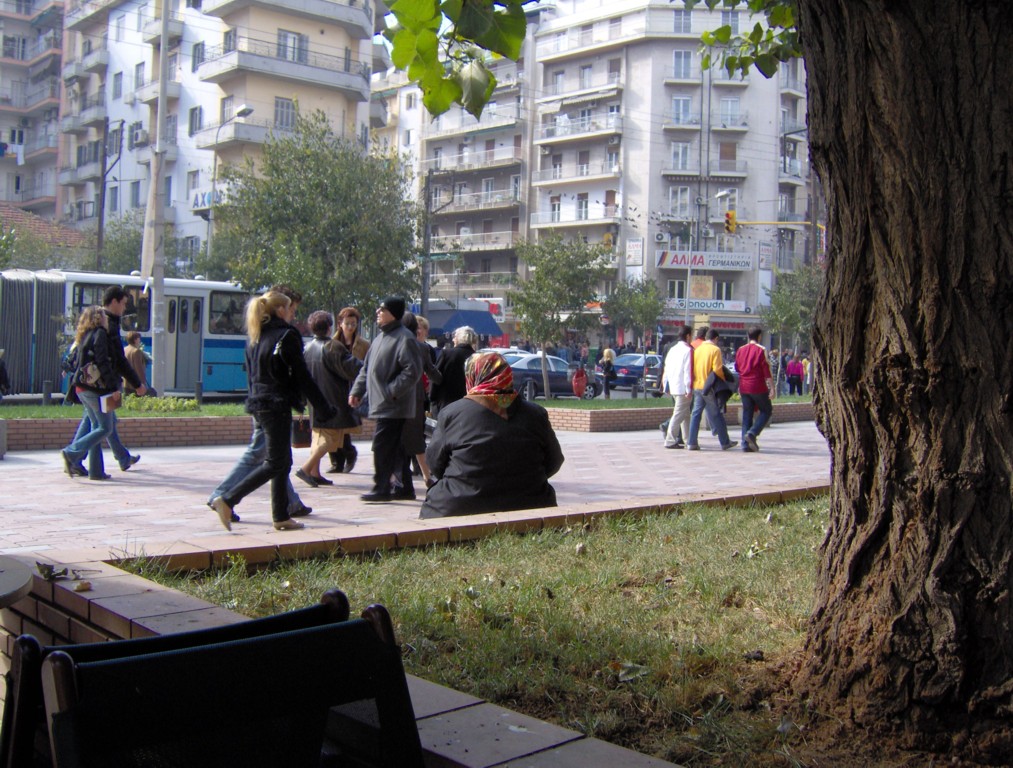
Taken while having coffee in the Starbucks near the Kamara, Thessaloniki. Even though November is now upon us you can still sit outside in comfort.

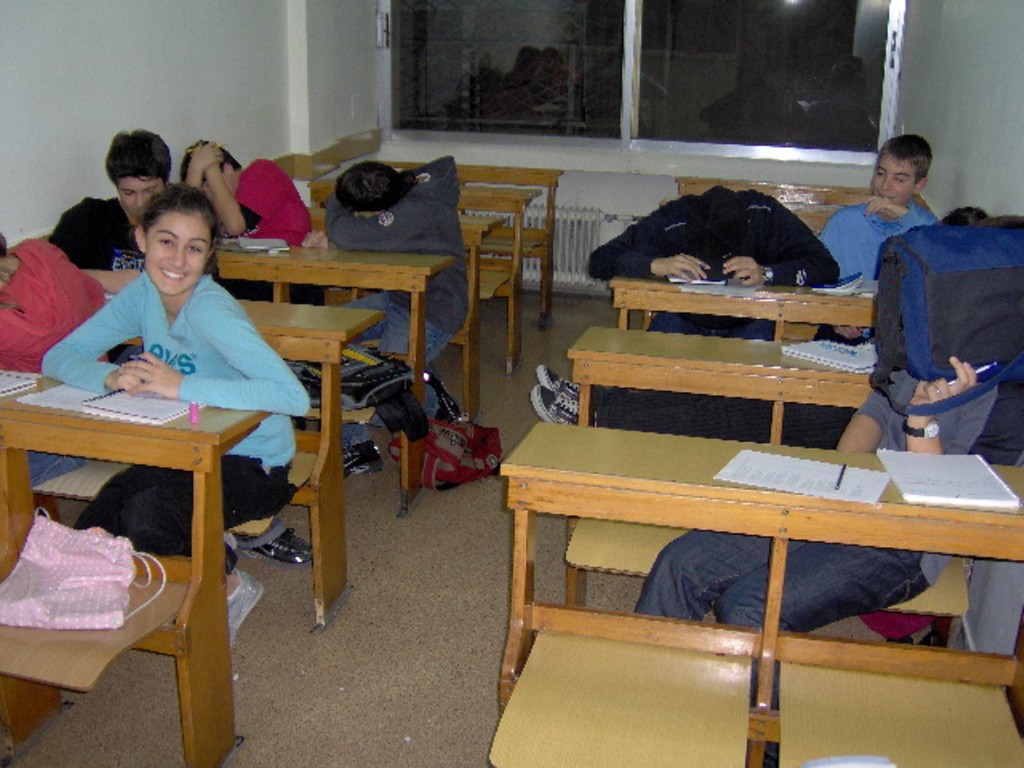
LC 1 Proved a little camera shy, all that is except Claira and Kostis.


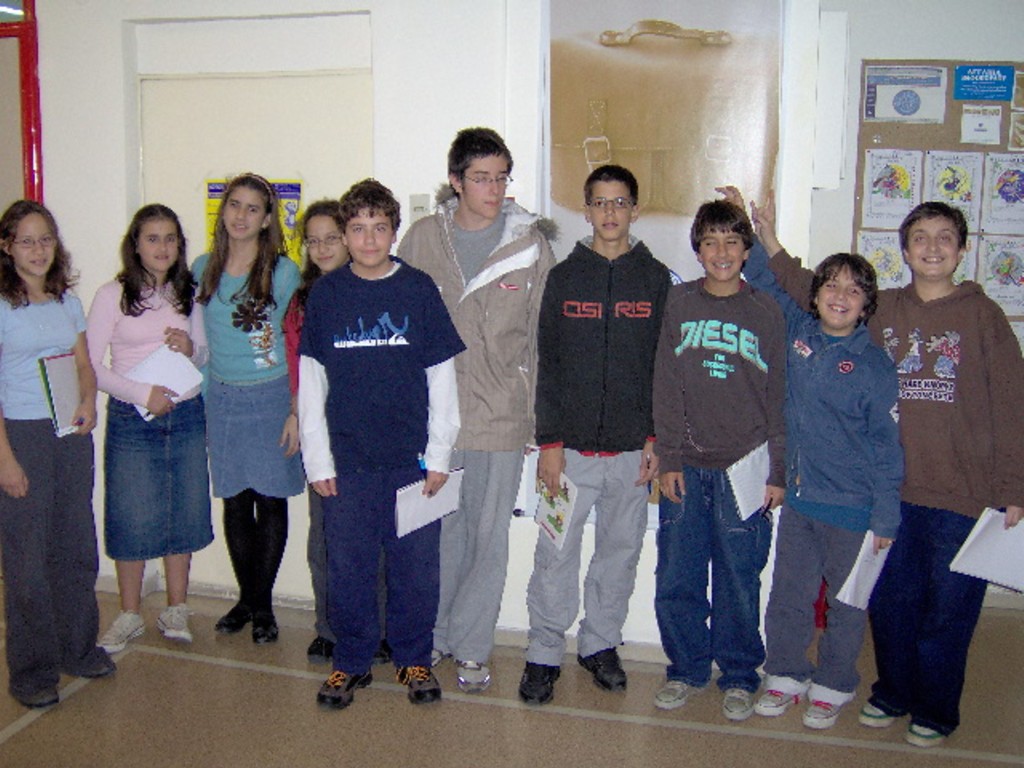
All the usual suspects from my D class. I'm looking forward to seeing their photos on their blog.


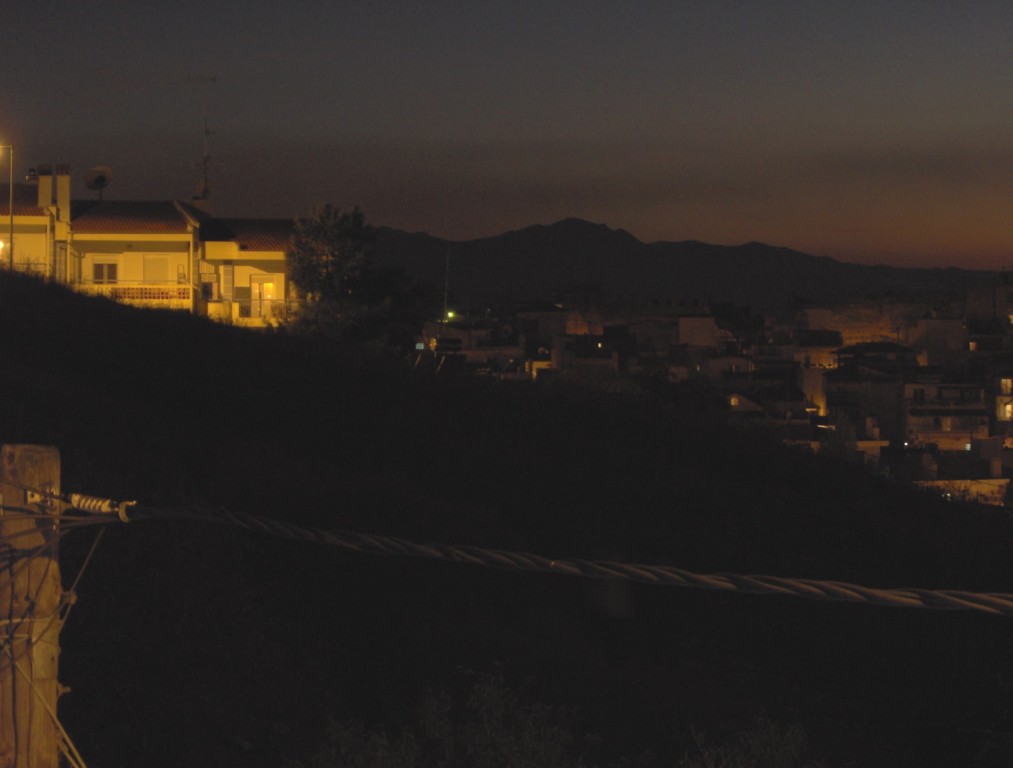
These photos were all taken tonight as I'd just discovered how to take night pics on my digital camera.

The mountain in the background is Mt Olympus, which is about 70 km away.

My neighbourhood.

Friday, November 10, 2006

100,000 new blogs a day


Check out this BBC report on the state of the blogosphere;

"The web's love affair with blogging shows no signs of abating according to the latest report from blog tracking firm Technorati.

Every day 100,000 new blogs are created and 1.3 million posts are made, it found during its quarterly survey.

Postings intensify around significant events such as the conflict between Israel and Hezbollah in the summer."

See here for the rest of the story.

Thursday, November 09, 2006

Home goal


When it comes to home goals I sometimes think that Greece is in a league of its own. This month Athens hosted the Internet Governance Forum's latest meeting at the Divani Apollon Hotel. However, on the eve of the meeting (which amongst other things discussed freedom of speech on the web) we had the case of Antonis Tsiropoulos who was arrested by the authorities for simply linking to a blog that was considered to have libelous content.

If that wasn't enough the venue proved unable to provide internet access to all the delegates. As one reporter present put it;

What on earth am I talking about? The mild insanity of hosting a global, revolutionary Internet conference and then failing to allow anyone to actually access it - the Internet, that is. The wireless access, despite endless complaints yesterday, is still not working at the Internet Governance Forum. This is a mild irritation for most people, but as the mug who is supposed to be officially reporting on what is being discussed online but who is unable to be in the room and online at the same time, it is mind-meltingly annoying.

It isn't helped by the fact that the Greek hosts have assured me - and others far more senior than me - that providing me with a wired connection is "impossible".

All the more galling was to have the prime minister, Kostas Karamanlis (see here for the speech) talking about finding ways to empower the "digitally homeless" when only 27% of Greeks have ever used the internet and the state - run telecommunications organisation (OTE) has failed miserably to provide reasonably priced access, or in many cases any kind of access to vast swathes of the country.

Wednesday, November 08, 2006

Incorporating technology into your teaching


Another tiring day over and I was just thinking on the journey back home that I would be lost if I didn't have access to technology. Over the past few years it has crept into my teaching practice, going from an occasional extra to being an integral part of the way I teach English, both in the class room and in private lessons.

For instance, today I found stuff at the British Council site to help with one of my students, updated his blog and next time I'm going to give him some American comics to read which I'll download.


In the next lesson at the school I realised that I'd made a big mistake, as I had prepared for the Wednesday's lesson instead of today's. It only occurred to me when one of my students asked my about what we were going to do in the lesson. With only ten minutes to go I surfed the web to find the lyrics to Nerina Pallott's "Everybody's Going to War (which I have on my pocket pc), printed them out and photocopied them.

In the lesson I used the song as the basis of a listening exercise which was in turn a warm - up activity for a debate on whether there is such a thing as a "good war". I asked the students to post their opinions on their blog. In addition I also asked them to take part in a competition; take a photo connected with leisure which will be posted on the class blog as well.


Later on we'll send them off to the BBC young photographer competition and see if we get lucky.


Finally, in the last lesson of the day I also got my student to post on her blog her latest film review, one which I copied without Greek subtitles, using DVD Shrink. I also asked her to listen to a couple of chapters of the first Harry Potter book audio book , which she has as an mp3 download, and write a summary. Also, as I didn't have any ink in my printer I scanned and emailed her the test from the course book we use.


As you can see access to technology and all that it offers allows me to find materials that my students find interesting and so they make the effort to understand and as a result they learn more effectively. All I have to do is open the door to a place they find fascinating and they'll do all the rest.

Updating class blogs

This year I decided that I would post all the homework I set on the class blog. One reason behind this (beyond the obvious ones) is that I hope through this to encourage students to view and participate in the blog more often. My problem up till now has been that because students don't really have access to the internet at school I have to rely on them figuring out problems at home. Also since blogging is my own personal initiative, and not really part of the curriculum I'm having a hard time persuading students to contribute.

Class photo competition


Next week I'm thinking of having a class photo competition. The basic idea is that the students post one of their photos on the blog with a humourous caption and I choose the best. I still haven't decided on a suitable prize yet, perhaps a week without homework?

The idea is that the competition acts as an incentive for students to figure out how to post photos on the blog. Although many students do not have a dedicated digital camera most have a mobile phone capable of taking digital pictures.

Tuesday, November 07, 2006

Good news


I had some great news from one of my students. Yesterday, he said that he had told the rest of his computer studies class at school that he has a blog and that now all his classmates want him to teach them how to get one of their own. He was as proud as punch that he was in a position to teach others, that he was now an expert and that he could pass on what he'd learnt in our lessons. Collateral learning, perhaps?

Using BBC news podcasts in the classroom


Today I decided to use a BBC World Service podcast in my Proficiency lesson. I used my Pocket PC linked up to a set of computer speakers that I borrowed from the secretary's PC.

Lesson Plan

1 Ask students what are the latest international stories in the news. Students discuss this in pairs or groups and then report back to the teacher.

2 Write up four or five words from the first story in the podcast on the board.

E.g. elections, Bush, USA, 15

And ask students to guess what the story is about.

3 Play the section (it is a real help if your mp3 player has a screen on which you can see where in the podcast you are). Ask students to write down as many details as possible. It is very important that you make them understand that no one can take down all the details and that they are going to work together as a group.

4 Students swap notes.

5 Play the section again.

6 Ask the class to tell you what they understood.

7 Repeat steps 2 to 6 for the remainder of the stories, either one by one or all the stories in one go.

8 For homework ask them to follow one of the stories either in the news or on the web.

BTW I just noticed today that Sky TV channel here in Greece has the same BBC news stories that I used in the lesson dubbed into Greek. The next time I do a lesson like this I'm going to ask my students to watch Sky in order to see how much they've understood in the lesson.

Sunday, November 05, 2006

Looking outside the well

I thought I'd post this cool animated map that I came across at Ewan MacIntosh's blog.

"Who has controlled the Middle East over the course of history? Pretty much everyone. Egyptians, Turks, Jews, Romans, Arabs, Persians, Europeans...the list goes on. Who will control the Middle East today? That is a much bigger question."

Maps of War

Oh yes, the title was inspired by the Japanese saying;

"The frog in the well knows nothing of the sea."

"井の中の蛙大海を知らず。"


Teaching English using movie trailers


Materials

photocopy
video or dvd with trailers

Instructions

1 Ask students what was the last film they saw.

Did they enjoy it ?
Why/why not ?
What kind of film was it ?

2 Write the word "genre" on the board and explain what it means. Elicit different kind of film genres and examples.

3 Give out handout (see below) and deal with any language problems in section 1

4 Students match films and categories.

5 Ask students to think of any other not included on the list and examples to go with them.

6 Explain to the students that you're going to show them some trailers and that you want them to fill in the grid.

7 Show video once and ask students to check their answers in pairs.

8 Go through the answers and be ready to discuss any ambiguous ones.

9 Students then decide, in groups, which film they'd like to see and why.


THE SILVER SCREEN


A MATCH THE FOLLOWING FILMS AND CATEGORIES.

1 Star Wars
2 Seven
3 Kate and Leopold
4 Bowling for Columbine
5 The Saw
6 Black Hawk Down
7 Fight Club
8 Scary Movie
9 Ice Age
10 The Constant Gardener

a drama
b comedy
c science fiction
d documentary
e horror
f thriller
g cartoon
h action/adventure
i war
j comedy

B Can you think of any other genres (and examples to go with them) ?


C Watch the video and fill in the table below.


NAME CATEGORY YOUR OPINION

1:_______________________________________________
2:_______________________________________________
3:_______________________________________________
4:_______________________________________________
5:_______________________________________________
6:_______________________________________________
7:_______________________________________________
8________________________________________________


Which of these film would you most/least like to see and why ?


For more sophisticated exercises based on trailers (see here).

Teaching's Holy Grail - Irrresistable content


As I watch my daughter playing on the Polly Pocket site, effortlessly negotiating the vast site even though she has just started learning to read and write in English, I see once again how finding material that students are interested in, can completely change their attitude to the language. I've seen the most indifferent of pupils struggle (and understand) material that I would never have imagined possible, simply because they decided that they had to do it in order to achieve their own goals.

So, it doesn't matter what you choose as long as it is in English and helps your students. Don't rule out using films, music, comics, video games even car repair manuals, whatever sparks a glimmer of interest.

Saturday, November 04, 2006

Killing two birds with one stone


The aim of this exercise is to teach some basic first aid ideas and help our students with their English. Of course, it could also be used in lesson teaching them the use of the imperative, giving instructions or vocabulary connected with health, the body or medicine.

Lesson plan

1 Explain to students what a nose bleed is. Ask if any of them have ever had one.

2 Now ask them to write down what you should do if you have a nose bleed. In most cases you'll need to help translate any possible related vocabulary. Don't forget to write these items on the board otherwise you'll end up repeating yourself.

3 Students then work in groups or pairs to write down notes that somebody could read and understand quickly in an emergency. Emphasise the fact that the language used has to be as simple and easy to understand as possible.

4 Elicit answers from the class.

5 Now tell them that they are going to hear what first aid experts have to say about such a situation and that they should keep notes.

6 Play the St John's Ambulance Service's podcast twice. After the first time give students chance to swop notes. Remember this is a learning activity, not a a test.

7 Students work in groups to share their answers.

8 Now give out the web page in written form (see here) and ask students to compare their version with the original . Do they have the same advice? Remember the exact wording is not important, as long as students have captured the main idea.

7 Now write out a similar handout for another situation such as burns, shock etc.

This can be done with a wide range of first aid situations (see here). You don't need an internet connection in your classroom for this, remember that you could download the mp3 onto a ipod, mobile phone etc. and use any handy pair of computer speakers to play it in class.

FCE Interview tips

The exam season is once again fast approaching so I though I'd post this again.


Cambridge interviews do's and don'ts

PART ONE

1 Be friendly, be polite. This is a chance to show the
examiners how well you can speak English, not a fight to
the death.

2 Learn some words that may come up, e.g. the name of
the subject you are studying or the job you want to do
in the future.

3 DO NOT learn a little speech by heart. It sounds
unnatural and you'll get even more nervous than you
need to be trying to remember it.

4 Keep eye contact with the examiner. That means looking
him or her in the eye rather than staring at your shoes
or some point on the wall behind them.

5 Remember there are no wrong answers here, only well-
expressed and badly expressed ones.

6 DO NOT give short, monosyllabic answers, nor tell them
the story of your life.

PART TWO

1 Remember that the question you'll be asked about the
photos will have three parts, answer all of them.

2 If you don't understand the question ask the examiner to
repeat it. You'll not lose marks for this. However, you will
lose marks for answering the wrong question.

3 DO NOT stop speaking till the examiner tells you your
time is up.

4 Pay attention to what the other person says as you will
be asked a similar question to theirs when they finish.

PART THREE

1 Make sure you understand the question before you start
speaking. If necessary, ask the examiner to repeat it.

2 Move your chair so that you are facing the other person.
Remember what we said about eye-contact.

3 Start with a question, not a monologue.

4 Listen to what the other person says, comment on it, ask
them questions.

5 Disagree with the other person whatever they say. It's
always easier to have something to say if we disagree.

6 Give the other person chance to speak. You'll lose
marks if you monopolise the conversation.

7 DO NOT stop speaking until the examiner tells you that
your time is up.

PART FOUR

1 Remember the questions asked in this part are always
connected with the topic in part three.

2 Give full answers, not just short, monosyllabic ones

3 Comment on what the other person says, use their
name.

4 There are no wrong answers, only badly-expressed
ones.

Lesson plan

1 Ask students to write down three things they should or shouldn't do in the interview.

2 Students swap answers in groups of four.

3 Elicit answers from the class, write them on the board.

4 Give out the handout above and ask them to underline any words or phrases they don't understand.

5 Go through the handout, section by section, giving examples of things.

6 Chose two students, preferably ones who aren't shy about talking in front of the others, and tell them that you are going to interview them.

7 Explain to the rest of the class that they are going to listen to the interview and make note of the ways in which the two interviewees do or do not follow the advice given in the handout. Also they should think of ways in which the people could improve their performance.

8 Do the interview. It would be a good idea to record this. Usually, I use my digital camera to do this and then transfer the recording to my laptop in order to burn a cd which I give to the students who've been interviewed.

9 Divide the class into two groups and assign an interviewee to each group. The groups then discuss the interviewees performance and make suggestions as to how they can improve.

10 If you have enough time, get students into groups of three and ask them to do the same interview (one person being the examiner, the other two candidates). Just make sure that those who were interviewed are now examiners.

11 Give the students who were interviewed the cd and as them to watch it and see how they did or did not follow the advice in the handout.
Friday, November 03, 2006

Teaching EFL/ESL using ads


Here's an idea that I used today in the Proficiency class as a warm up exercise for a listening activity based around advertising. For this you'll need some magazines or newspapers, ideally one for each student.

Lesson plan

1 Give out the magazines and explain to students that there are going to look at the ads in order to find out who reads the publication. The idea is that advertisers choose ones that most reflect the interests and views of their target audience.

2 Now ask them to guess the typical reader's based on the ads the magazine etc. has.

age
gender
education

income

occupation
interests/hobbies

3 Students then discuss their answers with their partner, using various ads to prove their point.

4 Elicit answers from the class.

5 Play the section from the cassette.

Although the TeachIt site is aimed at British students, it is a wonderful place to find interesting exercises that you can do with with FCE (b2 level) and post FCE (c1 and c2 level) students. With a little linguistic tweaking and/or warm up exercise that head off possible language difficulties, many of the activities make for a wonderful alternative to the dire course books that are usually used at higher levels.

See here for a list of lesson plans (all of which can be printed out!!!) based on advertising. It's the lazy teacher's dream come true. Actually, not really, as the lazy teacher would simply wade through the course book assigned and not bother looking for something else. However, you know what I mean.

Tuesday, October 31, 2006

Internet Governance Forum - Live


You can see the various speeches and work shops here.

Freedom of speech on the net


The Athens electronic crime units gets a hot tip in the Blogme case

It seems that the Blogme case has lit up the Greek blogosphere like a Christmas tree on steroids. The news the Antonis Tsiropoulos, the site administrator was arrested and charged with God knows what law for linking to a site that satirising the ultra - nationalist nutcase, Dimothenes Liakopulos has deeply angered the blogging community here. Coming at the same time as the Internet Governance Forum in Greeece, it graphically shows that despite words to the contrary, The Greek authorities are ready to use authoritarian tactics to deal with what they either cannot understand or find suspicious.

While looking at other blogs talking about the Blogme case I've come across a whole series of cases of the police raiding internet user's home and confiscating their equipment on the flimsiest of excuses. Take for example the case of Dimitis Fotiou, an Athenian sculptor, who set up a mock site which supposedly allowed people to find "help" i.e. get in contact with those in power who could pull strings ("rousfeti", in Greek) so that they could get a place in the civil service.

His sense of irony was apparently lost on the police who arrested him, confiscated his equipment and held him in custody for three days. Read here and here what another bloggers say about the case. Unfortunately, as the court case is pending, Dimtrios cannot speak on his own behalf. Given such attitudes it's hardly surprising that Reporter without Borders ranked Greece 32 (out of 168) in terms of freedom of the press.

Or there is the case of Rick Downes, a Swedish programmer arrested in Hania, Crete charged with illegally selling pharmaceuticals on the net and spamming (see here).

"Downes strongly denies the accusations and maintains there is nothing to link him with the spam messages. He said his knowledge of computers was taken as suspicious by investigators who knew nothing about technology.

We tried to explain to the police that what most likely happened is that the travel agent's computer is compromised and that her address book (including the addresses of her two friends who've met Rick) has been harvested for use by spammers, but they did not understand this. They were very unsophisticated in terms of computers and seemed to believe spammers met people and collected email addresses one by one," Phillips said."

Time and time the police's answer is to arrest and intimidate, irrespective of whether or not they have the slightest clue what it is the "offending" internet user has done.

Monday, October 30, 2006

Back to education

I haven't been blogging much about EFL/ESL over the last week or so, and so I thought I'd make amends by posting a discussion regularly that I use regularly with FCE and post FCE classes. The exercise is based on the environment, a topic that often pops up in the various exams I prepare students for.


Lesson plan

1 This is optional. If you can find the film Soylent Green on DVD/VHS.

2 Tell students that they're going to see part of a film that talks about the future and that they should say what they think is the meaning of the sequence. Play the first three minutes. (Basically, it's a photo-montage that shows how the pace of industrial life has quickened and the effects that is having on the planet).

3 Students discuss their answers in pairs and then report back to the teacher.

4 Give out the photocopy (see below).


5 Do the warm up questions from the photocopy. Students write down their answers then form groups to discuss them.

6 Elicit answers from the groups.

7 Go through the handout, deal with any problems with vocabulary.

8 Divide the class into five groups, one for each lobby and another group who will be judges.

9 Explain to students that each lobby has to talk for two minutes, .presenting their opinions.on why the mill should or should not be built. The judges think of questions to ask each group.

10 Then conduct a class debate; You could use the following format, if you wish.


A - Each lobby presents their opinion (no other group is allowed to speak). While the group is speaking, the other notes down questions, objections etc.


B – The other groups ask their questions.


C – The judges ask questions or asks for clarifications.


The cycle is repeated again for each of the other groups.


11 When every group has had their chance to speak then the judges make their decision and explain to the class what they've chosen an why.


What you could do as a follow up.

1 Ask students to create their own eco-video using their own pictures and/or ones from the internet (they also get to choose their own music). This could be turned into a short video using Window's Movie Maker,which is on every XP equipped PC. Or you could download Microsoft's free Photo Story 3 which is a great way to get newbies creating stuff for say, YouTube.

2 Ask your students to create their own TV/radio spot which sets out their own opinion on the matter. This could be posted on the class blog, again via YouTube or as a podcast using Odeo.

3 Students write their own newspaper article, using the debate as a basis. They should also interview the various parties involved and quote them in the story. It could also be put on a blog.

Sunday, October 29, 2006

Protest email (2)

Taking Asteris's advice I wrote out a protest email that you may want to copy and paste when contacting the IVG.

"To the Internet Governance Forum,

It seems that the Greek state has joined that illustrious list of enlightened regimes that feels that it can use the full force of the law to gag bloggers who have unpopular opinions. The owner of a Greek blog aggregating service www.blogme.gr is currently being sued for hosting a blog with some satirical material about a famous person. Antonis Tsiropoulos, Blogme's administrator was arrested and hauled off to the spend the night in jail and later to taken in handcuffs to the District Attorney. This is akin to arresting the owners of Technorati or Google in a midnight raid as they hosted something I disagree with.

It is a shame that the country charged with holding a conference on internet issues such as access and freedom of expression should permit the kind of draconian police action seen in the case of Antonis Tsiropoulos.

On behalf on the blogging community, both in Greece and abroad, I call upon the IGF to condemn this action in the strongest terms possible and exert all possible pressure on the Greek authorities to look into the matter."

(name)

Here is the IGF's general contact address

Here is the the IGF Greek helpline address

Protest emails


In response to the previous post I sent off an protest email to the IGF (internet Governance Forum), which is being hosted this week in Athens. The more people do this, the greater then effect will be on getting the Greek government to look into the Tsiropoulos case.

Here is the IGF's general contact address

Here is the the IGF Greek helpline address

Irony of ironies, one of the workshops scheduled is on Access to knowledge and Freedom of Expression. Now that's a debate I'd love to take part in.

See Cnet's take on this.

Blogging in Greece: The dark side


It seems that the Greek state has joined that illustrious list on enlightened regimes that feels that it can use the full force of the law to gag bloggers who have unpopular opinions. It seems that the the owner of a Greek blog aggregating service BLOGME is being sued for hosting a blog with some satirical material about a famous person. Antonis Tsiropoulos, Blogme's administrator was arrested and hauled off to the spend the night in jail and later to taken in handcuffs to the District Attorney. This is akin to arresting the owners of Technorati or Google as they hosted something you disagree with.

As the Greek blogger, Xpsilikatzoy says;

"In Greece of 2006 we have the first sue against a site that (through rss) published some satirical posts (from a blog) about a famous person. You see, in my country WE ARE NOT FREE. The owner of the site was handcuffed and driven to prison for one night and now he is free until the day he testifies in court. His computer with all his work was taken away from the police and now we are all waiting for the court to decide.The site I am referring to : BLOGME

Excuse my bad English but this was the only way to inform all foreign bloggers that my country is not free anymore.


Please tell everyone you know."

According to kierenmccarthy.co.uk, the person behind all this is none other than Dimitris Liakopoulos, one of the most hateful and racists figures to disgrace Greek TV. A man whose national chauvanism and anti - semitism are on view every night of the week on the local TV channels here in Thessaloniki. I too have talked about him in less than glowing terms and have linked to videos from YouTube (see here) that make fun of his racist rants. So, I guess that I, too I'm guilty of slandering a man whose views are so foul that they would make most far right thinkers blush.


"Update: The man arrested was Antonis Tsipropoulos and the target of the satire was Dimosthenis Liakopoulos - a controversial Greek tele-evangelist. The satire site that mocks Mr Liakopoulos can be found at funel.blogspot.com, but since it is hosted in the US, neither the Greek authorities nor even Mr Liakopoulos can get at it.
What Mr Tsipropoulos has been charged with, god only knows. But this is a spectacular own goal by the Greek authorities on the eve of the IGF. (Internet Governance Forum) Particularly since making a crime of linking to someone else’s content is pure, and legally foolhardy, censorship."

kierenmccarthy.co.uk

For more information in Greek click here.
For more information in English click here, here and here.