Just the one accident today. I came across two cars just outside Thermi which had collided with one another. Presumably, one had run a red light (my money is on the taxi involved as they are, by far the worst drivers in Greece) and smashed into the other on the main road.
Thursday, February 08, 2007


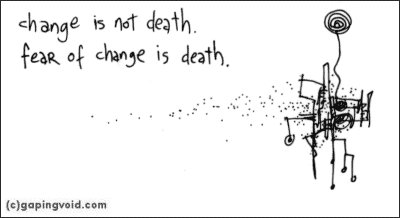
Change ?
I have recently started doing private lessons with a doctor. We meet once a week and I help him with his spoken English as he often travels abroad for his work and therefore wants to practice his conversational English. Of course he could quite happily do this via Skype or with KanTalk, but he prefers to do lessons face to face. In our last lesson he said something that stuck in my mind; he told me that as a specialist in pulmonary disorders he has to relearn his discipline every seven years. i.e. changes in medicine are so rapid that a doctor who hadn't kept up with developments for just seven years would be unable to function effectively in a modern hospital.
Then I considered how we teach in school; the materials we use, the techniques that are encouraged, the methodologies employed and realised that they have changed very little in the last 18 years. I could have walked out of a classroom in 1989 and into my 2007 one and within the space of 20 minutes carried on. This is truly a depressing thought.
The only good piece of news in this whole, sad scenario is that this is most definitely not true of the lessons I do with my private students. In those I have much more control over my choice of teaching materials and methodology and many of the learning exercises I do with them now would have been unimaginable even two years ago. Lessons with Flickr, Youtube video productions and blogging are a few of the examples in which not only have the tools I used changed but also the way I approach teaching English as well.
Then I considered how we teach in school; the materials we use, the techniques that are encouraged, the methodologies employed and realised that they have changed very little in the last 18 years. I could have walked out of a classroom in 1989 and into my 2007 one and within the space of 20 minutes carried on. This is truly a depressing thought.
The only good piece of news in this whole, sad scenario is that this is most definitely not true of the lessons I do with my private students. In those I have much more control over my choice of teaching materials and methodology and many of the learning exercises I do with them now would have been unimaginable even two years ago. Lessons with Flickr, Youtube video productions and blogging are a few of the examples in which not only have the tools I used changed but also the way I approach teaching English as well.
Wednesday, February 07, 2007


Tuesday, February 06, 2007
Mad Max ala Ellinika
It's been one hell of a day. In the course of three and half hours this morning I saw five traffic accidents. Yes, five separate crashes involving cars, scooters, trucks and even an excavator. All of this on a clear, relatively warm day without a trace of rain, ice or fog . This is not to mention the two near accidents I saw last night, one of which involved a driver deliberately trying run down a pedestrian who dared to cross in front of him on a red light.
I tell you, driving behaviour here ranges from plain, old dumb to clinically psychotic.

I tell you, driving behaviour here ranges from plain, old dumb to clinically psychotic.
Seven days, seven pictures - A project

I once did private lessons with a student who apartment had a stunning view of the sea here in Thessaloniki. Every time I went there I was amazed by the vista that his living room room offered. Yet when I commented on this he struggled to understand why I was so excited. I think that the same is true for the way many of us see our lives. We think that they are just the same as everyone else's and therefore seem a little mundane when in fact quite the opposite is true.
Here is a teaching activity which should reawaken our student's interest in their environment and give them a sense of how different their lives really are. The inspiration for this came from www.adayinthelife.org (alas, under construction at the moment) whose basic premise is that a different person from around the world takes a picture that illustrates his or her everyday life each day for a week.
"Publisher Jon Setzen from Brooklyn, N.Y., laments, "I'm upset that we haven't had anyone from Africa." He does have riveting shots of a "security wall" in the West Bank, "communist lunacy" in Romania and a woman cleaning a Wal-Mart gun display in Alabama. "I tell people not to send me arty shots," he says. "I think it's much more interesting to see the mundane aspects of everyday life around the world." And it is."
The Best Photo Blogs - Forbes.com
Lesson Plan
1 Ask students to write down five everyday events that happened during the previous week. e.g. I went out to dinner with my parents, I saw a DVD with my friends etc, I had an exam etc.
2 In pairs, students ask each other questions about the events mentioned.
3 Now ask them to think about if and how people in other countries do these everyday things.
4 Now go through the project guidelines;
a Take a pictures everyday for a week that illustrates your life.
b The pictures can be taken with a digital camera or mobile phone.
c All pictures should be put on the internet with a title and a description that explains what is happening so that somebody who doesn't live in Greece will understand the context.
d You can use a Flickr set, blog, Bubbleshare, Slide.com, Slideshare etc to present your photos.
e Students vote for the best project.
f Optional: Create a blog/wiki and post all the projects in one place.
I'm going to be doing this myself over the next week. So why don't you check out this post next Tuesday ?
Sunday, February 04, 2007
Looking over the horizon

As well as thinking about cool activities we can do in our lessons it's good to look at the big picture, to think about how all this technology we are using is going to change educational fundamentals. Luckily, this week I happened to come across two examples of people who have done just that. I can't think of another era when such connections would have been possible, meaning that with the introduction of web 2.0 we have broken the constraints of geography in the same way the written word broke the bonds of time. No longer is it necessary to share a classroom, campus or era with those creating new, exciting ideas.
The first such example is this exemplary video by Michael Wesch, assistant professor of Cultural Anthroplology at the University of Kansas, on the way in which the foundations of knowledge are being reorganised by the internet. As well as being a tour de force of breathtaking ideas it is also visually stunning. By the way the music is by Deus and can be downloaded free from here.
The other is Steve Hargadon's interview with John Seely Brown on web 2.o and the culture of learning;
"I think that the amazing moment we have right now in time is to kind-of go back and rethink what Dewey really was about. I think we have to reinvent Dewey for the 21st century--finding a way to bring productive inquiry, bring the social basis of learning, bring the cognitive basis of learning all together. And I think now we can actually start to do that in a much more authentic way for kids at almost any age in a way that there's truly authentic things that these kids are doing that are being picked up by other kids and shared and built on and so on and so forth."
To hear the interview click here.
I'd like to thank The Thinking Stick, Cool Cat Teacher and Steve Hargadon for sharing these great ideas with us.
Saturday, February 03, 2007
Tunes that won't leave you in peace

You know that feeling when you hear a song and you just can't get it out of your head. I have had that a lot recently. First was Konstantinos Vita's 2, the music from the opening ceremony of the 2004 Olympic games which a friend lent to me. The other is Philip Glass's 1000 Aeroplanes on the Roof which I came across on Last FM. Here is a short snippet from the first;
For those in the mood for something more Pop-py the check out Mika;
I think I'll use something from one of the two albums as the basis of my next video.
Teaching young learners using Flickr

I've been using Flickr over the last few weeks in order to help my student, Aristeidis learn basic vocabulary and tenses. Flickr's Add Note application is a wonderful way to add your own notes to your photos. In my student's case, this means taking photos of his room, kitchen etc and labeling them. It's a great way of personalising learning. Check out his Flickr page here.
We're also doing work on tenses and so after doing stuff on the present continuous/progressive in Chatterbox 2 I asked him to find examples of the sentences we saw in the book on Flickr. So, for example, he looked for a picture of;
"She's eating chocolate."
This is not simply a copy and paste exercise as Aristidis has to make sure the picture shows a "she", that the person is "eating" and that it's "chocolate". Now, this may seem blindingly obvious to somebody who already speaks English, however, it is anything but to a young learner coming from a different linguistic background, especially from one so different to other European languages. Aristeidis then posted the pictures to his blog using the Blog This feature in Flickr along with an appropriate description.
Therefore we practise our reading, writing and computer skills at the same time. In addition the idea of the present continuous (which doesn't exist in Greek) is reinforced,
Thursday, February 01, 2007
Teaching with Chatterbox
I usually ask my students to act out the comic strips from the Chatterbox book while I record them with my digital camera and then play the recording back to them on my ibook. We keep on doing this until they're happy with their performance. Also they love finding props and ideas to use in the video.
It's a great way of improving their pronunciation and as they are acting rather than just reading it is a lot more fun, as you can see. Look out for Maria and Marianna in the 2017 Oscars.
It's a great way of improving their pronunciation and as they are acting rather than just reading it is a lot more fun, as you can see. Look out for Maria and Marianna in the 2017 Oscars.
Wednesday, January 31, 2007
Another day, another photo

Taken yesterday near the sea front: it's a statue of some kind whose name escapes me.

Winter cafe on the sea front.
Tuesday, January 30, 2007
Pulling my hair out!!!!!!
The more I create my own material the less satisfied I become with the teaching resources available commercially. In the vast majority of schools you're obliged to use the books which I would never dream of using in my private lessons. They are so exam obsessed that there are little more than rehashes of past papers with a few language production activities to thinly veil the fact. So, for example you have three page of grammar activities followed by the pathetically inadequate speaking exercise which can be got through in a couple of minutes.
Even the books I do use have changed very little over the last decade. As much as I appreciate the Headway series (all except the advanced book, which is dire) they are way out of date methodologically and seem to have successfully ignored the electronic revolution that has been underway for the last 20 or so years. It's almost as if their world froze in 1986 and no one told them otherwise.
The situation becomes even more tragic when you reach advanced levels where simply revising grammar, syntax and vocabulary is unlikely to produce the kind of linguistic skills needed to pass exams or help those who want to be able to communicate in English at anything other than the most basic manner. It is hardly surprising then, that the Greek pass rate for C2 level exams such as CPE is 29%. Also as I read in Hyphenpedia;
"To the above equation you add the sad 77% (hyphen 2005 annual market research) of Greek professional FL certificate holders who cannot speak English, thus shaping a disappointing international profile for the average Greek professional. Then it is easier to swallow that maybe this whole Greek ELT system, that has successfully served Greek insecurity and the need for formal (but not necessarily substantial) accreditation, is coming to an end."
It is not enough that current methodologies are incredibly bad in helping students get the certificates they so dearly desire, They are also terrible at producing able second language speakers even amongst those who do manage to acquire some kind of qualification.
Yet every time I mention these facts and figures and try to introduce new ideas and approaches I'm told that they won't work, they'll negatively affect exam results or that that's not what students want from their lessons. After a while there comes a time when you just shut up, keep your opinions to yourself and tow the line.
Strangely though, the vast majority of the parents of students I do private lessons with are extremely happy with the fact their kids have become confident users of English and actually are happy to do lessons. But hell, what do I know? I'm just a teacher.
Monday, January 29, 2007


Sunday, January 28, 2007
A busy day
Today the school held its annual awards ceremony. This is when students received their certificates and we all went along to celebrate our students success in the various exams they passed. Here are some photos I took to give a taste of what what it was like to be there.


Afterwards it was to friend's for a Sunday lunch then later home to work on Lydia's latest blog entry and then to make chocolate biscuits.
Afterwards it was to friend's for a Sunday lunch then later home to work on Lydia's latest blog entry and then to make chocolate biscuits.
Saturday, January 27, 2007
Tagged
I've been tagged for a meme by CurryBet. So here goes, five things that you don't know about me.
1 I've signed the Official Secrets Act. No, I'm not a member of MI5/6 but I did work for British Telecom and they required everyone to sign.
2 My favourite food is grilled octopus, something that I never would have dreamed possible before coming to Greece.
3 I can't drive a car. Even though I come from a family of professional drivers (they're all truckers).
4 My dream is to go to New York on holiday, preferably for an extended period of time in which I actually got got see something more than just the sights.
5 I once drove from Florence to Venice on a 200cc Vespa.
Cool Cat Teacher
Vicki Davis, a high school teacher in Georgia, USA is out there on the bleeding edge as far as web 2.0 in education is concerned. Thankfully, her work had been recognised by others and she, along with Julia Lindsay were winners of the 2006 Edublog Awards for best wiki (see here for the winning entry). Listen to her interview two of the judges in the contest for the reasons behind their choice. It's always fascinating to hear how educators use technology in their teaching situations and to see what works and what doesn't.
Friday, January 26, 2007
Using video
This is an exercise which I did with my student yesterday. We were working on some vocabulary connected with rooms from Chatterbox 2 and he was having a problem with this is/these are so we decided to kill two birds with one stone and record this. We then put the video on his PC and listened to the playback, which a great help when seeing the errors in pronunciation and grammar he'd made. Afterwards we recorded it again a couple of times until he was happy with his performance.
I'll post the video on his blog in a short while.
Changes in the ECPE
It seems that there are going to be major changes in the Michigan ECPE exams this year.
1)The preliminary test is being abolished as a prerequisite for taking the main examinations. Though this won't come into force until November 2007 as far as I can tell from their site.
2)From 2008 the ECPE will be held twice a year in November and June.
3)Administration of the exam will now be carried out by the Hellenic American Union instead of Anatolia college, Thessaloniki.
Click here for more details of the exam changes.
Thanks to Theodora P for putting me onto this.
Some more photos


Don't worry, I haven't forgotten the teaching stuff, there are plenty more ideas I want post but for the time being, it's pictures.
Wednesday, January 24, 2007
Latest video
I thought I'd create a cool, Cold - War, Death in Berlin feel to this. The music is from The Persuaders by John Barry. All pictures by Teacher Dude.
Playing with Flickr

Tuesday, January 23, 2007
Using Flick to create a photo dictionary

Tsimiski St, originally uploaded by teacher dude in Greece.
Last year talked about how students could use their digital cameras to create a photo dictionary. The idea was that they could take pictures of everyday scenes such as a street, classroom, party etc. and label them using programs such as Word .
However, a nice, new shiny application by Flickr has made this even simpler. As many of you know, you can label different parts of your photos when you post them to Flickr. So, this is a great opportunity or students to learn and practice naming everyday objects.
When you click on your picture, look for the Add Note option which is above the image, on the left-hand side. Then just place the square where you want and add a description.
The potential for this technique doesn't just end with learning languages, it could be used in all kinds of learning situations where you need to know the different parts of an object. Imagine using it in biology lessons to name bones, in architecture to show different features etc. It is a great way to revise your knowledge using real life examples.

Sunday, January 21, 2007
Saturday, January 20, 2007
Enraptured
Over the last week or so I've been working on this video which is about ten minutes long, which in YouTube terms makes me David Lean, lol. Still, I have finally managed to finish it, yet a name alludes me. So I was thinking, can any of you think of a suitable title? I know what a creative bunch you are, so give it your best shot.
The music is Help Yourself, off the Scorpio Rising album by Death In Vegas .
Thanks to Kassandra for the name.
The music is Help Yourself, off the Scorpio Rising album by Death In Vegas .
Thanks to Kassandra for the name.
Friday, January 19, 2007
Cooking up a video
Yesterday I talked about an idea I was going to do with one of my private students. Well, we made our recipe video and I reckon that it didn't turn out at all bad. The student loved the idea and made a real effort to get things right knowing that others will be watching it. I think I'll try this again with my daughter over the weekend and post it on her blog as well.
Thursday, January 18, 2007
Using Kantalk
I had the chance to use Kantalk this morning when I had a great chat with Claude, a professor at a French university. The site allows people to practice their language skills (it's not limited to English, either) and for me it offers the possibility of endless opportunities for people to speak and use the language they've learnt in class. Also,It was great to have the chance to see the world from a different point of view.
Cooking with the Dude
This is a idea I'm going to try out today with one of my students (click here to check out his blog). Basically, it involves using video and YouTube to talk about food and cooking. The Daily English Show gave me inspiration.
Lesson plan
1 Students ask each other about their favourite dishes, what's in them and how you make them.
2 Student draw up a table with two columns: in one they write all the words connected with their favourite dish in English, in the other, all the words they know only in Greek.
3 Student work together in groups to find translations for the Greek words. If they can't find one they then ask you.
4 Now show students a recipe that you like. Explain the lay out, terms (e.g. tbs) and grammar used (for example, the use of the imperative.
5 Students the write up their recipes, or if some students don't know how to cook a group recipe is created.
6 For homework students use their video/digital camera or mobile phone camera to film themselves or somebody else making the recipe.
7 Then use Windows Movie Maker or the like to add the recipe to either the end or the beginning of the video. Also, if the students are not happy with what they said they can re-record it as a voice over.
8 The video can be posted via YouTube to their blog.
Sarah's latest creation at the Daily English Show.
Lesson plan
1 Students ask each other about their favourite dishes, what's in them and how you make them.
2 Student draw up a table with two columns: in one they write all the words connected with their favourite dish in English, in the other, all the words they know only in Greek.
3 Student work together in groups to find translations for the Greek words. If they can't find one they then ask you.
4 Now show students a recipe that you like. Explain the lay out, terms (e.g. tbs) and grammar used (for example, the use of the imperative.
5 Students the write up their recipes, or if some students don't know how to cook a group recipe is created.
6 For homework students use their video/digital camera or mobile phone camera to film themselves or somebody else making the recipe.
7 Then use Windows Movie Maker or the like to add the recipe to either the end or the beginning of the video. Also, if the students are not happy with what they said they can re-record it as a voice over.
8 The video can be posted via YouTube to their blog.
Tuesday, January 16, 2007
"Only the dead have seen the end of war." - Plato


These pictures were taken today in the military cemetery on Lagadas St. Here lay buried thousands of Italian, British, French and Serbian soldiers who died in the First World War.
Monday, January 15, 2007
Exam registration dates

On of my greatest fears is that I'll forget to tell students about exam registrations and so the deadline will pass and they will be unable to do take their FCE, ECCE etc. Although I haven't made that mistake yet, I've come pretty close on a couple of occasions. So to make sure you don't make the same mistake here are the registration dates for the most common EFL exams here in Greece for the coming summer.
Cambridge (FCE, CAE and CPE) - Feb 20th till 2nd March
Michigan ECCE - up till the 1st March
The Kratiko exams - from jan 15th till 31st Jan
Click on the links for more information.
Sunday, January 14, 2007
A new blogger on the block

Inspired by Ewan MacIntosh's post on blogging in Scottish infants school I decide to set up a blog for my daughter, Lydia aged seven as a way of helping her with her English (click here). Since she uses the internet regularly (Polly Pocket is her favourite site) I thought that it wouldn't be too much of a stretch. I want to make it is any rich as possible in terms of media so that it doesn't just become a write and read blog.
On the bus

On the bus, originally uploaded by Teacher Dude.
Taken on the number 56 bus whilst coming back home. I think the other passengers thought I was crazy still, it was worth the stares.
Saturday, January 13, 2007
KanTalk
This is an application which has been created by LinguaBee (who is my hero as far as foreign language learning goes). This basic idea is to allow students learning foreign languages to communicate with each other using Skype. I'll be recommending it to my university students next week. It seems the perfect place to do Tandem language learning (see here for more ideas) i.e a place where students can practice their language skills with others who speak that language. So, for example a Peruvian student who is learning English could have a 30 minute session with a American who wants to learn Spanish, then they could swap languages for the next 30 minutes.
Alternatively, anyone who wants to practice their language skills can get themselves a "speaking buddy" and regularly practice.
So check out KanTalk and tell me what you think.

Alternatively, anyone who wants to practice their language skills can get themselves a "speaking buddy" and regularly practice.
So check out KanTalk and tell me what you think.
Wednesday, January 10, 2007
Electronic Peace Corp - How would it work?
There's nothing new under the sun. I googled the term "electronic peace corp" and found references going back to 1984. I should have realised that somebody would have thought of this long ago. However, I though I'd describe how such a scheme might work in the web 2.0 era.
The whole enterprise depends upon easy access to broadband internet connections, Now this may sound like a utopian idea to those who live and work in poor countries, yet as I said yesterday, the massive growth of mobile phone usage in places like Africa means that setting up wifi networks over large areas is not just a crazy dream. In addition, the introduction of the $100 laptop means that many more people will have the tools to access the internet within the next five years.
How would it work?
Once problems of access have been overcome I envisage that the Electronic Peace Corp would be an internet space akin to Ebay. In the sense that "buyers" and "sellers" seek each other out rather than being directed by a central authority. The idea would be that those who want to volunteer their time and expertise would advertise or seek out those who most need it. And vice versa.So, for example, I, as an ESL/EFL teacher might decide to cooperate with a colleague in secondary school in Ghana or Laos.
You would sign up, giving details of your professional background, interests, preferences and level of commitment - which could be anything from volunteering to spend an hour a week at your PC to actually going there to help.
The Ebay model
However, there is the possibility that the system might be abused. For example I might say that I'm an experienced engineer or pretend to be a professor when in fact I'm nothing of the sort. Like Ebay each person or group would be subject a rating system. Everybody would have to "earn their stripes". Any bad behaviour would earn negative reviews. Similarly, those who work well and effectively garner better ratings in the same way sellers on Ebay do.
Using Voip/ Video
The other major plank of this service would be voip/video services such as Skype. This would allow real time communication in spoken form and so anyone who is not a fluent in say, written English, or even their mother tongue could participate. Pictures/video taken by cell phone cameras and sent via the web would also get round the need for lengthy or complicated descriptions.
Even the language barrier would not prove insurmountable as people could volunteer their services as interpreters/translators via skypecasts. For example, a America doctor could discuss a patient with a nurse in Cambodia while a Khmer speaking Cambodia-American translates via a skypecast.
What about this for a name? The Walking Wiki (WaKi)
Tuesday, January 09, 2007
The Electronic Peace Corp
A few months back I wrote about how two things will change education in developing countries (see here); the hundred dollar laptop and the mobile phone. Over the last 24 hours I have seen a couple of stories that seem to bear out my prediction, or at least appear to show that things are moving in the right direction.
Whilst over at the BBC's website I came across this story about how mobile phones are transforming life in Kenya. Of all the interesting details that the article contains, the one that stood out was the a third of all Kenyans have a mobile. While I'm sure that most are not the state of the art phones with built - in camera and mp3 players that will change in the near future as these items become standard on all entry level models. This means that students have a means of watching video, listening to audio material and perhaps most importantly of all producing such things.
The other item I saw in the news was the imminent arrival in Greece of the first MIT 100 dollar laptops (though they are going to cost a bit more than that in the beginning). I finally got to see one of these things in detail on TV and I was most impressed both by the design and its potential. Although I don't think that it will have much impact here, the possibilities for countries which do not have the money to pay for PCs or Macs are enormous.
The idea that the laptop can replace existing textbooks is just the beginning as the potential for producing material and spreading ideas is simply endless. Suddenly, blogging, podcasting, vlogging, wikis and social networking cease to be the preserve of the well - off countries of the North and become a means to educate and be educated wherever you are.
Here's an idea: The Electronic Peace Corp. The idea is that people sign up to help a project in a developing country without having to leave their own living room, let alone country. This would allow doctors, teacher, business leaders, engineers and the like to contribute their time and expertise. The ability to communicate in real time via Skype video and the like would mean that people could be on hand to help when needed. A kind of walking, talking Wiki page.
Another possibility is that you make translating Wikipedia part of your national curriculum. In countries where instruction in English is common students translate Wiki pages into the local languages. Suddenly, within the space of a few years the vast repository of knowledge Wikipedia contains in English becomes available in hundreds of different languages and dialects.
What do you think the 100 dollar laptop could be used for?
Monday, January 08, 2007
Teaching vocabulary using Flickr
Here's something that came to me today while whizzing across the city on my Vespa. The basic idea is that you use Flickr to help students differentiate between similar words which can be easily confused if you just present them as a list in the lesson.
e.g. march, stroll, stride, trudge, wander etc
The students then search on Flickr for photos that best show the meaning of the word. They then use Slide.com to make a slide show to put on their class/ personal blog. Afterwards they look at other students' blogs to comment on their choice of photos.
e.g. march, stroll, stride, trudge, wander etc
The students then search on Flickr for photos that best show the meaning of the word. They then use Slide.com to make a slide show to put on their class/ personal blog. Afterwards they look at other students' blogs to comment on their choice of photos.
Free FCE listening test downloads

Sunday, January 07, 2007
Practising what you preach
One blog that I regularly read is Cool Cat teacher, which is by Vicki Davis, a middle school teacher from Georgia, USA. She also has a podcast which is great way to pick up on new ways of using web 2.0 tools in the classroom. Inspired by her example I decide it was time to update my wikispace on teaching EFL/ESL with technology.
Check out her latest one which is an introduction to all these wonderful ways of using the internet in our teaching practice. If you're not using PowerGrade then I'd skip the first 18 minutes and go straight to her presentation on learning with podcasts, blogs and wikis.
Check out her latest one which is an introduction to all these wonderful ways of using the internet in our teaching practice. If you're not using PowerGrade then I'd skip the first 18 minutes and go straight to her presentation on learning with podcasts, blogs and wikis.
Saturday, January 06, 2007
My walk
Taking my last lesson plan to heart I decided to make a slide show based on my walk to work. Well, I know it was meant to be a walk from work but I decided to take photos walking the other way as it is all downhill, phewwww.
Teaching using photos

I got this idea from the BBC's Today programme. The aim is to record your journey home from work/school in pictures. The reporter published her photos (click here) did so as part of a project by a UK university;
"Today presenter Sarah Montague took these pictures of her walk home as part of a project being set up by academics at Northumbria University to increase our awareness of the environment around us.
To contribute contact mywalks@northumbria.ac.uk."
Lesson Plan
1 Tell students that they are going to find out how the others get to and from school. Elicit from them the kind of questions they would need to ask;
E.G. How do you get to school? How long does it take? Who drives you? Which bus do you take? Which route do you take?
2 Student then ask each other. The best thing is shuffle students around so they're not asking their regular partner(s).
3 Now explain to students that they are going to take 10 to 15 pictures of their journey home. They can use a digital camera or their mobile phone. Show them either your example or the one from the Today programme. If students don't have access to either then get them to borrow or share a friend's for a day or so.
4 In the next lesson get students to make a slide show of their pictures with suitable captions.
You can use BubbleShare or Slide.com for a simple version or Microsoft's Photo Story3, Windows Movie Maker or Jumpcut for a more sophisticated one.
If you do choose Jumpcut, Photo Story or Movie Maker then ask them to record a voice over and add some background music.
5 Now get students to post their slide shows on the class/personal blog.
6 For homework students write three questions about someone else's photos in the comments section. All questions must be answered by the following lesson.
Alternatively, you could simply ask them to post the photos on their Flickr page as a set with suitable captions for each. In this case the questions and answers are posted in the Flickr comment box.
You could even ask them to send it to the university project managers - click here for details.
Friday, January 05, 2007
Five things about me meme
I was tagged for this by Peregrinations.
1 I'm the first person in my family to be formally educated beyond 15 years of age. It came as much a surprise to me as anyone else that you could study beyond 18. Still, one Ba and an Ma later, I reckon I've just got started.
2 I taught myself to read and write Greek. Once I'd been here a few months I thought I'd better hit the books. By the way, I was an awful language learner at school and drove my French teacher crazy, poor soul.
3 I once drove a Vespa from Athens to Rome. Two people, one hell of a lot of luggage and 24 hours later we arrived in the Eternal City. Roman Holiday all over again, sigh.
4 I once had to sing "Grease is the Word" to A couple of hundred kids in Poland. An experience neither they nor I wish to relive.
5 I used to spend my summer holidays in Tipperary, Ireland when I was a kid as my grandmother had a small farm there.
I tag Theodora p, TooManyTribbles, FCE BLog, Lightning Rod Girl, Lingual Bee

BubbleShare
Just playing. I came across BubbleShare after reading about it in Ewan McIntosh's edublog. I'm going to be playing around with it over the net couple of days.
Getting your students to read

I thought I'd talk again about a teaching idea that has really been a major help to my students. It combines the two great traits of any good idea; it's easy and it's quick. As most language art teachers know one of best routes to proficiency in a language, be it a foreign one or your own is extensive reading.
The problem is that for many students the idea of reading literature, on top of all the other stuff they have to do sounds more like punishment than anything else. Over the years I've pleaded, begged, threatened, demanded and any number of other verbs my students to read outside the curriculum, often to no effect. However, last year I hit upon a method that gets my students to read more. Instead of asking them to read, say a chapter (WHATTTTT, ARE YOU KIDDING????) I simply say I want them to do 20 minutes per week extra work. Hardly, a huge sacrifice, even for my over stretched, time - famished teenage students.
Basically, the idea is that the students listen to an audio book whilst following it in printed form. In this way, even a chapter can be done in less than half an hour. Also, it can be done anywhere, if you have an mp3 player or mobile phone with mp3 capability the you can listen on the bus, in bed, lounged out in front of the TV etc. Also for foreign language students the ability to see what is being said as well as listen to it makes the whole task much easier.
The audio books can be downloaded from any number of sources. For those of you interested in the likes of Dickens, Austin, Wilde and the like, go to Librivox or Gutenberg.
For those of you with more modern tastes then a quick visit to TorrentSpy and the like via BitComet is more likely to get you what you want.
Just remember to make sure you are downloading the full, unabridged version.
Thursday, January 04, 2007
So, what brings you here?
One of things that I've added to my blog is Sitemeter (check out the little box at the very bottom of the page) which basically tells me everything I want to you about you, dear reader. Dangerously Orwellian or great feedback, I'll let you decide, however, it does allow me to find out how people found this site.One of the added pleasures of this is that you realise that things you wrote have taken on a life of their own and that in some respects you have become an "authority" in the sense that when people go to Google to look up something, you are on the first page.
So here are a list of searches on Google which turn up Teacher Dude's Grill and BBQ on page one. They make for strange reading at times as they include not only teaching stuff but an odd array of other terms that brought people here.
"FCE interview"
"protest email"
"police brutality Greece"
"BBQ lessons"
"Thessaloniki at night"
"Web 2.0 and EFL"
"ESL icebreakers"
"writing a blurb"
"Blade techno theme"
"Youtube Greece"
Weird but true, try it out for yourself.
Wednesday, January 03, 2007
Born Too Slow - The Crystal Method
Most of these photos were taken last night. The video is courtesy of Starbuck's hyper-caffeinated filter coffee. Too much free time on my hands, I guess it's time for me to earn a living once more.
Check out the photos at Flickr here.
Check out the photos at Flickr here.
2006 - A year in pictures
Well, soon it's back to work for me and like most of you it's going to be difficult first week until I find my rhythm again. So, here's a lesson plan that will put a smile, well, at least I hope, on your students' faces.
The basic idea is for your students to create a video based on what they did in 2006. They can use the photos/video they took with their digital camera or mobile phones in order to give the rest of us a taste of what last year was like for them.
Lesson plan
1 In the first week back ask your students to write down a list of the top 5/10 best moment in 2006. If necessary, work on any vocabulary items.
2 Students then ask each other about their highlights.
3 Now explain to students that they are going to make a video based on their 2006 and that they should use their photos/videos from last year to create a video.
4 Tell them that you are going to show your own video and that they should think of three questions to ask you about 2006.
5 Answer their questions.
6 Now tell students they have a week to make a 2-5 minute video something similar using Windows Movie Maker, Photo Story 3, imovie, Jumpcut.com etc . If you want, you could also get them to record a narrative explaining the images.
7 If, for some reason students don't have access to a digital camera/mobile phone then ask them to find images from Flickr that reflect their experience of 2006. For example, if they took part in some sports event, get some photos from Flickr that show something similar.
8 Students then post their work on the class/personal blogs.
9 For homework students choose three other blogs and post five questions about the video on each. All questions must be answered.
The basic idea is for your students to create a video based on what they did in 2006. They can use the photos/video they took with their digital camera or mobile phones in order to give the rest of us a taste of what last year was like for them.
Lesson plan
1 In the first week back ask your students to write down a list of the top 5/10 best moment in 2006. If necessary, work on any vocabulary items.
2 Students then ask each other about their highlights.
3 Now explain to students that they are going to make a video based on their 2006 and that they should use their photos/videos from last year to create a video.
4 Tell them that you are going to show your own video and that they should think of three questions to ask you about 2006.
My 2006 in pictures
5 Answer their questions.
6 Now tell students they have a week to make a 2-5 minute video something similar using Windows Movie Maker, Photo Story 3, imovie, Jumpcut.com etc . If you want, you could also get them to record a narrative explaining the images.
7 If, for some reason students don't have access to a digital camera/mobile phone then ask them to find images from Flickr that reflect their experience of 2006. For example, if they took part in some sports event, get some photos from Flickr that show something similar.
8 Students then post their work on the class/personal blogs.
9 For homework students choose three other blogs and post five questions about the video on each. All questions must be answered.
Tuesday, January 02, 2007
Quote of the day
 "In fact, one of the saddest but most common conditions in elementary school computer labs (when they exist in the developing world), is the children are being trained to use Word, Excel and PowerPoint,"
Mr Negroponte said.
"I consider that criminal, because children should be making things, communicating, exploring, sharing, not running office automation tools."
Click here for the rest of the article.
This is my sentiment exactly as I believe that the most students need is how to use a basic word processing package in order to put down their thoughts. All the really useful stuff that we can use to learn from the internet does not need Office. Blogging, vlogging, photo sharing, creating video, podcasting, wikis, and the like are the applications that will give our students the chance of getting a first class education. If, at some point they require a knowledge of Office tools then I'm sure they'll pick up the necessary skills in a matter of weeks.
But just teaching office automation tools, especially to younger learners is like teaching somebody to drive by letting them only learn the Highway Code and three-point turns.
Monday, January 01, 2007

Saturday, December 30, 2006


Iraq
I thought long and hard before I decided to post this on my blog. However, it represents what I truly believe. Although I'm not American, I have family who emigrated there and who have prospered, however, I cannot in all good conscious support this war. The final straw was seeing masked thugs hang a man on TV today.Not even a monster as awful as Saddam deserves such as fate. Today I feel a great deal of shame about being a citizen of a nation, in my case, Britain that has allowed this situation to come to pass.
An hour in the life of a city
I made this using Photo Story 3 and pictures I took over the last couple of weeks. They come from Ano Poli, Ladadika, Langada St and Egnatia St in Thessaloniki.
The music is by The Crystal Method.
The music is by The Crystal Method.
My Top 10 of 2006

Photo by Teacher Dude
In keeping with the spirit of this time of year I’ve decided to compile my own top ten sites on the internet for 2007. They are in no particular order and represent no more than my own personal preference. They are all ones I’ve visited or used regularly over the last 12 months.
1 - YouTube. Whether it’s looking for an obscure music video or finding a forum to display your latest mini - epic then this is the place. For me the site has given my two great opportunities; as a teacher it allows me to show students a way to share their own videos and so gives them an incentive to get to grips with the often complicated technology involved. As a budding film maker (hey, stop giggling there at the back!) it has meant that I can try out ideas that I’ve had floating around for years and see what people think.
2 - Flickr - Since I got broadband my use of Flickr has really taken off. It has reawakened my love of photography that has lain dormant for nearly 20 years. I’m now starting to use the site in my teaching practice, both as a means of getting student reaction and a way for them to reach out to the outside world by sharing their photos. See here and here to see some examples.
3 -In Our Time - This BBC podcast, hosted by Melvyn Bragg has been a source of joy for me over the last year. Every week Bragg hosts a discussion on different topics, which range from the role Indian mathematics to the fall of Constantinople. Philosophy, science, art, history and politics are all discussed in way that neither excludes the non - expert nor patronises them.
4 -Ted Talks - I can’t remember where exactly I came across the link to this site, but I do remember the blog saying if you listen to two or three of these ( you can either see them as video or listen to them as a podcast) in a row then it will change the way you see the world. A big claim but one I feel is true. Every year TED holds a conference and ask people with new and innovative ideas to talk for just 20 minutes. The results are amazing. What to recommend first? Check out Bono’s acceptance speech (he won a Ted award in 2006) or Negroponte on the 100 dollar laptop. Do yourself a favour and set aside time to see two or three talks - you won’t regret it.
5 - Cool Cat Teacher’s Blog - Whenever I want to know what I would like to do in the future as far as the web and teaching goes then all I have to do is go to this wonderful blog full of inspiring and practical ideas. It shows what “ordinary” teachers can do if they have drive, enthusiasm and imagination. If anyone is pushing the envelope in education then it is Vicki Davis. I wonder if her students realise how lucky they are?
6 - Mabryonline.org. This school site, or to be more accurate collection of blogs cobbled together to look like a unified site is another inspiring story. Originally set up by the headmaster of the Georgia middle school it gets more than 1,5 million visits per month. It is a great example of how a few dedicated people using limited resources can produce a fabulous place for their students to express themselves. It has really opened my eyes to what I could do with blogs.
7 - Sitemeter - This addictive site is everything a narcassistic blogger could want for. Find out everything about people visiting your site from what screen resolution they’re using to how they found you on Google.
8 - Skype video - I still find this technology as amazing as if they’d brought out a tractor beam or matter transporter.Chatting with my family In England on their video service is an awesome experience, epecially when you consider that it costs nothing!!!!!!!!! Also try out Skypecasting as a way of getting in touch with other people across the globe.
9 - Dekita.org is a site dedicated to allowing student bloggers to get in touch with one another wherever they are in the world. I have just started to exploit the possibilities this offers with my students. Next year is going to see some really exciting possibilities as far as my own student bloggers are concerned as they start to get feedback on their class and individual blogs.
10 Technorati is to blogging what Google is to search engines and so has been one of my favourite destinations on the web. It’s a wonderful way to see into thousands of disparate lives, to flit across the face of the planet in a matter of minutes or truly discover what it is to be a different person for hours.
What about you? What's your top ten for 2006?
Looking back at 2006

At long last, my lonely struggle as Greece’s premier - (read only) edublogger has paid off. Yep, I’ve been awarded Time magazine’s person of the year award. I know, it came as a shock to me as well, I didn’t even know I was even in the running.
Just kidding, It seems “you”, faithful blog reader have also been given the same honour, so let’s congratulate you on this unexpected recognition of your valiant efforts.
Actually, this has been my year as far as the internet is concerned. Even though I’ve been using the web on and off for nearly a decade, it has only been over the last year or so that I’ve really felt that it is a tool I can use actively, an area in which I can express myself and contribute.
Blogging is the most obvious expression of this new found confidence, however, I have also been posting things on YouTube, Flickr and Wiki. All in all, I feel that the claims I have heard repeated so many times over the last decades about the potential of computers has finally come true. Finally, science fiction is becoming everyday reality.
For me the most amazing thing about all this for me, personally is the fact that that blogs, videos and photos and wikispaces I’ve posted have had 30,000 visits during 2006. Not a large number for those who regularly get those kinds of visits in a week or a day, but for me it is a mind blowing number as I never in my wildest dreams thought that so many people would be interested in what I had to say or show.
This year I think I’ve learnt more than at any other time in the last ten years, not since I finished my masters in teaching have I been exposed to so many new ideas. As far as teaching is concerned I’ve seen an acceleration in my application of new ideas and approaches in the classroom.
I feel that this just the beginning and that in the next couple of years I’ll throw off the shackles of my old style teaching practice in order to really make the web 2.0 tools available really work to their best advantage. That means seeing the internet tools such as blogging, vlogging, podcasts, wiki and the like not merely as away of enriching course books but a way of completely changing our teaching approaches.
I haven’t got there yet as I’m still learning - it’s a pretty steep learning curve- but also because I’m waiting for Greece’s internet infrastructure to catch up with my ambitions. Broadband still remains a novelty and prices for simple dial - up connections high. Hopefully, that will change in the next couple of years and so I’ll be able to rely on students having access to fast connections at home. Who knows, the school may even buy some PCs so enabling me to show students in more detail how to use the internet more effectively.
So here’s looking forward to a great 2007.
Friday, December 29, 2006
Adding to your blog

Here are something useful things you can put on your blog to liven it up.
Video - The easiest way is to go to YouTube, choose a video and copy the box that says "embed". Paste it in your blog post. Also check out Jumpcut.com if you want to create your own movies online.
Photos - You can put photos from Flickr directly if you sign up, just click the "blog this" link.
Presentations - SlideShare allows you to post your Power Point, Open Office and Keynote presentations on your blog.
Slide shows - Slide.com allows you to create your own slide show, using photos from your PC, Flickr page, other blogs or basically anything on the net.
Music/audio - Add Del.icio.us's playtagger and you can listen to mp3's on the web directly on your blog.
Site meters - To find out who's looking at your site then there are lots of choices. Clustermap offers you a small map which shows the location of your visitors. Geovisitors gives you more detail and if you have Google Earth then you can zoom in on people's location. Finally, Google Anayltics and Sitemeter give you all the stats you could ever want for.
Chat - Meebo allows you to chat directly with your visitors. Skype also allows you do the same if you have it installed.
Thursday, December 28, 2006
Using Flickr for teaching

For second language teachers, Flickr can be an endless source of ideas for lessons and projects. I'm using Andrew Wright's Pictures for Language Learning as a template for many of my English lessons. Originally written in 1989, it is a great source ideas for using images as teaching tools, almost as if it was awaiting for the advent of the internet and photo sharing services.
Subscribe to:
Posts (Atom)