Monday, November 20, 2006

What would you do?


Imagine a situation:

You're the head of a refugee camp somewhere in a poor, developing country. The annual crops have failed once again and thousand of people arrive at the camp seeking food and medical help. The problem is that you have supplies enough for, at most 5000 refugees, however another 15,000 have come. As the days pass the death rates, especially amongst the very young and the very old rise dramatically. Despite repeated calls to the international community the aid promised by western governments fails to appear.

At this point a local drugs baron/warlord appears on the scene and makes a proposal; in return for supplying food and medical supplies for the camp you must agree to let him use the place as a cover for his cocaine/heroin/etc production facilities.

Do you agree?

This is a moral dilemma exercise which I will do in my lesson this week. It was inspired by the movie Beyond Borders.


Be warned this video contains harrowing scenes

When the police prove more dangerous than anarchists


Yesterday I wrote about the brutal beating of a demonstrator in front of hundreds of witnesses by plainclothes police "officers". Now, no police force has a monopoly on virtue or vice and the actions of a few violent individuals should not be the yardstick by which the whole force is judged. On the other hand when the police force representative goes on live TV to threaten the law professor who witnessed the whole event all that goes out the window. It was not enough that the idiot questioned the academic's patriotism or called him a liar, no he had to go on and threaten him on live TV.

This brings bad memories for many Greeks of the times in the past when the police were free to do anything they chose, knowing full well that their actions would always be covered politically under the cover of "law and order" or because they were for the "good of the state".

According to The Ethnos Newspaper;

"Η ανακοίνωση της ΓΑΔΘ σημειώνει ότι η σύλληψή του έγινε περίπου στις 22:30 της Παρασκευής, όταν επιχείρησε να φύγει από το χώρο, και αναγνωρίστηκε από αστυνομικούς με πολιτικά, οι οποίοι έκαναν γνωστή την ιδιότητά τους και του ζήτησαν τα στοιχεία του. Ωστόσο, ο 24χρονος, όπως αναφέρεται στην ανακοίνωση, «στη θέα των αστυνομικών και επιχειρώντας προφανώς να διαφύγει» έπεσε πάνω σε μηχανάκι και σε ζαρντινιέρα, ενώ επιτέθηκε και στους αστυνομικούς που επιχείρησαν να τον ακινητοποιήσουν."

Translation

The Thessaloniki police department's press release notes that (the student's) arrest happened on Friday at about 10.30pm when he attempted to leave the area and was identified by plainclothes police officers who identified themselves and asked to see his ID. However, the 24 year old, as the report states, "in full view of the police officers, he apparently attempted to escape and fell over a moped and into a window box. Also he attacked police officers who were attempting to immobilise him."


Well, as anything who saw the TV footage will testify this is absolutely rubbish, unless you count being kicked in the face and punched in the stomach while you're held in an arm lock, "an attack upon an officer of the law"

See here and here for other Greek news sources.

Technology is not a light bulb, it's a wet paper bag


I've been using computers on and off since I was 14 when I got a Sinclair ZX81 which had 1kb of computing capacity. Later on I discovered the internet and started dreaming of ways in which this wonderful tool could help me teach English. It seemed, even then in 1996 that the net offered unlimited possibilities for foreign language learners with its ability to provided easy access to newspapers, magazines and a wealth of other English language material.

However, it is only been since 2004 that I have been able to put into practice many of the ideas I had years earlier. Finally, able to get regular access to the internet and a PC, many of my students are now in a position to utilise the power of the web in their language learning. Perhaps more importantly, The technology I use has gradually seeped into my teaching practice, slowly evolving from something I used occasionally into a core element that makes me, I believe, a much better teacher.

Using technology in the classroom is not like a light bulb which is suddenly lights up, but rather a paper bag full of water. Eventually the water soaks into the paper until it breaks and spills everywhere.

Blogging hits the political mainstream in Greece

Interestingly, it seem that blogging has started to make itself felt in the Greek political system. Evangelos Venizelos , minister of culture in the previous PASOK government has set up his own blog (see here). Unfortunately for non-Greek speakers, there is no translation in English. However, I will be keeping an eye on it and will translate anything you might find of interest if necessary.

Sunday, November 19, 2006

Competition Time at the BBC

I came across this site on the BBC. They want to hear from young people who use online social networks. I'll be asking my students (who have their own class or personal blogs) over the next week to contribute, if they want to.

"Aged between 13 and 19? Into online social networking? And - most importantly - fancy your 15 minutes of fame to a worldwide audience?

Click is the BBC's flagship technology show, broadcast to over 300 million viewers worldwide, as well as on network television here in the UK.

Come on, let's face it - we all do (ok, most of us!). In a few weeks time we're running a feature about you - the teens who are defining the next generation of web users and content.

If you're an active user of one of the rapidly expanding pool of social networking sites, we'd like to hear from you - on the benefits and pitfalls of being part of the latest online craze."

See here for the rest of the article.

Police brutality

Imagine a country where plainclothes police can beat a suspect to a bloody pulp in front of one of the biggest international hotels, have this witnessed by TV cameras, eight university professors (including professors of law) and a whole troop of fellow officers and nothing happens.

Unbelievably, this is exactly what did happen on Friday, the 17th November a few metres from the entrance to the Thessaloniki's ABC hotel in the aftermath of the riots that took place around the university. Five cops systematically beat and humiliated a hapless student in full view of hundreds of witnesses. Whether or not, he'd been involved in the troubles earlier is beside the point. Mega channel showed pictures of police officers kicking their prisoner in the face, punching him in the stomach (whilst the other held his arms) and generally brutalising their prisoner who was later taken to hospital with a broken nose, a mouth full of stitches and concussion.

The worst of all was seeing the head of the city's police department defend the actions of his officers as a legitimate and flatly refuse to accept that they were doing anything blame worthy, even as the images of the played on the screen. Apparently, the official report says that he was "resisting arrest".


Their brutality is only matched by their gross incompetence.

Driving in Greece - A crash course


As I have lessons all over the city I usually travel around Thessaloniki on a Vespa. It's next to impossible to park a car in many areas, and especially in the centre. On the other hand going by public transport is not really an options as it is often slow and unreliable. A journey that takes me 25 minutes by bike would need 1.5 to 2 hours by bus, so it's not feasible.

I found this video on YouTube that was taken in Greece, probably off a traffic camera in Athens. I had a similar collision last year when some idiot did an illegal upturn right in front of me and as a result I went flying over the hood of his car. luckily, I suffered little more than cuts and bruises, though the bike was a write - off. Still, unlike the guy in the video (who was even luckier) I always wear a helmet.

The worst thing about this is that when the driver gets out of the car, instead of asking about the victim or trying to get help she tries to defend her actions!! Even though she'd run a red light (according to the guy).

By the way, Greek law clearly states that wearing a helmet is mandatory. Now if only we can get the cops to figure that out it would be a start.

Saturday, November 18, 2006

17th November march, Thessaloniki


Despite all the trouble afterwards, yesterday's commemoration of the student uprising on 17th November 1973 (see here about the event)went off without incident. Indeed, it was a good - natured affair and I had the chance to speak to many of my old students that I bumped into as I followed the march's progress. I thought I'd post a few photos and a some video that I took.

I saw several student groups that had volunteered to protect the university's building from possible vandalism by more violent factions. I saw them arguing with a group of masked anarchists who'd been stopped carrying empty retsina bottles (apparently, they make for more reliable Molotov cocktail containers than beer bottles).

Inside the university there was a party atmosphere as students listened to rembetika music and generally celebrated the anniversary of the fall of the junta in a relaxed, laid back manner (see here for other reports).


And see here for the video I took of the march which wound its way through the centre of the city and ended up at the Aristotelian university of Thessaloniki.

The Aristotelian university of Thessaloniki, Greece


A Google Earth photo showing where last nights dramatic events took place. The university is in the centre of the city and has about 70, 000 students.

Friday, November 17, 2006

Riots in Thessaloniki


Here is a video I took earlier (see here for others)

I was running away from the advancing riot police, the camera tripod fell out of my backpack and went clattering across the road. I stopped briefly and bent over to pick it up as as I got ready to resume my flight an enraged anarchist, stone in hand screamed in my face,

"τι'εν αυτο;" (what's this?)

and before I could answer he demanded to know,

"τι εισαι;" (what are you?)

As quick as a flash told him I was a blogger, and satisfied with my reply he ran off in the opposite direction to throw the piece of paving stone he was holding at the police who were rapidly advancing. I knew one day that blogging would have some practical use in the real world.

Today is the Polytechniou, on 17th November 1973 students at the Polytechnic in Athens started a student uprising that helped topple the military dictatorship that had ruled Greece since 1967. For educators and students of all ages it is a public holiday, marked by events which celebrate the brave stand that the students took against a particularly repressive regime.


I decided to take part in the march which went off in a peaceful manner and was the best attended I had seen for some time. Yet just like every other year I can remember there were riots and clashes between anarchists and the MAT (Greek riot squad). This year I thought that I would see what was happening for myself and hence angry encounter with the masked anarchist.

Skirting past the police blockade I managed to enter the university campus and see what was happening from the other side. The strangest moment was when the dean and university senate came marching out of the darkness chanting,

"We are dean and senate, we've come to tell the police to leave."


At great personal risk (there were stones and Molotov cocktails being thrown as he left the university grounds to talk to the police) he tried to reason with the young protesters, but without much effect. Like a disapproving teacher trying to bring order to a unruly class he argued, reasoned and implored the demonstrators to put down their stones and return back to the campus.

For the second time in three months I've been tear gassed (see here for September's riots). The trials and tribulations of being a citizen journalist, I guess.

Creating a video introduction to your life

Hopefully over the coming weeks or months I will have the chance to get my students to collaborte with students abroad. What I thought would be a great idea is to create a class video that gives students in say, Canada or Japan an idea of what it's like here in Thessaloniki. I was inspired in this by the example of what students at the Mabry Middle School have achieved. The video could take any of a number of forms. Indeed a major part of the lesson would be deciding just that question. Possible ideas might include creating a photo montage of the city using students' and internet gathered images which are then made into a short two - minute video using Window's Movie Maker.

Alternatively, students could shot short films of their own using their digital cameras or mobile photos and we use that as the basis for the video. The final result could then be posted via YouTube to the class blog.

Mind blowing ideas

In a good month I get about 2000 visitors to this blog, a number that far exceeds my wildest expectations when I started it, however, imagine a school that gets 1.5 million visitors a month to their site. No, not a world famous university, multi-national corporation or big name e-retailer, but a middle school in Georgia, USA.

When I was over at ever interesting Cool Cat Teacher blog I came across an interview Vicky did (listen here) with the Principle of Mabry Middle School, Dr Tim Taylor, who set up the site.
The school is a world leader in the integration of technology into teaching practice and the amazing thing is how low cost and easily accessible most of the tools are. For example, the site itself is, in fact as series of connected Movable Type blogs. What you can't put a price on though, is the sheer inventiveness and creativity of those teachers and students that are making this idea a practical reality.

I found the student produced video particularly amazing. Now that I've figured out how to post stuff on YouTube and have access to broad band at school and at home I'm definitely going to start on some of the video projects I blogged about during the summer.

Check out their film festival here.

Ticking off the boxes


It seems more and more the internet means blogs, I mean that much of what I find interesting or useful on the web comes via blogs or links mentioned on blogs. While over at Ewan MacIntosh's one I came across a short post which linked to an interesting article on young people and technology. Although the article in The Observer was about the huge divide between journalist's and younger people's perception of this technology, Ewan's point was that this gap also exist between teachers and their students.


"These kids have been socially conditioned in a universe that runs parallel to the one inhabited by most folks in the media business. They've been playing computer games of mind-blowing complexity forever. They're resourceful, knowledgeable and natural users of computer and communications technology. They're Digital Natives - accustomed to creating content of their own - and publishing it. (Remember the motto of YouTube: 'Broadcast yourself!')

They buy music from the iTunes store - but continue to download tracks illicitly as well. They use BitTorrent to get US editions of Lost. They think 'Google' is a synonym for 'research' and regard it as quite normal to maintain and read blogs (55 million as of last night), use Skype to talk to their mates and upload photos to Flickr. Some even write entries on Wikipedia. And they know how to use iMovie or Adobe Premiere to edit videos and upload them to YouTube.

Now look round the average British newsroom. How many hacks have a Flickr account or a MySpace profile? How many sub-editors have ever uploaded a video to YouTube? How many editors have used BitTorrent? (How many know what BitTorrent is?)"

See here for the rest of the article.


Spurred on by this I decided to learn to do a few of the things mentioned. Today, I posted my first video on YouTube and despite a few hassles with my first attempt, it proved to be a lot simpler than I had imagined. Although I'm not in Marc Prensky's terms a digital native, I'm doing a pretty good imitation.


I can't see Steven Spielberg losing any sleep over this film, though. LOL

Thursday, November 16, 2006

Ideas for EFL/ESL writing


Here are some ideas I used today to help students with their writing skills.

Lesson Plan 1

1 Write the first line of a story (this is a common exam question) on the board.

E.g. "I opened the envelope and inside I saw a plane ticket with my name on it."

2 Write down a second sentence.
E.g "If that wasn't strange enough, there was also $1000 in cash."

3 Ask the class to shout a third sentence and write it on the board.

4 Ask for a couple more sentences and write them on the board.

5 Put students in pairs or groups of three. Get them to write the sentence in their notebooks and explain to them that they'll take turns in adding their own sentences. To ensure that they don't waste too much time, tell them that each person has only 30 (or more) seconds to write their sentences. To make sure they have an idea of the time, count to 30 aloud slowly.

6 Students then swap the book and the other person adds their sentence. If they haven't finished the sentence his/her partner must finish it before adding, their own.

7 Do this four or five times.

8 Ask the student to make a copy of the story in their own notebooks

9 For homework, students correct what has already been written and then finish the story.


Lesson Plan 2

This idea is a way of getting students to practice using relative clauses in a way that doesn't bore them (not an easy feat, believe me).

1 Write a short sentence on the board;

E.g. "Alan is a librarian"

2 Ask students in what ways we can make the sentence longer.

E.g "Alan is a good librarian"
"Alan is not a good librarian."
"Alan is sometimes not a good librarian." etc.

3 If the students don't mention relative clauses the write up an example of your own.

E.g. "Alan, who is married with two wonderful kids, is sometimes not a very good librarian at Kingston college, which is one of the best in the country."

4 Now write a new sentence on the board;

E.g. " Ingrid is the boss."

5 Tell students that they have five minutes to write the longest sentence they can. The winner of the competition has no homework for that lesson.

I did both these activities in my intermediate lesson today and they were a great success with a very lively and demanding bunch of teenagers.

Using music in class

Last week I posted a Rage Against the Machine video, Wake Up and said that I was going to do the song as a lesson. Here is the lesson plan for post intermediate classes. For this you'll need the song along with copies of the lyrics and some information about the song and singer/group (see here).


Wake Up - Rage Against The Machine


"Come on!
Uggh!

Come on, although ya try to discredit
Ya still never read it
The needle, I'll thread it
Radically poetic
Standin' with the fury that they had in '66
And like E-Double I'm mad
Still knee-deep in the system's shit
Hoover, he was a body remover
I'll give ya a dose
But it can never come close
To the rage built up inside of me
Fist in the air, in the land of hypocrisy

Movements come and movements go
Leaders speak, movements cease
When their heads are flown
'Cause all these punks
Got bullets in their heads
Departments of police, the judges, the feds
Networks at work, keepin' people calm
You know they went after King
When he spoke out on Vietnam
He turned the power to the have-nots
And then came the shot

Yeah!
Yeah, back in this...
Wit' poetry, my mind I flex
Flip like Wilson, vocals never lackin' dat finesse
Whadda I got to, whadda I got to do to wake ya up
To shake ya up, to break the structure up
'Cause blood still flows in the gutter
I'm like takin' photos
Mad boy kicks open the shutter
Set the groove
Then stick and move like I was Cassius
Rep the stutter step
Then bomb a left upon the fascists
Yea, the several federal men
Who pulled schemes on the dream
And put it to an end
Ya better beware
Of retribution with mind war
20/20 visions and murals with metaphors
Networks at work, keepin' people calm
Ya know they murdered X
And tried to blame it on Islam
He turned the power to the have-nots
And then came the shot

Uggh!

What was the price on his head?
What was the price on his head!


I think I heard a shot
I think I heard, I think I heard a shot

'He may be a real contender for this position should he
abandon his supposed obedience to white liberal doctrine
of non-violence...and embrace black nationalism'
'Through counter-intelligence it should be possible to
pinpoint potential trouble-makers... and neutralize them.
Through counter-intelligence it should be possible to
pinpoint potential trouble-makers... and neutralize them
and neutralize them, and neutralize them, and neutralize them'

Wake up! Wake up! Wake up! Wake up!

How long? Not long, cause what you reap is what you sow"


Lesson Plan

1 Explain to the students that they will hear a short extract from a song (20 - 30 seconds). As they listen they should think of some questions using the following question words;

What
Where

Which
When


E.g Where is the band from ?
Which album is it from ?

2 Students write down their questions. Get them to check their grammar with each other before you go around and check them.

3 If a student recognises the song and/or performer then they take over your role. All the class's questions will be directed at him or her. Otherwise you answer them.

4 Write questions on the board;

This might be a good time to deal with any vocabulary issues. Just don't get too bogged down in explaining every possible nuance.

1 Why do you think the song is called "Wake Up"?
2 What do you think the song is trying to tell us ?
3 What names (people, places) are mentioned ?

5 Hand out the lyrics and play the song.

6 Students discuss their answers in pairs and groups.

7 Elicit answers from the class, and ask them if they know any of the names/places mentioned.

8 Now tell them that for homework they have answer a longer list of questions(see below) which I've posted on their class blog (I also posted a video and the lyrics to help them). The answers can either be written in their notebooks and discussed in the next lesson or posted on the blog.


Questions 1 Why is the song called "Wake up"?
2 Who was (Martin Luther) King?
3 How did he die?
4 What was happening in Vietnam in 1966?

5 Who was (Malcolm) X?

6 How did he die?

7 Why do you think the song was used in the
Matrix movie?
8 What does the last line mean?

Wednesday, November 15, 2006

Student blogging - The rules


I came across these guidelines for student posting on their class blog at The Believe It or Not blog, which has been set up by RE department at Nodehill Middle School, Newport, Isle of Wight.

"Before we start, let’s agree we all stick to these ten rules below. They are designed to keep you safe and help you learn from each other.
  1. I will only use my first name
  2. I will never give out my email address
  3. I will never give out my home address
  4. I will never give out my telephone number
  5. I will respect others
  6. I will not use rude or threatening words
  7. I will not use text talk or chat language
  8. I will not copy other people’s work
  9. I will be responsible for everything I write
  10. I will check my spelling before posting

All comments will be seen first by us before going live. So we can make sure all the rules are followed. Remember, BELIEVE IT OR NOT is like a virtual classroom. Don’t do anything here that you wouldn’t do at school. That way, we can all enjoy the blog and improve our RE at the same time."

I'm going to be explaining and implementing these rules with my students' blogs over the next couple of weeks.


When I become a teacher.....


" I want to cover rather than uncover material... and use chalk."

" I going to teach one year 25 times."

"I want to use my computer only for recording grades."

Check out this wonderful video by The Apple Teacher Institute, Lesley University which parodies teachers' attitudes.

Tuesday, November 14, 2006

Support Blogging

Well, I've had a strange, if interesting morning so far. I was interviewed via Skype by Steve Hargadon , a Californian blogger and podcaster who writes about the use of technology in education. We talked about how I use the internet, more specifically blogging when teaching. I look forward to seeing the final result when he's finished editing it. The only problem is that I can't remember where he's going to post it. Oh well, never mind I'll ask him later and let you know.

Also check out his wiki page (Support Blogging) which has loads of links to other educators who use blogging, podcasting etc in their teaching practice.

UPDATE

Steve has just finished editing the interview, so if you go to The Infinite Thinking Machine you can read about it and you can listen to it here.

Great blog and video

I came across this wonderful video at 21st Century Collaborative Blog.


As she says;

"Sure-- this is a Linux commercial, but forget that. Rather look at the real message. The message of information and how this generation of digital learners are being given an advantage over those who do not have access. As I watched this commercial I was taken with the fact that children of parents with digital access have a distinct advantage over children with parents without access."

Her post talks about the responsibility we have as educators in bridging the digital divide, that not to do so will severely disadvantage students in the future;

"In my opinion, we are the last generation of teachers who have the prerogative of deciding whether or not to master technology. Many of us chose not to acquire proficient skills and still have experienced a high level of success in our professions. However, the children we teach today are not going to be afforded that choice."

See here for the rest of her post.

Monday, November 13, 2006

Don't think - learn !


I came across this Remote Access blog today which really crystallises many of the thoughts I've been having over the last few years;

"I'm getting to the point where I want to be finished with old ways. I truly believe that we are actively harming the kids in our classrooms when we are not preparing them for the society they live in. But more and more I roll around at night, get up early in the mornings and wonder what those new ways look like. Do we even know what we want? What would a classroom that actively supports kids in learning the skills which will best prepare them to be active, informed, concerned citizens in the twenty first century look like? If we could do anything, what would it be?"

As my daughter gets older and has entered the Greek educational system I become more and more worried about the quality of education she's receiving. It's not just the endless strikes and lost days but something much more fundamental. What exactly does this system want to achieve? If you've listened to the various ministers of education over the years, they all say that they want well-rounded individuals able to deal with the challenges of the modern world. Yet, like so many of their pronouncements, the wonderful statements bear little or no relation to the reality I see in schools and in the knowledge and skills that the students acquire.

Whilst the system may not be preparing kids for the demands of the twenty-first century,

"it was the ideal preparation for the Organization Man economy, a highly structured world dominated by large, bureaucratic corporations that routinized the workplace. Compulsory mass schooling equipped generations of future factory workers and middle managers with the basic skills and knowledge they needed on the job. The broader lessons it conveyed were equally crucial. Kids learned how to obey rules, follow orders, and respect authority -- and the penalties that came with refusal."

Daniel H. Pink - School's Out

The problem is that world is fast changing, disappearing even, and still the curriculum, with its heavy emphasis on theory and it's chronic distaste for practical application of knowledge continues to churn out thousands of students with precious few marketable skills, crammed with "facts" like some kind of goose being prepared for the production of liver pate.

I think the most damning indictment of the present situation came from the mouth of an ten year old student I was teaching English to last week. At the end of the lesson she sighed that she now had to study her history homework. When I asked her what she had to do, she replied that she had to learn a page from the book by heart. The passage, which was about the difference between an aristocratic and a democratic form of government in ancient Athens, was way beyond what you could reasonably expect from an ten-year old. She read out the passage and when I asked what she understood, she said, "nothing". But as her sister, who is seventeen said, if she wants a good grade what she had to do was learn it by heart. The saddest thing about this whole story is that her sister is right. As long as she can repeat in class the teacher will be happy.

The moral of the story?

Don't think - learn !

Sunday, November 12, 2006

When the impossible becomes a matter of routine


Forget the numbers, ignore the jargon, pay no heed to mbs or mps, the thing that makes technology so great is the way it allows ordinary people do extraordinary things. I'm now watching my niece's birthday party live on the web. Today Maisie will turn four and she is having her party at her grandmother's house.

Luckily, the room were everything is laid out also has a computer with an internet connection, Skype and a video camera. this means that I, too can follow the event and take part. With the computer connected to the speakers it almost sounds as if I were in the room with them. What was once a science fiction fantasy has become a piece of everyday reality. It's like being there when people saw their first motion picture or made their first phone call.

At no cost, I can chat to my family in England and share with them these special moments. Now that's what the best technology is all about; allowing us to do what would have been unimaginable just a few decades ago.

The Edublogs Awards 2006 - nominations

Picture courtesy of Stalinsunshine's flickr page

Nominations are open from 8 November to 30 November 2006. So don't forget to email in your nominations (maximum 2 per category) to the awards email address:

2006awards@googlemail.com

Please remember to include the address of your site!

  • Best audio and/or visual blog
  • Best group blog
  • Best individual blog
  • Most influential post, resource or presentation
  • Best library/librarian blog
  • Best newcomer (2006)
  • Best research paper on social software within learning and teaching
  • Best teacher blog
  • Best undergraduate blog
  • Best wiki use

Films and teaching


As people who read this blog regularly (hi, mum!) will know I just love using films when teaching as I believe they are a rich source of language opportunities. My only gripe is that the vast majority of EFL/ESL teaching exercises based around movies treat them as little more than listening comprehension tests with visuals (I think I will scream if I see yet another gap-fill exercise). Given the vast range of possibilities the medium offers it seems a shame just to repeat tired, old teaching techniques that were created thirty or forty years ago for use with cassette recorders.

So, once again I've had to look out of the well in order to find fresher, more up - to - date activities. Luckily, today I came across the BFI (The British Film Institute) site (see here) which has a lot of educational material aimed at British students studying for their GCSE's. While, the materials are not tailored for the EFL/ESL learner there are loads of teaching possibilities and activities which could be used with post intermediate classes.

The only drawback is that the exercises are based on short films that you have to be a member of the BFI to access. However, I'm sure that they can be substituted by other film extracts.

Amnesty international


As a result of the Blogme case here in Greece, I've decided to join Amnesty's Irrepressible Info campaign. The idea is that bloggers and other internet users can circumvent government censorship;

" Chat rooms monitored. Blogs deleted. Websites blocked. Search engines restricted. People imprisoned for simply posting and sharing information.

The Internet is a new frontier in the struggle for human rights. Governments – with the help of some of the biggest IT companies in the world – are cracking down on freedom of expression.

Amnesty International, with the support of The Observer UK newspaper, is launching a campaign to show that online or offline the human voice and human rights are impossible to repress.

Find out more about this campaign"


If you wish to have a similar badge on your site (click here) and follow their simple instructions.

Saturday, November 11, 2006

Art for art's sake

Rage Against the Machine


Wake Up!


"Come on!
Uggh!

Come on, although ya try to discredit
Ya still never read it
The needle, I'll thread it
Radically poetic
Standin' with the fury that they had in '66
And like E-Double I'm mad
Still knee-deep in the system's shit
Hoover, he was a body remover
I'll give ya a dose
But it can never come close
To the rage built up inside of me
Fist in the air, in the land of hypocrisy

Movements come and movements go
Leaders speak, movements cease
When their heads are flown
'Cause all these punks
Got bullets in their heads
Departments of police, the judges, the feds
Networks at work, keepin' people calm
You know they went after King
When he spoke out on Vietnam
He turned the power to the have-nots
And then came the shot

Yeah!
Yeah, back in this...
Wit' poetry, my mind I flex
Flip like Wilson, vocals never lackin' dat finesse
Whadda I got to, whadda I got to do to wake ya up
To shake ya up, to break the structure up
'Cause blood still flows in the gutter
I'm like takin' photos
Mad boy kicks open the shutter
Set the groove
Then stick and move like I was Cassius
Rep the stutter step
Then bomb a left upon the fascists
Yea, the several federal men
Who pulled schemes on the dream
And put it to an end
Ya better beware
Of retribution with mind war
20/20 visions and murals with metaphors
Networks at work, keepin' people calm
Ya know they murdered X
And tried to blame it on Islam
He turned the power to the have-nots
And then came the shot

Uggh!
What was the price on his head?
What was the price on his head!


I think I heard a shot
I think I heard, I think I heard a shot

'He may be a real contender for this position should he
abandon his supposed obediance to white liberal doctrine
of non-violence...and embrace black nationalism'
'Through counter-intelligence it should be possible to
pinpoint potential trouble-makers... and neutralize them.
Through counter-intelligence it should be possible to
pinpoint potential trouble-makers... and neutralize them
and neutralize them, and neutralize them, and neutralize them'

Wake up! Wake up! Wake up! Wake up!

How long? Not long, cause what you reap is what you sow"


I'm going to use this in my lesson next week, any ideas?

This week in photos

Taken while having coffee in the Starbucks near the Kamara, Thessaloniki. Even though November is now upon us you can still sit outside in comfort.

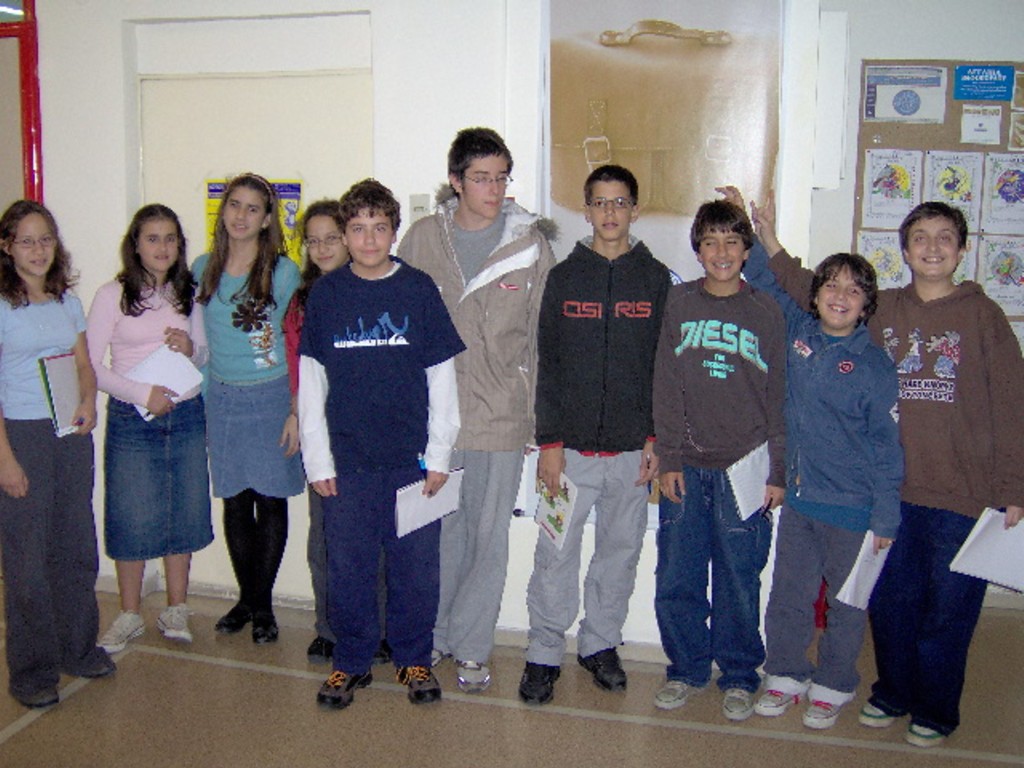
LC 1 Proved a little camera shy, all that is except Claira and Kostis.


All the usual suspects from my D class. I'm looking forward to seeing their photos on their blog.


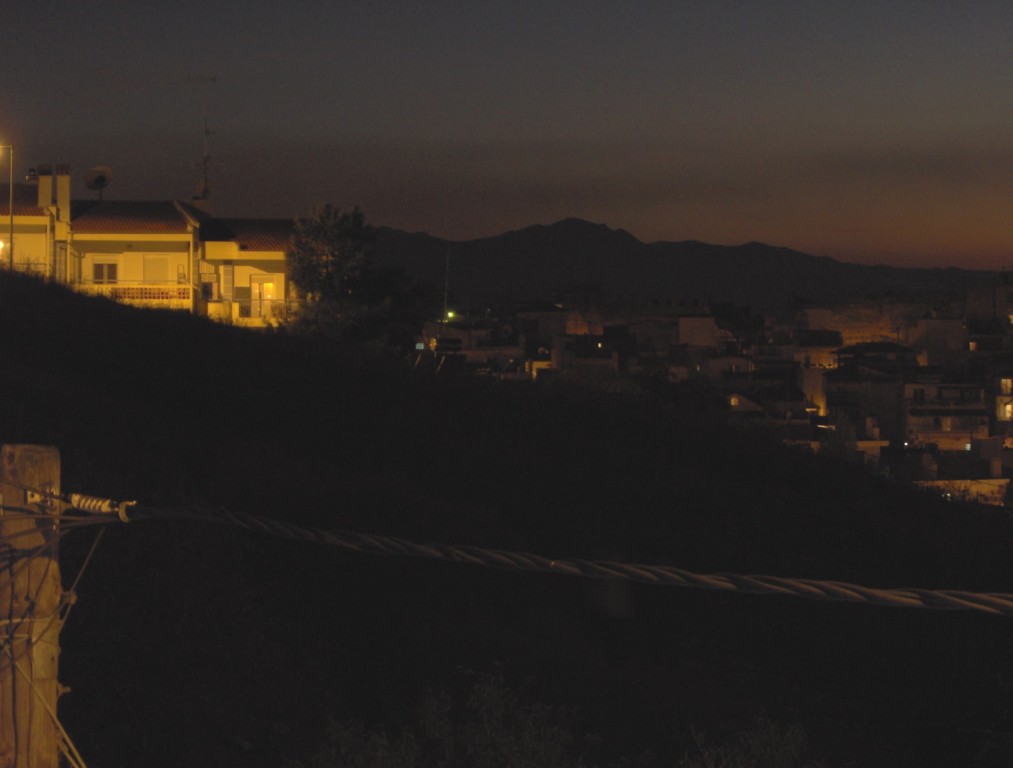
These photos were all taken tonight as I'd just discovered how to take night pics on my digital camera.

The mountain in the background is Mt Olympus, which is about 70 km away.

My neighbourhood.

Friday, November 10, 2006

100,000 new blogs a day


Check out this BBC report on the state of the blogosphere;

"The web's love affair with blogging shows no signs of abating according to the latest report from blog tracking firm Technorati.

Every day 100,000 new blogs are created and 1.3 million posts are made, it found during its quarterly survey.

Postings intensify around significant events such as the conflict between Israel and Hezbollah in the summer."

See here for the rest of the story.

Thursday, November 09, 2006

Home goal


When it comes to home goals I sometimes think that Greece is in a league of its own. This month Athens hosted the Internet Governance Forum's latest meeting at the Divani Apollon Hotel. However, on the eve of the meeting (which amongst other things discussed freedom of speech on the web) we had the case of Antonis Tsiropoulos who was arrested by the authorities for simply linking to a blog that was considered to have libelous content.

If that wasn't enough the venue proved unable to provide internet access to all the delegates. As one reporter present put it;

What on earth am I talking about? The mild insanity of hosting a global, revolutionary Internet conference and then failing to allow anyone to actually access it - the Internet, that is. The wireless access, despite endless complaints yesterday, is still not working at the Internet Governance Forum. This is a mild irritation for most people, but as the mug who is supposed to be officially reporting on what is being discussed online but who is unable to be in the room and online at the same time, it is mind-meltingly annoying.

It isn't helped by the fact that the Greek hosts have assured me - and others far more senior than me - that providing me with a wired connection is "impossible".

All the more galling was to have the prime minister, Kostas Karamanlis (see here for the speech) talking about finding ways to empower the "digitally homeless" when only 27% of Greeks have ever used the internet and the state - run telecommunications organisation (OTE) has failed miserably to provide reasonably priced access, or in many cases any kind of access to vast swathes of the country.

Wednesday, November 08, 2006

Incorporating technology into your teaching


Another tiring day over and I was just thinking on the journey back home that I would be lost if I didn't have access to technology. Over the past few years it has crept into my teaching practice, going from an occasional extra to being an integral part of the way I teach English, both in the class room and in private lessons.

For instance, today I found stuff at the British Council site to help with one of my students, updated his blog and next time I'm going to give him some American comics to read which I'll download.


In the next lesson at the school I realised that I'd made a big mistake, as I had prepared for the Wednesday's lesson instead of today's. It only occurred to me when one of my students asked my about what we were going to do in the lesson. With only ten minutes to go I surfed the web to find the lyrics to Nerina Pallott's "Everybody's Going to War (which I have on my pocket pc), printed them out and photocopied them.

In the lesson I used the song as the basis of a listening exercise which was in turn a warm - up activity for a debate on whether there is such a thing as a "good war". I asked the students to post their opinions on their blog. In addition I also asked them to take part in a competition; take a photo connected with leisure which will be posted on the class blog as well.


Later on we'll send them off to the BBC young photographer competition and see if we get lucky.


Finally, in the last lesson of the day I also got my student to post on her blog her latest film review, one which I copied without Greek subtitles, using DVD Shrink. I also asked her to listen to a couple of chapters of the first Harry Potter book audio book , which she has as an mp3 download, and write a summary. Also, as I didn't have any ink in my printer I scanned and emailed her the test from the course book we use.


As you can see access to technology and all that it offers allows me to find materials that my students find interesting and so they make the effort to understand and as a result they learn more effectively. All I have to do is open the door to a place they find fascinating and they'll do all the rest.

Updating class blogs

This year I decided that I would post all the homework I set on the class blog. One reason behind this (beyond the obvious ones) is that I hope through this to encourage students to view and participate in the blog more often. My problem up till now has been that because students don't really have access to the internet at school I have to rely on them figuring out problems at home. Also since blogging is my own personal initiative, and not really part of the curriculum I'm having a hard time persuading students to contribute.

Class photo competition


Next week I'm thinking of having a class photo competition. The basic idea is that the students post one of their photos on the blog with a humourous caption and I choose the best. I still haven't decided on a suitable prize yet, perhaps a week without homework?

The idea is that the competition acts as an incentive for students to figure out how to post photos on the blog. Although many students do not have a dedicated digital camera most have a mobile phone capable of taking digital pictures.

Tuesday, November 07, 2006

Good news


I had some great news from one of my students. Yesterday, he said that he had told the rest of his computer studies class at school that he has a blog and that now all his classmates want him to teach them how to get one of their own. He was as proud as punch that he was in a position to teach others, that he was now an expert and that he could pass on what he'd learnt in our lessons. Collateral learning, perhaps?

Using BBC news podcasts in the classroom


Today I decided to use a BBC World Service podcast in my Proficiency lesson. I used my Pocket PC linked up to a set of computer speakers that I borrowed from the secretary's PC.

Lesson Plan

1 Ask students what are the latest international stories in the news. Students discuss this in pairs or groups and then report back to the teacher.

2 Write up four or five words from the first story in the podcast on the board.

E.g. elections, Bush, USA, 15

And ask students to guess what the story is about.

3 Play the section (it is a real help if your mp3 player has a screen on which you can see where in the podcast you are). Ask students to write down as many details as possible. It is very important that you make them understand that no one can take down all the details and that they are going to work together as a group.

4 Students swap notes.

5 Play the section again.

6 Ask the class to tell you what they understood.

7 Repeat steps 2 to 6 for the remainder of the stories, either one by one or all the stories in one go.

8 For homework ask them to follow one of the stories either in the news or on the web.

BTW I just noticed today that Sky TV channel here in Greece has the same BBC news stories that I used in the lesson dubbed into Greek. The next time I do a lesson like this I'm going to ask my students to watch Sky in order to see how much they've understood in the lesson.

Sunday, November 05, 2006

Looking outside the well

I thought I'd post this cool animated map that I came across at Ewan MacIntosh's blog.

"Who has controlled the Middle East over the course of history? Pretty much everyone. Egyptians, Turks, Jews, Romans, Arabs, Persians, Europeans...the list goes on. Who will control the Middle East today? That is a much bigger question."

Maps of War

Oh yes, the title was inspired by the Japanese saying;

"The frog in the well knows nothing of the sea."

"井の中の蛙大海を知らず。"


Teaching English using movie trailers


Materials

photocopy
video or dvd with trailers

Instructions

1 Ask students what was the last film they saw.

Did they enjoy it ?
Why/why not ?
What kind of film was it ?

2 Write the word "genre" on the board and explain what it means. Elicit different kind of film genres and examples.

3 Give out handout (see below) and deal with any language problems in section 1

4 Students match films and categories.

5 Ask students to think of any other not included on the list and examples to go with them.

6 Explain to the students that you're going to show them some trailers and that you want them to fill in the grid.

7 Show video once and ask students to check their answers in pairs.

8 Go through the answers and be ready to discuss any ambiguous ones.

9 Students then decide, in groups, which film they'd like to see and why.


THE SILVER SCREEN


A MATCH THE FOLLOWING FILMS AND CATEGORIES.

1 Star Wars
2 Seven
3 Kate and Leopold
4 Bowling for Columbine
5 The Saw
6 Black Hawk Down
7 Fight Club
8 Scary Movie
9 Ice Age
10 The Constant Gardener

a drama
b comedy
c science fiction
d documentary
e horror
f thriller
g cartoon
h action/adventure
i war
j comedy

B Can you think of any other genres (and examples to go with them) ?


C Watch the video and fill in the table below.


NAME CATEGORY YOUR OPINION

1:_______________________________________________
2:_______________________________________________
3:_______________________________________________
4:_______________________________________________
5:_______________________________________________
6:_______________________________________________
7:_______________________________________________
8________________________________________________


Which of these film would you most/least like to see and why ?


For more sophisticated exercises based on trailers (see here).

Teaching's Holy Grail - Irrresistable content


As I watch my daughter playing on the Polly Pocket site, effortlessly negotiating the vast site even though she has just started learning to read and write in English, I see once again how finding material that students are interested in, can completely change their attitude to the language. I've seen the most indifferent of pupils struggle (and understand) material that I would never have imagined possible, simply because they decided that they had to do it in order to achieve their own goals.

So, it doesn't matter what you choose as long as it is in English and helps your students. Don't rule out using films, music, comics, video games even car repair manuals, whatever sparks a glimmer of interest.

Saturday, November 04, 2006

Killing two birds with one stone


The aim of this exercise is to teach some basic first aid ideas and help our students with their English. Of course, it could also be used in lesson teaching them the use of the imperative, giving instructions or vocabulary connected with health, the body or medicine.

Lesson plan

1 Explain to students what a nose bleed is. Ask if any of them have ever had one.

2 Now ask them to write down what you should do if you have a nose bleed. In most cases you'll need to help translate any possible related vocabulary. Don't forget to write these items on the board otherwise you'll end up repeating yourself.

3 Students then work in groups or pairs to write down notes that somebody could read and understand quickly in an emergency. Emphasise the fact that the language used has to be as simple and easy to understand as possible.

4 Elicit answers from the class.

5 Now tell them that they are going to hear what first aid experts have to say about such a situation and that they should keep notes.

6 Play the St John's Ambulance Service's podcast twice. After the first time give students chance to swop notes. Remember this is a learning activity, not a a test.

7 Students work in groups to share their answers.

8 Now give out the web page in written form (see here) and ask students to compare their version with the original . Do they have the same advice? Remember the exact wording is not important, as long as students have captured the main idea.

7 Now write out a similar handout for another situation such as burns, shock etc.

This can be done with a wide range of first aid situations (see here). You don't need an internet connection in your classroom for this, remember that you could download the mp3 onto a ipod, mobile phone etc. and use any handy pair of computer speakers to play it in class.

FCE Interview tips

The exam season is once again fast approaching so I though I'd post this again.


Cambridge interviews do's and don'ts

PART ONE

1 Be friendly, be polite. This is a chance to show the
examiners how well you can speak English, not a fight to
the death.

2 Learn some words that may come up, e.g. the name of
the subject you are studying or the job you want to do
in the future.

3 DO NOT learn a little speech by heart. It sounds
unnatural and you'll get even more nervous than you
need to be trying to remember it.

4 Keep eye contact with the examiner. That means looking
him or her in the eye rather than staring at your shoes
or some point on the wall behind them.

5 Remember there are no wrong answers here, only well-
expressed and badly expressed ones.

6 DO NOT give short, monosyllabic answers, nor tell them
the story of your life.

PART TWO

1 Remember that the question you'll be asked about the
photos will have three parts, answer all of them.

2 If you don't understand the question ask the examiner to
repeat it. You'll not lose marks for this. However, you will
lose marks for answering the wrong question.

3 DO NOT stop speaking till the examiner tells you your
time is up.

4 Pay attention to what the other person says as you will
be asked a similar question to theirs when they finish.

PART THREE

1 Make sure you understand the question before you start
speaking. If necessary, ask the examiner to repeat it.

2 Move your chair so that you are facing the other person.
Remember what we said about eye-contact.

3 Start with a question, not a monologue.

4 Listen to what the other person says, comment on it, ask
them questions.

5 Disagree with the other person whatever they say. It's
always easier to have something to say if we disagree.

6 Give the other person chance to speak. You'll lose
marks if you monopolise the conversation.

7 DO NOT stop speaking until the examiner tells you that
your time is up.

PART FOUR

1 Remember the questions asked in this part are always
connected with the topic in part three.

2 Give full answers, not just short, monosyllabic ones

3 Comment on what the other person says, use their
name.

4 There are no wrong answers, only badly-expressed
ones.

Lesson plan

1 Ask students to write down three things they should or shouldn't do in the interview.

2 Students swap answers in groups of four.

3 Elicit answers from the class, write them on the board.

4 Give out the handout above and ask them to underline any words or phrases they don't understand.

5 Go through the handout, section by section, giving examples of things.

6 Chose two students, preferably ones who aren't shy about talking in front of the others, and tell them that you are going to interview them.

7 Explain to the rest of the class that they are going to listen to the interview and make note of the ways in which the two interviewees do or do not follow the advice given in the handout. Also they should think of ways in which the people could improve their performance.

8 Do the interview. It would be a good idea to record this. Usually, I use my digital camera to do this and then transfer the recording to my laptop in order to burn a cd which I give to the students who've been interviewed.

9 Divide the class into two groups and assign an interviewee to each group. The groups then discuss the interviewees performance and make suggestions as to how they can improve.

10 If you have enough time, get students into groups of three and ask them to do the same interview (one person being the examiner, the other two candidates). Just make sure that those who were interviewed are now examiners.

11 Give the students who were interviewed the cd and as them to watch it and see how they did or did not follow the advice in the handout.

Friday, November 03, 2006

Teaching EFL/ESL using ads


Here's an idea that I used today in the Proficiency class as a warm up exercise for a listening activity based around advertising. For this you'll need some magazines or newspapers, ideally one for each student.

Lesson plan

1 Give out the magazines and explain to students that there are going to look at the ads in order to find out who reads the publication. The idea is that advertisers choose ones that most reflect the interests and views of their target audience.

2 Now ask them to guess the typical reader's based on the ads the magazine etc. has.

age
gender
education

income

occupation
interests/hobbies

3 Students then discuss their answers with their partner, using various ads to prove their point.

4 Elicit answers from the class.

5 Play the section from the cassette.

Although the TeachIt site is aimed at British students, it is a wonderful place to find interesting exercises that you can do with with FCE (b2 level) and post FCE (c1 and c2 level) students. With a little linguistic tweaking and/or warm up exercise that head off possible language difficulties, many of the activities make for a wonderful alternative to the dire course books that are usually used at higher levels.

See here for a list of lesson plans (all of which can be printed out!!!) based on advertising. It's the lazy teacher's dream come true. Actually, not really, as the lazy teacher would simply wade through the course book assigned and not bother looking for something else. However, you know what I mean.