Showing posts with label greek economic crisis. Show all posts

Friday, January 20, 2017

Energy poverty and pollution in Greece

A symptom of Greek economic crisis is air pollution as people switch to burning wood instead of more heavily taxed heating oil/electricity

Greece's economic crisis grinds on for yet another year

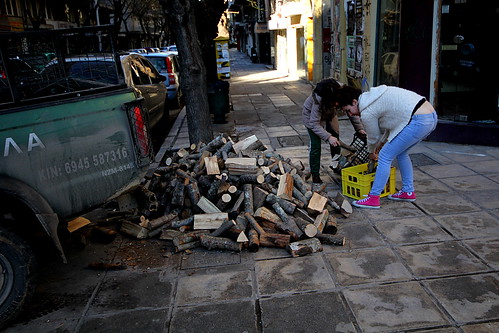
One of the symptom or perhaps better put, a victim of the economic crisis in Greece is air quality, especially in large cities such as Athens  and Thessaloniki as people switch from using heating oil and electricity to burning wood in order to heat their homes.

The government's attempt to claw in revenue by massively increasing taxation on the heating oil that used to be the staple of central heating boilers in many urban apartment blocks has seen many residents abandon them, unable to pay for the oil that fuelled them. In addition, in Greece people are wary of running up massive electricity bills and so are loathed to rely just on it for heating.

In their place many people have returned to traditional wood burning stoves which produce far more air pollution than other forms of heating and in built up urban areas have led to a serious decline in air quality, especially when combined with other sources of smog such as car exhaust fumes.

The recent bitterly cold spell in Greece dramatically brought to the fore energy poverty, yet another entry in a long list of woes that Greeks have had to face since the start of the economic crisis in 2009. Even after years of supposed bail outs and mandated economic "adjustments" (Read cuts in health, educational spending, pensions etc) the economy continues to wither and die on the vine, starved on capital and the prospect of improvement any time soon.

Wednesday, December 11, 2013

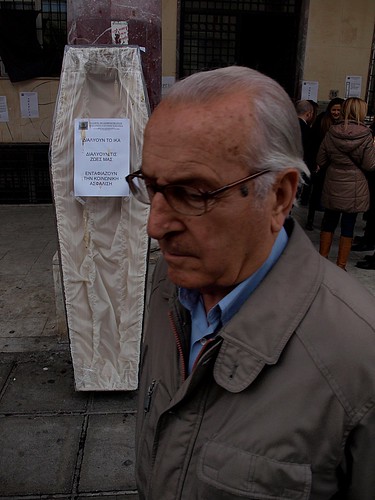
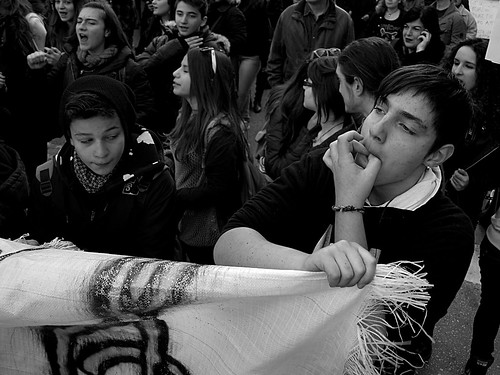
Teenagers march to funeral of fellow teen. Greece

Sara, aged 13 years old died from carbon monoxide poisoning after her mother lit a fire in a make-shift stove in their apartment. The family who had their power cut off three months ago were trying to keep warm as temperatures dropped to near freezing in the northern Greek city of Thessaloniki.

The march by high school students in the city was also in commemoration of the murder of a 15 year old teenager, Alexis Grigoropoulos by a Athens police officer in 2008. The event set off a wave of protest that engulfed Greece in the worst civil violence since the overthrow of the country's military dictatorship in in 1973.

Saturday, August 03, 2013

Greek TV going down the tubes

As seen on TV


Perhaps the easiest way to understand just exactly where the Greek economy is heading is to switch on the TV whilst here. Don't worry no knowledge of the language is required (many of the most popular series are in Turkish anyway), just the ability to cast a discerning eye over what is being shown and sold.  The first impression is that Greeks fashion tastes ossified sometime in the late 90's. Do they really think that is still cool? No, seriously? This misunderstanding stems from the fact that there are no new TV productions being made in Greece and so the stations are filling airtime with popular hits from the last couple of decades. This is also true for foreign imports such as Friends which is repeated so often you might be forgiven for believing Ross, Monica et al have created their own cult of personality.

The same goes for the adverts, gone are many of the slick Hollywood - style productions used by multi-nationals to push their wares, instead we have street barkers hawking carpets, dodgy diet products and perhaps the ugliest shoes on the planet, and all of this on prime time TV, even on the largest private stations.

In short, Greek TV like so much of the economy is in crisis and has sought to combat declining revenues by cutting back on spending and firing staff. And, as with the rest of the economy the results have been a miserable failure. Falling quality has driven away much of the TV's audience especially among the younger and well-educated who have migrated to the internet in search of something a little less trashy. Those left are happy enough with their daily diet of Turkish drama, gossip and b/w Greek movies from the 60's but they are a sign that TV in Greece is fading away as it's core audience gradually shuffles off this mortal coil, both just a shadow of their former selves.

To understand the reasons behind this decline is to understand the reasons why the Greek economy in general has suffered so badly over the last six years since in many respects they are are closely connected in ways it is often difficult  for outsiders to understand . The first thing to realise is that Greek TV was never really about making money, at least not in the way broadcasters usually do so. In most parts of the world a successful TV station makes it cash through bringing in as many viewers as possible and then using that to sell advertising. More viewers means more ad money which allows you to buy/create better programming which brings in more eyeballs etc, etc, etc.

However, in Greek economic universe there is often a kink. Whilst having as many viewers as possible is a given and ad revenue important too, neither has been the primary goal of the larger commercial stations. Instead these broadcasters are embedded in wider business empires and acted as the PR wings of the handful of very rich families that dominate much of the Greek economy. 

With these tools the owners of financial corporations, shipping lines, construction conglomerates etc. use the power of the media and especially that of the television to influence political policy. Parties and political careers can be nurtured, opponents embarrassed or vilified by suitably briefed reporters on the nightly newscast and in return all the owners required is a friendly ear in government. No wonder every self-respecting oligarch in Greece has, since private TV stations were permitted in 1989, sought to buy a TV channel, to go along with their newspapers and the inevitable football team.

However, as they ownership of the media has always been divided between a number of players the impression given to the outside world is that of plurality in which a variety of views and political opinions are expressed when in reality what is on offer are different interest groups vying for power and influence. The rewards for such influence are great; government contracts for major structural works, benign tax regimes, laws that effectively crush competitors are regularly doled out to those willing to support in power. In other words crony capitalism masquerading as a free economy in which those with the best connections to the State rather than the most efficient or innovative thrive.

However, the media sector was hit by a triple whammy after 2008 and the start of the current round of austerity measures. The crisis of confidence over that state of Greek banks mean that loss making media outlets could no longer rely on friendly banks to give no-strings attached loans, advertising revenue went into steep decline as multi-nationals cut back on their TV presence and the steady stream of State "support" dried up. Finally with public finances suddenly under close scrutiny many of the traditional means used to reward media supporters such as public works contracts, used by both PASOK and New Democracy parties became unavailable .

With Greece wavering on the edge of default and/or exit from the Eurozone, the stance of the owners of the country's media changed dramatically, instead of squabbling among themselves the TV stations and their sister newspapers suddenly came down hard of the side of any party or politicians most willing to implement the austerity measures being demanded by the Troika. The few outlets such as Alter TV or Eleutherotypia that refused to tow the line quickly found themselves in financial difficulties when banks refused to extend further lines of credit and so closed down.

On the other hand if it seemed that the government was dragging its feet then politicians would face the wrath of a vengeful journalists and commentators warning darkly that the nation risked wasting the hard won sacrifices made by ordinary Greek people for short term political gain.A warning that the oligarchs would not countenance any threat to their privileged place in the country's economy or open confrontation with the country's creditors and its attendant risk of default.

Such influence reached its peak (or nadir) in the 2012 elections when the Greek media along with much of foreign coverage painted SYRIZA as a threat to Greece's recovery and kept up an unrelenting campaign of of vilification against anyone advocating an end to austerity. Day after day, week after week, month after month the airwaves and front pages were filled with the doomsday scenarios that would accompany any attempt by Greek political forces to question the logic of austerity.

Likewise the supposedly independent public broadcaster ERT gradually lost more and more editorial control post 2008 as government sought to impose their own line and clamped down on even the faintest signs of resistance to the pro-austerity narrative playing upon the nation's screens nightly. The final act in that drama came in June when just two days after a strike that kept the prime minister off the air the government sent riot police to shut down transmission and fired all its employees leading to a three month war of nerves which continues to this day.
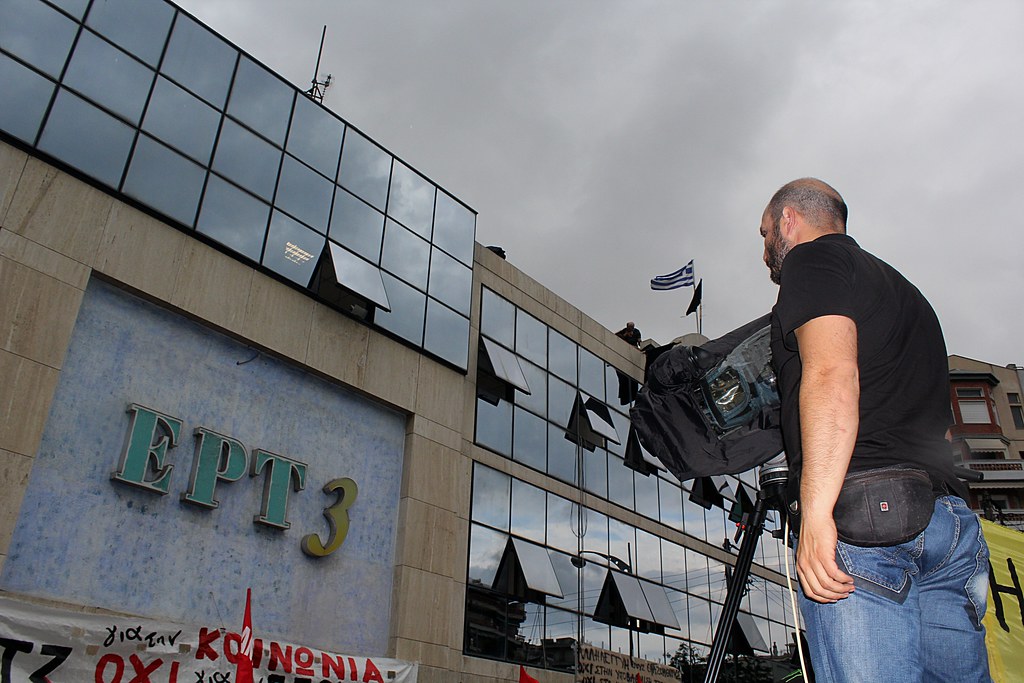
Cameraman outside ET3 studio - Thessaloniki, Greece


While the political situation may have stabilised Greek TV is still in crisis, the private TV stations so long, the playthings of rich oligarchs wishing to play political games are deeply in debt and stuck in a downward economic spiral in which every cut ensures fewer viewers and less revenue. And those who've gone are not coming back, once given a taster of the choice and variety the internet offers it is going to be next to impossible to lure people back to the TV screen with pitifully poor fare on offer at present. 

Deprived of access to government funds and cheap loans that have kept stations afloat till now they have become a mill stone around their owners' necks. Their primary purpose; their ability to set the political agenda  is now in severe decline, a victim of the public's distrust in news reporting whittled away away by endless stream of propaganda posing as news.

Even the parties the media relied upon to exercise power are waning, the government coalition partners, PASOK and New Democracy are seen by many voters as corrupt and beholden to the same wealthy individuals and family dynasties that own so much of the media. On the other hand Golden Dawn which has been largely excluded from the media has continued to grow in popularity at the expense of the two main parties in the coalition government, proof that TV's ability to make and break parties is fading.

So what happens next? The closure of ERT and the re-division of ad money to other stations will give the industry a slight boost for a while but in the middle to long term the situation look bleak. The lords of the small screen have been used to having enormous power for so long they disdained the internet as just a childish fad and did little to prepare for the new media landscape coming into being. They're have been half-hearted attempts to put their stations on mobile platforms such as Android but the reality is that the content is so poor that those most likely to use the service, namely the young are those least likely to be interested in what they have to offer. 

Most likely, media owners will do with their TV station what they did with their newspapers and run them into the ground, hoping that before they fail completely some second tier magnate will be persuaded by the fading glamour to take it off their hands.

Tuesday, May 28, 2013

What has been lost

Unpaid local authority workers protest in Greek city of Thessaloniki

I have been very quiet recently, at least as far as this blog is concerned. While I still tweet quite a lot about what is happening in Greece, over the last month or so I have lost the desire to go out on the streets and cover what has been happening in the city. Perhaps the fact that the end of the academic year is approaching and everyone is feeling worn out is to blame, or maybe the endless stream of bad news I hear from those around me is getting to me.

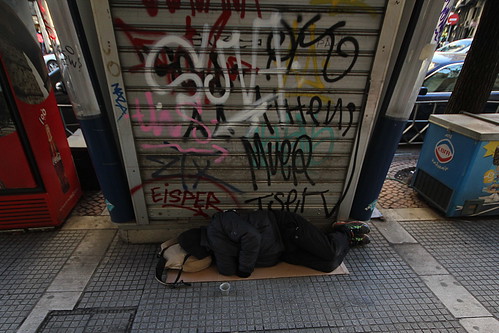
More friends are leaving the country to escape the crisis, others are struggling on but the cost is enormous both financially and in terms of dignity. It's hard to be sanguine when so many people you know are fighting to just retain their self respect in the face of grinding poverty which seems to have no end.

On the other hand the international press, or at least The Economist, FT, CNN and even the Guardian have decided that no matter what your eyes tell you every time you go out the worst of the crisis in Greece is over. Business confidence is up, the government's privatisation plan is finally going ahead, and the banking sector is stabilising. All of which is fine as long as your main interests are in finance and not out there in the "Real Economy"with the rest of us schmucks.

Despite the euphoria in the mainstream media the economy is still collapsing,unemployment hasn't stopped rising, let alone dropped, the suicide rate is the highest in 50 years, 200% increase in new AIDS cases reported and just to add yet more joy to everyday life a new drug, Sisa or Shisha is doing a roaring trade in Athens.

There are some bright spots, since Greece is not a war zone and despite the deepest wishes of many a  journalist on the Death and Debt tour of Southern Europe, there are not dead bodies piling up in the streets. It's not that kind of disaster. Some of those I know have moved abroad to much better paid positions where their skills will be properly utilised, and hopefully some day in the near future they will be able to come back to Greece and share what they have learnt.

Yet even in these cases there is a price to pay, relationships are forced to bear the weight of a such a move and even the most privileged of emigrants have to deal with stress and dislocation caused by moving to a new country. While many may dream of living the American Dream, few believe that their ideal future is set in some provincial town or village in Northern Europe.

For those left behind, phrases like "light at the end of the tunnel" or "The worst is over" seems like a bad joke. In the this part of Greece, the official unemployment figures for young people are 72%, which in practical terms means that virtually no one is in full - time employment.

For older people who lose their jobs the prospects are little better. The few jobs that are on offer are nearly all low skill ones in the service industry where 15-20 euros for 10 hour day is considered acceptable. Of course, these jobs come without  any form of social security contributions, health plan, or hope of a pension Nor do the wages offered cover the cost of living as the latest OECD survey on Greek cost of living shows prices for basic consumer goods have dropped only slightly below those found in Germany where a full-time  salary of 300-400E a month is unheard of.

However, summer is here, the weather is improving and people are out in the streets and cafes, celebrating the end of a difficult winter and for the casual observer, everything seems fine. To find out what has been lost you have to talk to people, crack their outward reserve and get them to trust you enough to reveal stories they may feel deeply ashamed of. That takes time and as we've seen from much of  the foreign media's coverage of the crisis in Greece, often considered  not worth the effort. Much easier to talk to political heads, regurgitate official figures and hang out at the bar of your hotel.

For those who spent a life struggling to improve themselves and provide for their family's future, debt, unemployment and loss of purpose in their lives is deeply felt. The stigma of poverty that haunted Greek society, especially in the difficult post war years is still part of many people psychological make up and so a return to levels of poverty not seen in decades is a bitter blow.


Wednesday, March 27, 2013

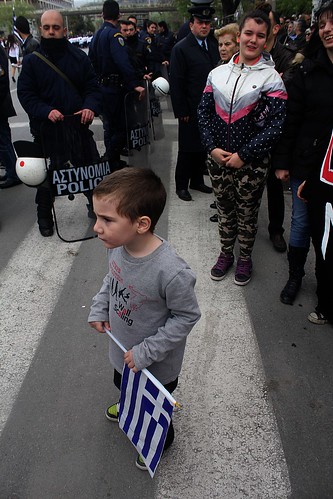
Riot police keep close eye on families gathered for Greece's independence day parade

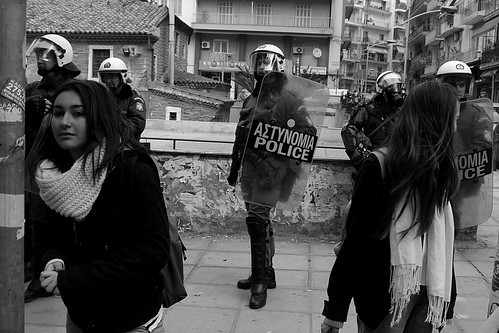
Monday saw independence day marked across Greece. Traditionally, communities large and small celebrate the start of the country's breakaway from the Ottoman Empire in 1821 by holding parades in the centre of towns and villages. This year was no different though the level of policing meant that Athens and other major cities resembled Pyongyang rather than Paris on Bastille Day.

Thessaloniki, Greece's second largest city was no exception with the president and other VIPs (who also included a convicted criminal) safely ensconced in the middle of a 1 km no-go zone surrounded by thousands of riot police. The aim of the authorities was to ensure that there would be no repetition of the events of 2011 when a spontaneous protest closed down the annual No day military parade in the city and angry citizens forced president Karolos Papoulias to flee the area. The incident sent shock waves through Greece's deeply unpopular political class revealing as it did the depth of ordinary people's anger towards their rulers.Just weeks later the government resigned.

The present government with its hard line on matters of law and order was taking no chances that such scenes would be repeated and so made sure no protest would be able to get anywhere near the VIP stands. In Athens the central Syntagma Square was emptied of citizens and a wall of buses kept back people from government politicians.

As Greece struggles through yet another year of economic contraction and the government promises yet more austerity cuts the gap between rulers and ruled becomes more and more apparent on such occasions.


Tuesday, February 19, 2013

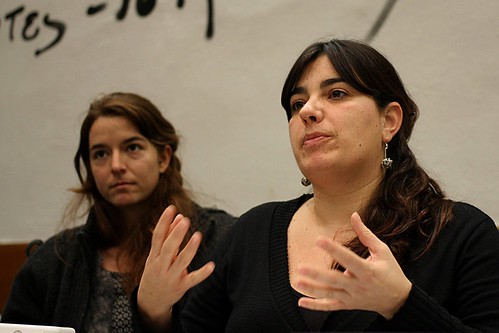
International Citizen Audit Network (ICAN) Meeting - Thessaloniki, Greece 2013

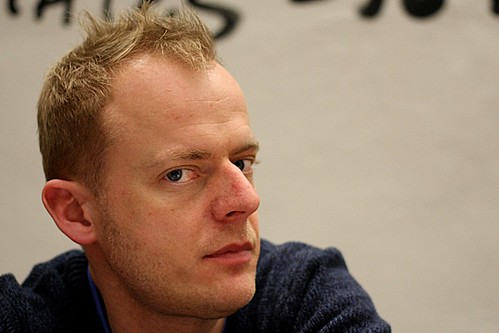
Nick Dearden - International Citizen Audit Network (ICAN) Meeting

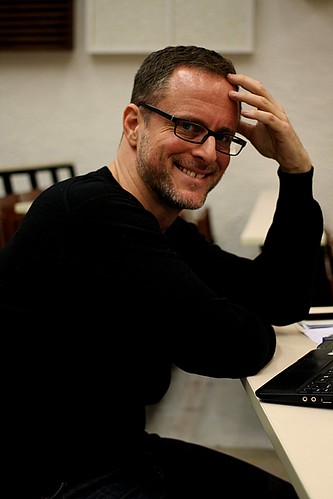
Jonathan Sugarman - International Citizen Audit Network (ICAN) Meeting

Costas Lapavitsas - International Citizen Audit Network (ICAN) Meeting

"European activists meet in Greece to discuss the debt problem, coordinate resistance strategies and
propose alternatives.

The International Citizen Audit Network (ICAN) holds its third meeting in Thessaloniki from February 15th to 18th 2013, with the participation of activists against debt and austerity measures from Spain, Italy, Portugal, France,Belgium, the UK and Greece. ICAN brings together, from April 2012 and under the slogan "We don't owe! We won't pay!", movements and networks in different European and North African countries fighting austerity measures and debt problems through Citizen Debt audits."


cadtm.org/IMG/article_PDF/article_a8811.pdf

Wednesday, January 30, 2013

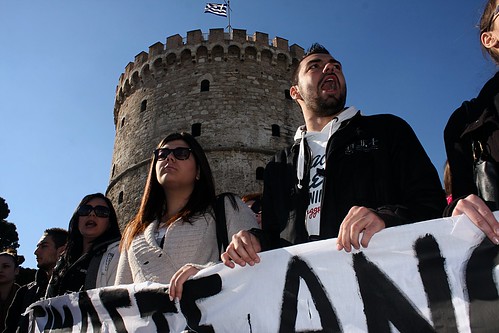
Students at Greece's musical high schools take part in nationwide protests

Students at Greece's musical high schools take part in nationwide protests The students were protesting over wide range of problems caused by lack of state funding for the country's music schools. Lack of staff, cuts in school buses and the stopping of school meals were among the issues that the high schoolers were trying to bring to the public's attention.

Tuesday, January 22, 2013

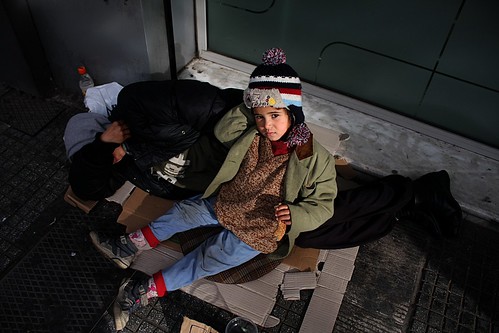
Poverty in Greece

Poverty in Greece by Teacher Dude's BBQ
Poverty in Greece, a photo by Teacher Dude's BBQ on Flickr.
Remember, Greece is not the victim of an insane policy of austerity but a shining example of the benefits of fiscal readjustment.

Wednesday, January 09, 2013

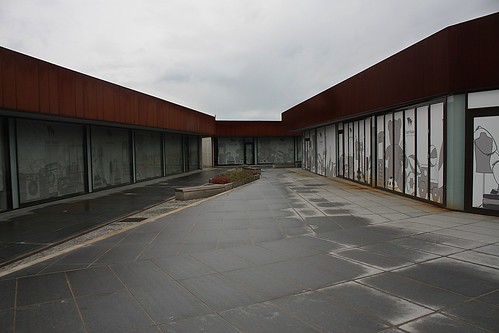
Zombie shopping malls - Greece

This place was built less than 5 years ago, part of shopping complex in the then prosperous eastern suburbs of the northern port city of Thessaloniki. This section never opened, a victim of the economic crisis that struck Greece in 2009. The rest of the complex closed down in 2011.

Thursday, December 20, 2012

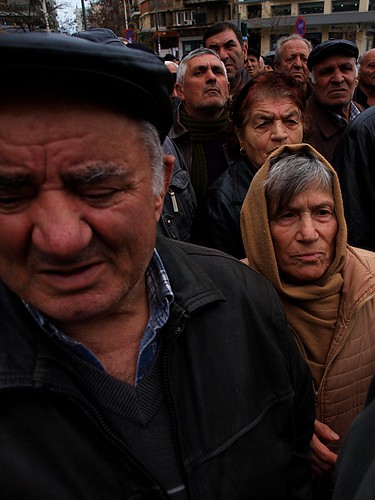
Greek pensioners brave the cold to demand free health care and cheapermedicines

Greek pensioners brave the cold to demand free health care and cheaper medicines by Teacher Dude's BBQ


Other demands included;

 "Cheap heating oil for the People" - signed a Pensioner from Thessaloniki

A reference to the fact that the government has raised the cost of heating oil by 40% in an attempt to raise tax revenues., a move that has led to a drop in consumption of up to 90% in some areas as turn off their central heating despite sub zero temperatures in northern regions of the country.

The situation is further exasperated by the national oil refining cartel, protected by Greek law that means local fuel prices are among the highest in the EU.

Friday, November 30, 2012

Protesting Greek university employees speak to supporters after courtcase adjourned.

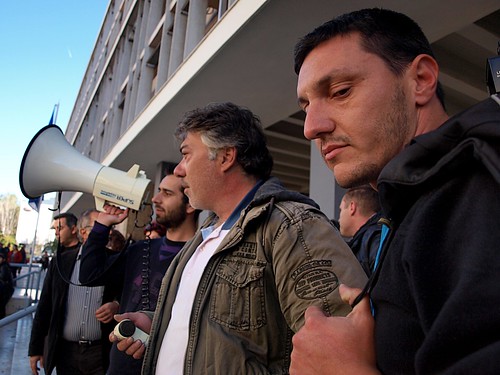
Greek police raided the Aristotelion University of Thessaloniki this morning, arresting 11 employees who had been part of an ongoing occupation of the Dean's office. The protest has been in response to the refusal of contractors used by the university to pay workers salaries for over three months.

Those arrested were released temporarily after their court case was adjourned till Monday.

With lay offs skyrocketing many unscrupulous employers have been using the fear of unemployment to delay or even stop payment of salaries, banking on the fact that people will continue working rather than face certain joblessness.
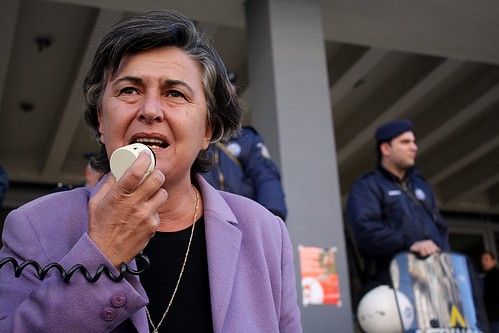
SYRIZA MP calls upon supporters of 11 university employees arrested today to continue their vigil outside city courts

Tuesday, November 13, 2012

M - A Modern Greek Tale

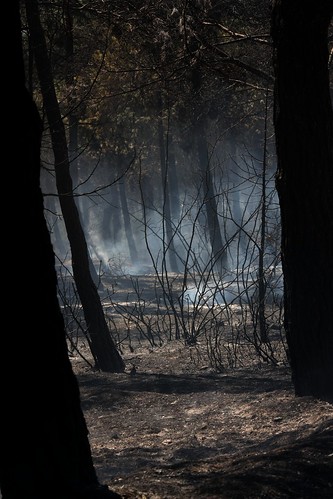
The aftermath of a forest fire near Thessaloniki, Greece

I have a friend who I shall M. Out of respect for the fact she has enough on her plate as it is without my revealing her real name and adding to the battle she has to wage to retain what is left of her dignity. M phoned my last night barely able to contain her anger, seeking a sympathetic ear for her angry venting. Yet again another job interview had ended in failure and yet again her hopes of finding work, any kind of work were dashed. This time she had been told that her qualifications, which are impressive made her potential employers uneasy.

While Greece's young and educated have long given up the dream of a well paid job that matches their education and skills, the realisation is growing that any kind of job, no matter how badly paid or unskilled is no longer open to them, even when they lower their expectations to levels undreamed of just a couple of years ago. Even a part - time job paying 200 euros a month for a 20 hour week is the subject of intense competition and now the degrees and certificates that so many worked so hard to pass are seen as best an irrelevance and at worse a disincentive.

The bitter irony is that a whole generation of Greeks have been raised to find a future in an economy that no longer exists. The sacrifices made by both parents and children to assure their kids future have proven to be an educational Ponzi scheme with people now holding useless pieces of paper that had once promised a prosperous future.

So my friend M once more trawls the internet and local paper for any kind of job, recent experience and her inner work ethic means that she will happily do any time of honest work that assures her a wage.In summer that meant 12 hour days on the street outside a seaside pizzeria, using her flawless English to persuade tourists to step inside.Now that the holiday season is over she is back in Thessaloniki struggling to find the money to finish her studies that would enable to become a therapist. However, the dream of such a job is fading away quietly being forgotten with every unanswered email, every fruitless interview, every day without the hope of some kind of way out of her dead end.