Almost forgot to say, I was interviewed by BBC Radio 5 Live this morning. They wanted to know what was happening here in Thessaloniki and how people saw the events unfolding. Once again my phone decided it was going to sulk just before the crucial moment. One day I'll get a new one but first a fridge as the old one has given up the ghost.
Also 35, 000 read the article I wrote for CNN's ireport yesterday!!!!!
Showing posts with label interviews. Show all posts
Showing posts with label interviews. Show all posts
Tuesday, December 09, 2008


Sunday, May 25, 2008
Interview day


I was in school today as many of my students were doing the interview part of their language exams. As you can imagine many of them were nervous at the prospect but I think they'll do well. I've spent most of the past eight months preparing them for this moment so there was little I could do except reassure them and just remind them of a the stuff we've been doing.
Sometimes it's small things like keeping eye contact with the person you're speaking with (as opposed to staring off into the middle distance), asking for the questions to be repeated and not getting hung up on an unknown word that make the difference at this stage. Basically, just chatting away in English so that when they go to be interviews they do not suddenly have to switch language.
So now I've almost finished as my students are now done with their PET /FCE/ ECCE/ CAE/ ECPE/ CPE exams. Now It's time to think about what I'm going to do in summer and how I'm going to earn a living for the next four months.
Wednesday, May 16, 2007
CPE interview

Thankfully the written CPE exams are over and done with. Good luck to all my students who took them on Sunday. All that is left is the interview so i thought I'd re-post some useful advice on how to approach paper 5.
CPE interviews do's and don'ts
PART ONE
1 Be friendly, be polite. This is a chance to show the examiners how well you can speak English, not a fight to the death.
2 Learn some words that may come up, e.g. the name of the subject you are studying or the job you want to do in the future.
3 DO NOT learn a little speech by heart. It sounds unnatural and you'll get even more nervous than you need to be trying to remember it.
4 Keep eye contact with the examiner. That means looking him or her in the eye rather than staring at your shoes or some point on the wall behind them.
5 Remember there are no wrong answers here, only well- expressed and badly expressed ones.
6 DO NOT give short, monosyllabic answers, nor tell them the story of your life.
PART TWO
1 If you don't understand the question ask the examiner to repeat it. You'll not lose marks for this. However, you will lose marks for answering the wrong question.
2 To make sure you've understood the question discuss with your partner what you have heard. Agree on what you have to answer before starting.
3 Move your chair so that you are facing the other person. Remember what we said about eye-contact.
4 Start with a question, not a monologue.
5 Listen to what the other person says, comment on it, ask them questions.
6 Disagree with the other person whatever they say. It's always easier to have something to say if we disagree.
7 Give the other person chance to speak. You'll lose marks if you monopolise the conversation.
8 DO NOT stop speaking until the examiner tells you that your time is up.
PART THREE (part one)
1 Make sure you understand the question before you start speaking. If necessary, ask the examiner to explain it.
2 Give yourself a few moments to think about what you want to say.
3 Remember there are no wrong answers. Nobody expects you to be an expert on the subject of the question.
4 Feel free to ignore the prompts suggested. You do not have to use them, if you do not wish.
5 DO NOT stop speaking until the examiner tells you that your time is up.
6 Listen to what the other person says as you will be asked to comment on it.
PART THREE (part two)
7 Remember the longer questions asked towards the end of this part are always connected with the topic discussed in the prompt cards.
8 Give full answers, not just short, monosyllabic ones
9 Comment on what the other person says, use their name.
10 There are no wrong answers, only badly-expressed ones.
Labels: EFL, ESL, teaching ideas, video
Saturday, May 12, 2007
Good luck with your exams!!!

Good luck to all my students taking exams over this weekend. I thought I'd post some tips to all those taking their FCE interview in the coming weeks.
PART ONE
1 Be friendly, be polite. This is a chance to show the
examiners how well you can speak English, not a fight to
the death.
2 Learn some words that may come up, e.g. the name of
the subject you are studying or the job you want to do
in the future.
3 DO NOT learn a little speech by heart. It sounds
unnatural and you'll get even more nervous than you
need to be trying to remember it.
4 Keep eye contact with the examiner. That means looking
him or her in the eye rather than staring at your shoes
or some point on the wall behind them.
5 Remember there are no wrong answers here, only well-
expressed and badly expressed ones.
6 DO NOT give short, monosyllabic answers, nor tell them
the story of your life.
PART TWO
1 Remember that the question you'll be asked about the
photos will have three parts, answer all of them.
2 If you don't understand the question ask the examiner to
repeat it. You'll not lose marks for this. However, you will
lose marks for answering the wrong question.
3 DO NOT stop speaking till the examiner tells you your
time is up.
4 Pay attention to what the other person says as you will
be asked a similar question to theirs when they finish.
PART THREE
1 Make sure you understand the question before you start
speaking. If necessary, ask the examiner to repeat it.
2 Move your chair so that you are facing the other person.
Remember what we said about eye-contact.
3 Start with a question, not a monologue.
4 Listen to what the other person says, comment on it, ask
them questions.
5 Disagree with the other person whatever they say. It's
always easier to have something to say if we disagree.
6 Give the other person chance to speak. You'll lose
marks if you monopolise the conversation.
7 DO NOT stop speaking until the examiner tells you that
your time is up.
PART FOUR
1 Remember the questions asked in this part are always
connected with the topic in part three.
2 Give full answers, not just short, monosyllabic ones
3 Comment on what the other person says, use their
name.
4 There are no wrong answers, only badly-expressed
ones.
Thursday, October 19, 2006
Travel and EFL/ESL teaching
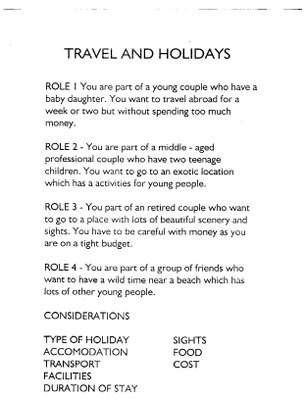
This is a low - tech exercise that I've done a lot over the last few years to help intermediate EFL/ESL students practice speaking skills. It is now especially relevant for the ECCE interview which asks students to take a more active role in the interviewing process.
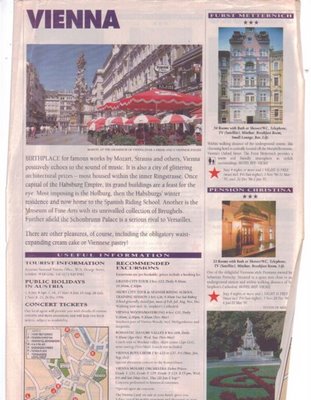
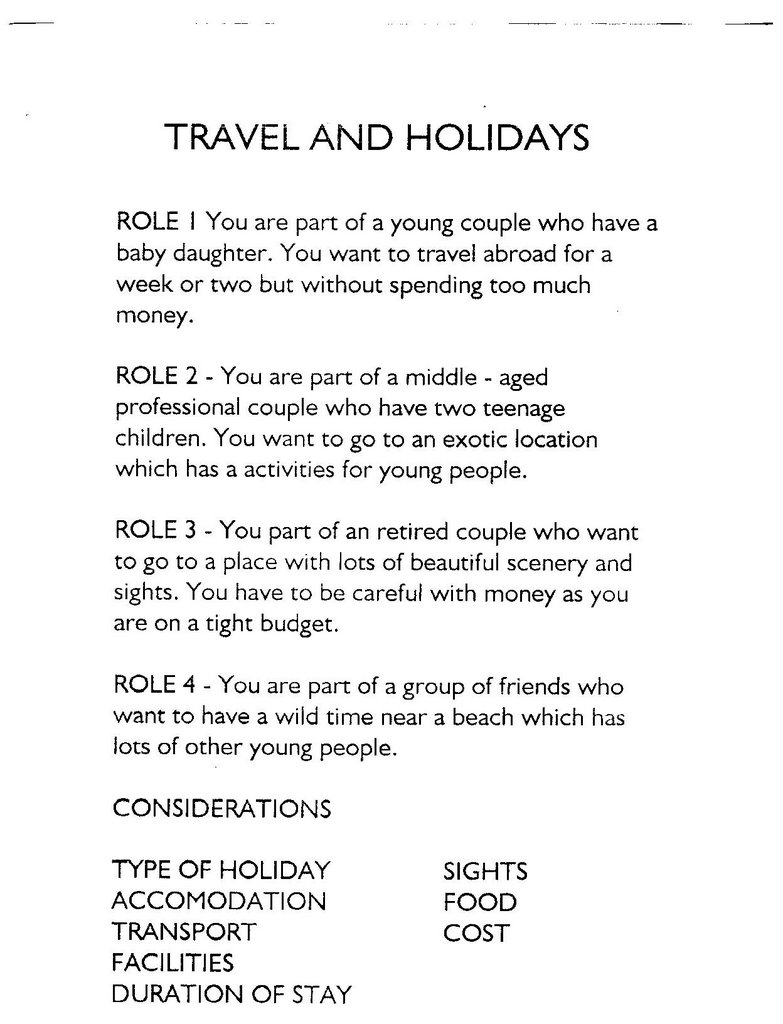
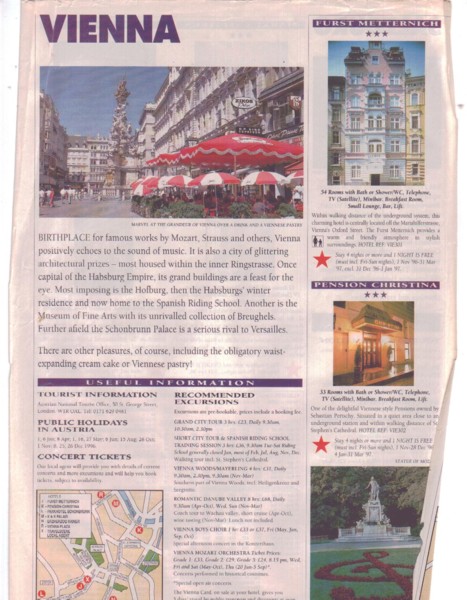
For this you'll need some pages out of a travel brochure and a photocopies of the handout below.
LESSON PLAN
1 In groups of three/four students ask each other about a holiday they been on. Remind them to ask;
Where did you go?
When did you go ?
Where did you stay?
What did you do there?
What made it so special?
2 Now explain to the students that they're going to do an exercise where they have to either choose a holiday or sell one.
3 Divide the class into two groups: Travel agents and holiday makers.
4 Make sure that everyone understands the terms before proceeding.
5 Divide the "travel agents" into pairs and give them each a page from a travel brochure. Explain that they have ten minutes to figure out what the page means as they have to be able to tell customers all about the holiday they are offering.
6 Give each of the "holidaymakers" the handout and assign one of the four roles. Explain to them that they have ten minutes to think about what kind of holiday would suit them and write down suitable questions to ask the travel agents, using the prompts provided.
7 Get the travel agents to set up shop, i.e. move their desks so everyone has easy access and write a sign which shows the place they are offering holidays to.
8 The holiday makers now go to the travel agents in order to find out information about the destination and eventually come to a decision. Make sure that they see as many travel agents as possible. This phase should last between 10 and 15 minutes.
9 The holiday makers then report back to the teacher about the reasons behind their holiday choices.
For this you'll need some pages out of a travel brochure and a photocopies of the handout below.
LESSON PLAN
1 In groups of three/four students ask each other about a holiday they been on. Remind them to ask;
Where did you go?
When did you go ?
Where did you stay?
What did you do there?
What made it so special?
2 Now explain to the students that they're going to do an exercise where they have to either choose a holiday or sell one.
3 Divide the class into two groups: Travel agents and holiday makers.
4 Make sure that everyone understands the terms before proceeding.
5 Divide the "travel agents" into pairs and give them each a page from a travel brochure. Explain that they have ten minutes to figure out what the page means as they have to be able to tell customers all about the holiday they are offering.
6 Give each of the "holidaymakers" the handout and assign one of the four roles. Explain to them that they have ten minutes to think about what kind of holiday would suit them and write down suitable questions to ask the travel agents, using the prompts provided.
7 Get the travel agents to set up shop, i.e. move their desks so everyone has easy access and write a sign which shows the place they are offering holidays to.
8 The holiday makers now go to the travel agents in order to find out information about the destination and eventually come to a decision. Make sure that they see as many travel agents as possible. This phase should last between 10 and 15 minutes.
9 The holiday makers then report back to the teacher about the reasons behind their holiday choices.
Subscribe to:
Posts (Atom)