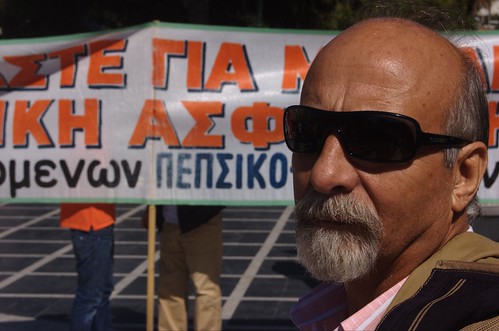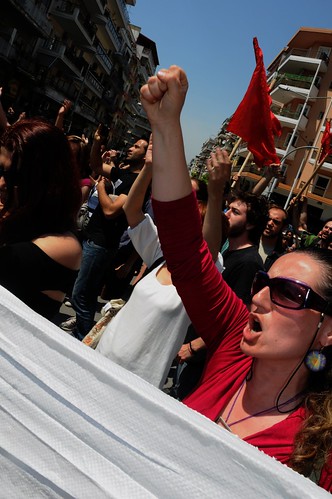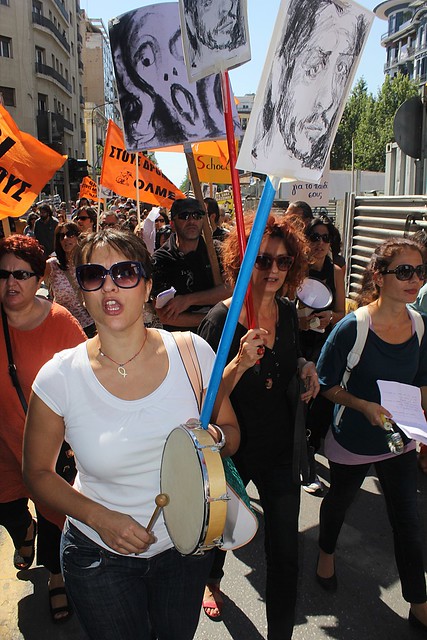
Striking teachers carry picture of murdered singer, Pavlos Fyssas.
September is usually the time of year when Greek politics shrug off its summer stupor and the country's parties vie with each other to set the political agenda for the coming winter. Yet this year the speed at which developments have unfolded is unprecedented and the arrest yesterday of the leader of the neo-nazi (let's not be coy about using the term) Golden Dawn party leader along with many of their MPs and supporters is just part of a string of developments which are sending shockwaves through Greek political life.
Suddenly, Greece's mainstream media which has often been indifferent to Golden Dawn violence over the past few years is full of stories concerning murders, money laundering etc allegedly carried out in the name of the movement. In fact all those widely documented stories they were so unwilling to report till the Greek government decided to clamp down on the far right this weekend.
The same TV stations and newspapers that till recently were happy to host Golden Dawn politicians have, as if by magic, turned into die-hard defenders of democracy and the sworn enemy of those who threaten its sacred institutions. In a similar vein, these media organisations have run stories concerning secret armies of Golden Dawn cadres trained by Greek special forces, calls for a coup by army reservists and dark tales of infiltration in the military and the police force.
Such stories have been seized upon by foreign correspondents eager for a juicy headline and not too worried by the fact that many of these plots have little in the way of hard evidence to back them up other than anonymous sources quoted in Greece's less than reliable newspapers. At times the furour concerning the influence of Golden Dawn in Greek public life reads like an extract from Evelyn Waugh's satirical novel about journalism, Scoop in which wild rumour is magically transformed into informed analysis by the press.
However, the killing of hip-hop singer and left-wing activist, Pavlos Fyssas (known as Killah P) set off a chain of events that has seen a sea change in Greek public life. Before it, Golden Dawn was cresting a political wave of discontent over austerity and exploiting for all its worth the public's disgust with the existing political establishment. Polls showed its share of the vote rising and some even predicted that it would go from being the third to the second party in next year's local elections. The lead analyst at the pro-government Skai TV even raised the possibility of a New Democracy - Golden Dawn alliance, saying a similar partnership had been cemented in Norway.
Now all of that is changing, instead of Golden Dawn being invited into government they're now behind bars, facing a raft of serious criminal charges, including that of being a criminal organisation. Opinion polls show a significant drop in support though it should be noted that they still remain the third most popular party a sign that while down Golden Dawn cannot be dismissed just yet.
It seems that the country's political leadership has decided to take the political gamble of clipping Golden Dawn's wings and even hope to secure their right flank by neutralising them politically. They are hoping that such a move will woo disgruntled voters back to the New Democracy/PASOK party fold and allow the coalition to portray itself as the saviour of Greek democracy both at home and abroad.
For domestic audiences the arrests are being used as evidence that traditional parties of government are combatting political extremism and so are a force for stability in difficult times. For those abroad the rise and fall of Golden Dawn can be used to force concessions in Europe in the next round of talks over the latest austerity measures. "Look," they say "if you insist on yet more cuts and firings you'll enable those extremists who wish to destabilise Greece".
Yet this is still a major political risk for prime minister Antonis Samaras. Golden Dawn MPs have threatened to resign en masse which would lead to 18 by-elections and so threaten the government's slim two seat majority. Other commentators are proposing that in such a situation Samaras would have no other choice but to call for general elections. Given the fact that Samaras was happy to bring down the PASOK led government last year just months after it was elected shows that such a possibility does not daunt the man. Indeed, given Samaras's role in bringing down the New Democracy administration in the 1990's, it would par for the course.
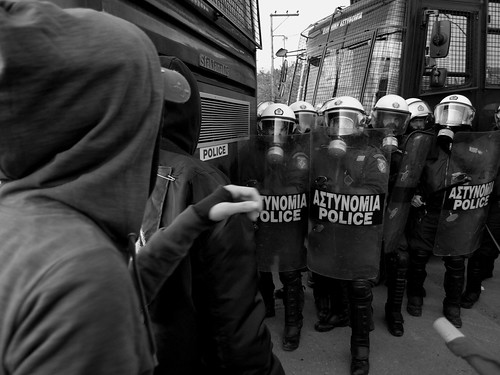
While Greek political establishment and its supporters in the mainstream media congratulate themselves on dealing with the threat to public order posed by Golden Dawn others wonder why an organisation facing multiple charges of murder and a much longer list of attempted murders and other acts of violence was allowed to get away with it for so long. Where have the police and judiciary been while for years gangs of thugs terrorised people on the streets of Greek cities?
If nothing else the clamp down reveals clearly the lack of distance between Greece's justice system and political parties in power. Only when the political leadership decided that Golden Dawn had gone too far did the police intervene decisively, despite a mountain of evidence collected by Greek and foreign activists over the last four years.
However, the willingness to overlook racism and violence is not limited to Greece's police officers. On the contrary, both PASOK and New Democracy have been more than willing to adopt Golden Dawn style positions on immigration in order to win back votes by proving that they are cracking down. It is this, along with the crushing effects of austerity that have provided Golden Dawn with so much impetus. The ruling parties have been happy to legitimise racism by making it government policy and so helped turn Golden Dawn from a bunch of nazi-junta nostalgists out on the wilder fringes of Greek political discourse into a part of mainstream public debate.
If the politicians had thought more about ethics rather than polls, if the police had just done their job rather than serve an ever changing political agenda and if both had treated violence against dark skinned people with the same seriousness as those with lighter complexions there would be several people alive today including Pavlos Fyssas, RIP.