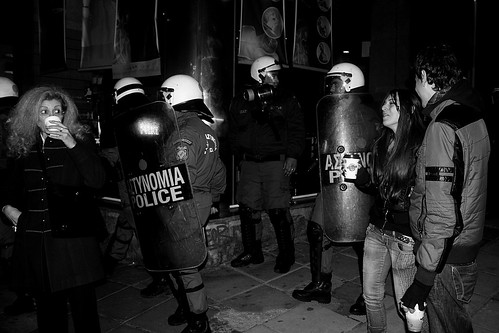
"Limited use of tear gas" or "περιορισμένη χρήση χημικών" as they say in Greek is such a benign phrase suggesting that the police sent a few squirts in the general direction of those protesting, a little snifter, just to add to the atmosphere. In reality there is no such thing, at least here in Greece.
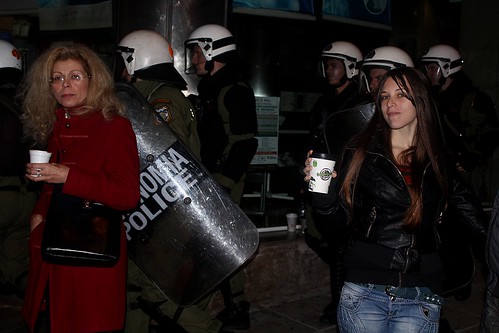
The police and especially the riot squad (
MAT) don't do half measures as the residents of downtown Thessaloniki found out again last night. With a clouds of tear gas covering half the centre and forcing tens of thousands to lock themselves inside or rush indoors coughing and crying. Even as far away as the port which is over a kilometres away some film festival goers were complaining of sore eyes and difficulty breathing.
All this to deal with a few dozen stone throwing youths who'd decided to use the university campus as a base to harass riot squad units opposite. As a result police shot round after round of tear gas into the grounds for over six hours. At one point firing canisters into the Polytechnic building, smashing windows and forcing students peacefully commemorating
17th November to flee.
That's how I found myself trying to climb eight stories with the lungs of an 80 year old manic smoker. That's the one thing they don't tell you about tear gas is that tears are the least of your worries. It's what is does to your respiratory system that really scares, suddenly you cannot breathe, you feel like you're drowning. You draw a breath but nothing happens, no oxygen makes it inside, instead more of the vile stuff penetrates your lungs. Around you you can hear young kids hacking and coughing like patients on an emphysema ward, some
desperately sticking their heads out of the window in order to take in something other than this poison.
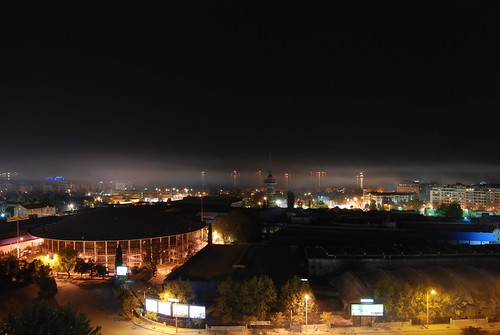
After what seems like hours I make up onto the roof and out of the building, even on the eighth floor below you cannot stay inside for more than a few minutes. From up here the city looks peaceful, beautiful even, despite the layer of who knows what that blankets this part of the city.
Later on when people have regained some measure of composure and made phone calls we then realise that we're trapped, all around the campus are riot police units, plain clothes cops and god knows who else ready to arrest anyone they consider suspicious. Just being here is cause enough and once in the their hands anything is possible.
Unwanted flashbacks of the scenes of
the savage beating of a Cypriot student captured by TV crews this night two years ago pop into my head. Having just arrived in the country he was naive enough to believe that being innocent he'd have nothing to fear from the police. Instead he was kicked and punched by half a dozen cops so badly that he spent weeks in hospital, his face an unrecognisable pulp. His crime stopping to answer their questions instead of running the hell away from there.
More phone calls and eventually those on the roof descend and meet up with others who were still in the area, all in all a few hundred who make their way to the university's admin building where students negotiate with the dean over how to guarantee our safe passage off campus.
It's nearly three, cold and the adventure and adrenaline have long since worn off, thoughts of sleep and home take the place of indignation and protest, it seems to last for hours but in the end we all move as a group towards Kamara and the relative safety of the centre. Here we can mingle in with night owls who even at this time fill the streets, cafes and bars.





What both leaders choose to ignore was the enormous drop in turnout by Greek voters, in some cases 50% less than in previous elections in 2006 and the growing dislocation between the country's ruled and rulers. While both major parties made some gains the overall trend is one of ever intensifying disenchantment with the current political system. Less an endorsment of the country's politicians than an understanding that the country no longer controls its destiny, no matter which party is nominally in charge.
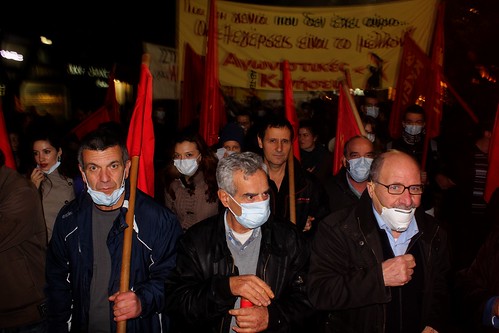
Tomorrow marks the 37th anniversary of the Polytechnic uprising which set in motion a chain of events that led to the overthrow of the military dictatorship that had siezed power in 1967. Every year students and others march in Greece's major cities in commemoration of those who died to restore freedom and democracy. The day is often used as a platform by political groups to demonstrate against unpopular government policies. This year's anniversary is likely to repeat this tradition and the presence of 7000 additional police officers in the centre of the capital is testiment to how worried the government is about the marches turning into something more violent.
Already there have been clashes in Athens between youths and the police around the university of Athens campus the scene of many of the violent confrontations during the 2008 uprising which caused billions of euros worth of damage.
Polytechniou day as it is known in Greece will prove to be an acid test over whether young Greeks in particular have accepted the massive cuts in public spending and job losses proposed by the European Union, European Central Bank and IMF.
Given the anger and frustration felt by much of the population over the continued economic crisis there is a very real possibility that a miscalculation by the authorities could have drastic consequences.