Monday, November 07, 2011

Greece's PM's horse trading reveals political system at odds with public opinion

Over the last week the world's media have been camped out in central Athens following the machinations of Greece's political caste as they vie for power and government positions. Papandreou remains, for the time being, prime minister having survived against the odds a vote of confidence on Friday, a feat that has both mystified observers both domestic and foreign. For the past three days the countries political leaders have been locked in negotiations over what form the so-called government of national unity will take. I thought I'd take the time to try and explain some of the major player involved and why creating a coalition seems to be causing so many problems for Greek politicians.

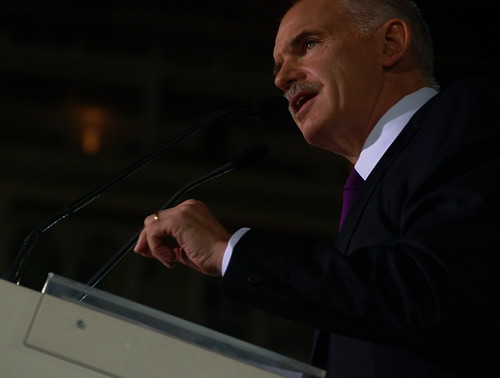
Γιώργος Παπανδρέου - Giorgos Papandreou

As we speak Greek prime minister and leader of nominally ( labels such as left and right have no firm meaning in a system that is predicted on gaining and keeping power) socialist PASOK party has agreed, at least in theory to come to an agreement with former room mate and leader of the nominally conservative New Democracy party.

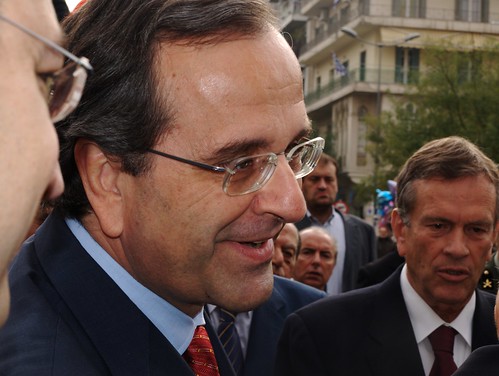
New Democracy leader, Antonis Samaras electioneering in Thessaloniki, Greece

The dilemma Samaras faces is that any co-operation with a figure as despised as Papandreou is disasterous for both New democracy's delicate internal political balance and any future electoral campaigning as his  leadership of his party is beset with problems since groups who align themselves with former prime minister Konstandinos Karamanlis are waiting in the wings to mount a leadership challenge.

Also with so little room to manoeuvre New Democracy's claim that they could deal better with the pressure emanating from Berlin and Paris over the nature of austerity measures would be put to the test and most probably be found to be little more than a PR ploy.

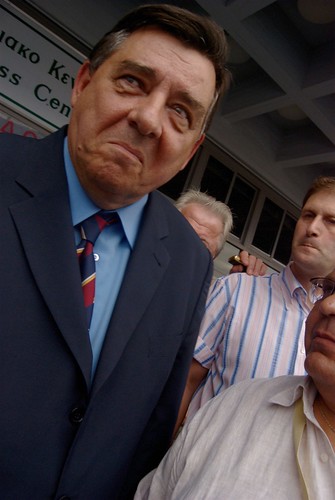
On the other hand Giorgos Karatzefris, leader of the far right LAOS party could conceivably be roped into a coalition government,as the party previously voted with PASOK to pass the first round of austerity measures. Although Karatzaferis faces fewer internal challenges (the party, like so many others in Greek political history, is, in essence a vehicle for his personal political ambitions) than Samaras, previous co-operation with PASOK has serious damaged LAOS's claims to be the only true patriotic defenders of the Greek fatherland and cost them poll support.

Giorgos Karatzaferis - leader of Greece's far right LAOS party

At the other end of the political spectrum Fotis Kouvelis, the leader of the tiny Democratic Left party has been mooted as possible new leader, presumably resurrecting the policy favoured by medieval French baron in elevating the weakest and least able amongst them to kingship. But once again, any party seen siding with the government is likely to severely punished in the next elections.

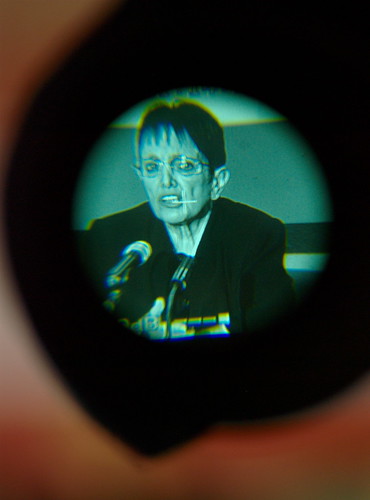
Greek communists kick off election campaign

The Greek communist party ( KKE) and the reformist socialist SYRIZA coalition party have made it perfectly clear that will not even contemplate taking party in any unity government believing that such a government simply legitimises the deeply unpopular public spending cuts and tax hikes being imposed by Greece's creditors. Instead communist leader Aleka Papariga has called for open defiance to austerity measures and communist affiliated unions are in the forefront of industrial action designed to fight cuts.

Similiarly, Alexis Tsipras's SYRIZA coalition has also rejected any possibility of working with Papandreou's government, instead promoting a campaign of protest and civil disobedience against the austerity package.

Αλεξης Τσιπρας/ Alexis Tsipras


What's left is a hodge podge of independent MPs many of them former PASOK members who've been drummed out of the party for failing to follow the party line so chance are they will be less than willing to trust their former colleagues.

However, what last weeks' dramatic developments have shown is that very little is certain in Greek politics and that MP's statement concerning who and what they support are little more than negotiating ploys and cannot be taken at face value. The endless round of horse trading and ever changing political gamesmanship has left many Greeks even more disgusted than ever with the seemingly amoral behaviour of their representatives who seem to consider party political careers a far more worthy use of their time than trying to repair their credibility with voters.

The reality remains that whatever government is formed they will be faced with the same unpalatable choices that forced the prime minister to offer his resignation and the same angry, resentful citizens who believe that they are paying for greed and incompetence of the country's political and economic elites.

Labels: , , , , ,

Wednesday, November 02, 2011

Greeks say NO to their own government

The Greek prime minsiter's decisionto hold both a vote of confidence in parliament and a national referendum on lastest austerity measures has taken the world's money markets by storm.

Even within Giorgos Papndreou's own PASOK party the decision has been met with mixed reactions. Whilst cabinet ministers have said they fully support the PM in this, backbenchers are rebelling with some saying they will vote against their own party if a referndum goes ahead, even calling for a government of "national salvation".

Opposition parties have been thrown into confusion by the referendum as well, The main opposition party, New Democracy has come out against it and is calling for elections. many smaller parties on the left are also against it, believing it a PR tactic to divert the public's attention from more important issues.

On the other hand the Greek public have thrown up their hands as far as the current political system is concerned. The nationwide protests and disruption of last Friday's national day parades made that clear to politicians who were booed and in some cases physically attacked by disgruntled voters.

The fact that polls show ever decreasing support for the two main political parties (figures for smaller parties have remained more or less static) shows that whatever the countries leaders may announce they are not in the position to say they speak for anything other than a small minority of the electorate. In such a situation the massive cuts in wages and public services and the prospect of a decades worth of painful austerity continue to have very little public support. Quite the opposite, Greeks across the political spectrum feel betrayed by their leaders and are in mood to go along with more of their follies.

The next crunch point will probably be Friday's vote of confidence which is likely to see the fall of Papandreou's as rebel PASOK MPs vote against their own party. The problem still remains who or what will take their place as no other party has a popular mandate to take over the reins of power and how do politicians campaign for re-election when voters would just as soon lynch them as give them their support?

On the other hand the annual 17th November anniversay of the fall of the Regime of the Colonels is just round the corner and this year a generation of Greeks raised on stories of heroic opposition to a hated regime will once again take to the streets across the country.

Labels: , , , , ,

Creative Commons License
This work is licensed under a Creative Commons Attribution-Noncommercial-Share Alike 3.0 Greece License.