Showing posts with label teaching. Show all posts

Wednesday, November 16, 2016

English For Refugees

English For Refugees

After so many months of silence I have decided to start writing here again. After the refugee camp in Idomeni in northern Greece was shut down and the people moved to more permanent settlements throughout the country.Our group, The Refugee Solidarity Movement, Thessaloniki, wound down and I decided that I needed a break from this. In addition it seemed clear that other groups were taking over so our group's efforts were less needed.

However,  I have managed to get back into the game and as with so many things that happen in Greece, it's as much to to with chance and serendipity as it is with any plan I may or may not have had in mind. Whilst visiting the Oikopolis Social Centre on an entirely unrelated matter, I found out that they were about to start new language lessons with refugees but one of their volunteer teachers was soon to Leave Greece to start a new life in France. So that is how I found myself in front of a class of refugees from Syria once again teaching English along with another Patricia, another volunteer teacher.

The situation was and still remains somewhat chaotic with people of different ages (11 till 50) and different levels of competency in English (complete beginners to those with the fundamentals sorted) in the same group. In addition we are in the social area of the centre which is like teaching on the hard shoulder of a motorway.

This is gradually being sorted out, Patricia has decided to form a group of complete beginners while I work with those who have intermediate skills. We are never sure how many students will turn up as new students turn up, others change class and others still drift away looking for something else.

With such uncertainty I have decided  to not use a course book both due to the cost and the fact that students are coming and going all the time. Instead I have been inspired by Teaching Adult Second Language Learners by Heather McCay and Tom Abigail. Designed for teaching practical, every day English to those arriving in an English speaking country, I have adapted some of the activities for my students so they can communicate with NGOs, the authorities, etc in English.

My approach is based on utilising students experience and expertise and giving them language skills that can be used instantly, rather than to be filed for later. I eschew technology as much as possible, not because I am against its use in lessons but from experience that so much time is used explaining it, and setting it up that time for other things is wasted. I hope this will change in the future as my students grow more confident with their English. Most have smart phones and we have internet access but this cannot always be relied on.

Also I have come to realise that the occasional photocopy, copious use of the white board and role play/mime are not only more easy to implement but take far less time setting up.

Topics covered so far

Introducing ourselves
Talking about family and background
Numbers, especially dates
Jobs
Interviews (asking and answering questions)
Parts of the body


When I have time I will be uploading detailed lesson plans.

Monday, October 04, 2010

Wild goose chase

It has been a particularly difficult summer here in Greece for everyone, rising prices, galloping unemployment and deep salary cuts have made people worried about how they are going to make it through the winter, which contrary to popular myth actually exists in Greece. Hard to believe when you 're on the beach and it is in the high 30s that the temperatures here in the north often are colder than those in the UK.

To make my particular situation even more difficult was the fact that I was burgled in May, which damn near wiped me out financially at the worst possible time of the year for a teacher. So when I got the chance to apply for a job as an IELTS examiner you can imagine how welcome that news was. Despite lack of funds I managed to scrape together the money necessay to travel to Athens for the interview. I travelled through the night by coach in order to save the cost of a hotel room and kept my spending to an absolute minimum.

After a long and stressful interview I returned the same day so spending endless hours stuck in a coach during the course of the day. As you can imagine a 14 hour, 1100km round trip is nobody's idea of a fun day out.

The only problem was that the British Council wanted me to do a five day series of training sessions in Athens, which was just impossible for me financially. As you can imagine spending five days away from home staying in a hotel, eating out and commutting is a major layout even in the best of times, let alone during one of the worse periods of economic crisis in modern Greek history. So I said that it was impossible for me and could I do the training closer to home. Thankfully, the BC assured me that someting could be worked out come September. September came and no word, when I sent off emails I was first told that the person responsible was unavailable, then I was told that the training material were appropriate for groups only and finally, today I received an email saying that is no job anyway.

I am angry that this whole procedure has been a waste of time, energy and money in which I foolishly participated, thinking that I might get a job out of it. I feel that that I have been misled and that an organisation has chosen to treat people with indifference and/or contempt. It's something that I have seen a lot of here in Greece as the economic situation has deteriorated and more and more people chase fewer and fewer positions. Teachers are being seen as just another commodity which can be exploited and discarded at will. An endless stream of other applicants can take their place if they are unhappy with expoitative wages, lack of social insurance or outrageous demands.

Monday, May 24, 2010

Back to teaching

Hairdresser's

I guess I've taken a break from reporting what has been happening here in Thessaloniki as I need some time and space for myself and do the other necessary stuff in my life so that the bills get paid and there is something in the fridge other than ice cubes and satchets of mustard.

Last week I helped present seminars in how to make and distribute videos on the internet using freely available software tools. As with using the web for teaching English I tried to adhere to two basic principles. The programs and equipment have to be;

1 Free (in the case of programs) or cheap (in the case of equipment) - so this means working with peoples' compact cameras or mobile/cell phones that have video recording capabilities.

2 The programs have to be easy to master.

There is little point wading through complex software that requires state of the art equipment if people do not have access to it afterwards. Instead the message I was trying to get across was that with simple tools and a little bit of knowledge we can capture half decent images that will help promote our message via the internet in ways that text alone cannot.

None of what said was groundbreaking or particularly new however, as with many powerful tools it's the application of existing technologies in new and innovative ways that makes all the difference. A mobile phone, a cheap netbook and use of the myriad of possibilities that social media offers means that we can all contribute something to the debates that surround us in the traditional media.


Sunday, September 20, 2009

Greek EFL/ESL in crisis

The school year has started once again here in Greece and once again I am getting back into the swing of things a far as teaching is concerned. I have started lessons with new students and as is often the case I have been appalled by what they have been put through in the name of EFL/ESL.

Case in point being a pair of teens who were forced to get through 10, yes 10 exam practice books as a way of preparing for their B2 level exams. No other material was provided and these poor guys had to wade through hundreds of pages of test items. No wonder they were wary about continuing their foreign language education with me. I quickly assured them they would not be doing anything as dry and soulless as this.

With the growth in number of ESOL examinations recognised by the Greek state the response of the the private language sector (where the bulk of language teaching takes place) is to turn intermediate level classes into little more than exam pratice lessons which do little more than repeat the format of whatever examinations are being taken. There is very little principled teaching of skills, functions, syntax, phonetics or anything else that might effectively help a person attain proficiency in English.

All that matters is that students do an endless list of exercises that may come up in the examinations they are going to take. Of course this scatter gun approach is time consuming, expensive and extremely ineffective. However, by the time that becomes apparent, the frontisteria (Greek private schools), publishing companies and exam providers have all made handsome profits out of hapless parents and robbed students of hundreds, if not thousands of hours of their youth.

Personally, this is a good thing, as cynical as it may seem as the latest generation of parents have come to realise the huge scam being committed and have started to look or alternative teaching opportunities and so come to me looking for something different. On the other hand schools have responded to this crisis by cutting cost and reducing the quality of the education offered even further. Low wages, chronic job insecurity and dubious contracts mean that teaching English in Greece has become a McJob where the youngest and cheapest are favoured and anyone with experience or qualifications are deemed a waste of money.

Saturday, February 23, 2008

The law of unintended consequences

I don't think I believe it either I don't think I could ever have conceived in my wildest dreams that a million people would want to see what started out as a simple, proof-of-concept project. Just over a year ago I came across Microsoft's Photostory 3 and decided to play around with this program that allows you to produce short movies using still pictures. Intrigued I made a few videos hoping to pick up skills that I could then use in class to help my students on their own projects.

Now I see that those videos have taken on a life of their own and more than a 1.000,000 people have viewed them.

Tuesday, February 12, 2008

Quote of the day

Student a: But I don't know how to download stuff on the internet.

Me: Oh come on, it's easy. Then again, I've been using computers since I was 13.

Student b (in all seriousness): Υπηρχαν υπολογιστες τοτε; (Did they have computers then?)

Tuesday, September 18, 2007

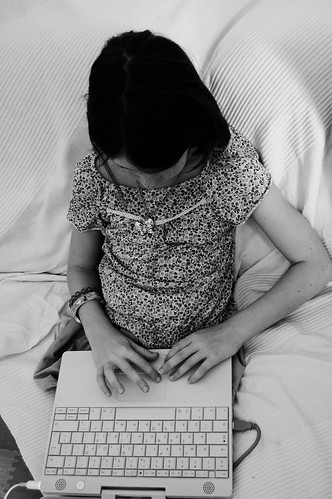
Kids on the net


, originally uploaded by Teacher Dude's BBQ.

Once again, the school year has begun and once again I have to persuade students and parents that the"unusual" teaching methods and material I use will help them achieve their goals; namely help them learn more effectively and increase their chances of getting a certificate.

My hardest battle, however usually revolves around the use of the internet. For many parents the mere mention of the word invokes fear and suspicion. Having been bombarded with scare stories from the mainstream Greek media they shy away from allowing their children near it.

Of course, concerns about younger people having unsupervised access are not to be dismissed as there are dangers a plenty on the web. Yet, this is true for so many aspects of our life. We do not, for example, keep our kids confined to the house because there are traffic accidents on the streets, do we?

Instead we teach them how to behave responsibly when in the street and so one of my first jobs when introducing kids to the internet is teaching them how to do it responsibly and safely. Still, sometimes it feels as if I'm fighting a losing battle.

Sunday, May 27, 2007

My teaching year


The school year has more or less finished for me here in Thessaloniki. My students have taken their exams and the language school where i work has closed down till the summer courses begin in June. So, I suppose this is as good a time as any to look back at what the year like was for me in teaching terms. Think of it as a State of the Union address for EFL/ESL in Greece.

In many respects this year has been just like last one. Although I have learnt an enormous amount about using internet an computers in teaching my ability to translate these skills into practical classroom practices has been hampered by a number of problems which haven't disappeared since May 2006. Technophobia, lack of equipment and a widespread ignorance of computers and internet has meant that in school my attempts at introducing new computer based ideas into the classroom stalled.

It's very hard to teach using the internet if there are no PCs or indeed any kind of technology that wasn't invented in the 70's. Audio cassettes and the occasional VHS video are about the limits of what is acceptable. This meant that that I was reliant on students being able to have access to a PC and internet at home. Yet even using this as a means of teaching was frowned upon and it was made very clear to me that it was not approved of. It distracted from the more serious goal of getting students their certificates.

Once again the lack of control over what I teach in class meant that integrating more up - date methodologies was limited and this, of course included the use of "new" technology. Exam practice, endless discreet grammar exercises, long word lists were once again the order of the day.The fact that students do well in their exams is, I suspect, despite all this not because of it.

On the other hand the students I tutor privately benefitted from using technology in a more creative way. I used blogging, vlogging, DVDs, digital photography, video and social networking tools to allow them them to use their language skills in real life situations. I think that their blogs alone (see here and here) show how much fun they found this. So much so, that Some of them have been teaching friends how to blog.

Using an ordinary digital camera's ability to record video has also been a major boon to me at all levels, whether it be preparing an CPE candidate for an interview or allowing nine year olds record themselves singing in order to improve their performance.

As far as next year is concerned I think that I'm not going to use the internet in school. The obstacles are too many and the resistance to innovation too fierce. I work too hard and my commitments too many to waste my energies on battles I cannot win. This is such a pity as I really wanted to explore the possibilities that things such as the Horizon project offer school. However, without the backing of the administration this is not feasible.

I will continue using the internet with my private students as I do believe it has really made a difference in many situations, especially with learners who have become bored with more traditional teaching approaches. I have seen disaffected teenage boys who loathe learning English work their butts off to improve, simply because we started doing activities on the computer that were based on their own particular hobbies and interests, be they football, cars or Star Wars.

Thursday, May 17, 2007

The teaching year is almost over


The exam season is almost over. The English learning alphabet soup of CPE, FCE, ECCE etc, has once again taken place and I wish my students the best of luck with their results. They deserve to pass as they have worked hard to prepare. It has been a long, gruelling year for everyone and I'm looking forward to taking time off.

Unfortunately, my students don't have such a luxury as they are embarking on other exams at either school or university. June is going to tough considering their work load.

As the more astute of you have noticed my EFL/ESL content has dropped off recently, reflecting both the need to concentrate on more mundane skills such as revision and the fact that I've been been having lots of fun re-discovering my love of photography. Don't worry, once I've recharged my batteries I'm sure that many classroom ideas will follow. Sometimes you have to take a break in order to retain your love of teaching.

Friday, May 11, 2007

A day in the life

Sometimes it is only when I look back at the pictures I take that I realise how varied my days have become. All the photographs are from today's lessons.


Monday, April 16, 2007

"The Seattle of the Balkans"

Photo by Puja

I promised Theodora that I would come up with a lesson for the New York Times article on Thessaloniki (click here). So here it is. Basically, it's for upper-intermediate and advanced EFL, ESL students.

Lesson plans

1 Ask you students where Seattle is. Ideally you should have access to a map of the States or the world.

2 Ask them what they know about the place. There's a god chance that they nothing, in which case ask them to write down some facts about the place based on the information in the map.

e.g. "It's near the sea"

or

"It must be quite cold in winter as it near Canada."


Alternatively, if you have access to the internet ask them to look at the place in Google Earth and ask them to comment on the layout, size and homes there.

3 Now ask students to quickly read the main part of the article and guess what Seattle must be like. What reminded them of Seattle?

e.g "Well, they talk about all the cafes and bars in Thessaloniki, so Seattle must have something simiar."

4 For homework ask the students to so some research on the internet to five five similarities and differences between the two cities.

Ideas for follow - up activities

1 Students create their own Thessaloniki tourist poster complete with slogan.

2 They create a magazine cover using either their own photos or ones from Flickr and this Flick Toys application.

3 They create their own 30 second ad for the city using either Windows Movie Maker or Photo Story 3. This can be done with photos (either their own or taken off the internet) or video recorded by digital camera or even mobile phones.

All of these suggestions can then be posted on the class or student's blog.

Saturday, February 10, 2007

A postcard from the nineteenth century

Today I was helping my daughter (aged seven) with her homework and she asked me to check put some exercise she'd been given to do over the weekend. As well as the usual times tables she asked me to look at the following activity;

For those of you who don't read Greek, it is a declension of masculine, feminine and neutral nouns in Greek along with with an exercise which asks them to give example of various tenses such as present perfect, future simple etc.

For anyone who studied Latin or Ancient Greek, I'm sure the format is familiar, however, trying to teach young learners in this fashion is madness. It shows an almost total lack of understanding of the way in which children learn. Imagine teaching a second grader English by asking them to list the differences between the present perfect continuous and past simple. The ironic thing is that I can't help my daughter with these exercises because I never bothered to learn the ludicrously complex (not to mention outdated terminology) used to teach syntax in Greek. Instead, I actually went out and used the language to read, write, speak etc.

The exercises Lydia has to do are all set out by the ministry of education and have to be followed to the letter by teachers in elementary school. (see here for the curriculum and material). I'm starting to believe the the school curriculum in Greece is the longest suicide note in history. How is this generation going to compete in a global economy where their peers learn skills at, say ten that they won't till they reach university, if at all?

If you believe that this is an exaggeration then tell me where in the country students in the public education system can do what these American fourth graders can?

Thursday, February 08, 2007

Change ?

I have recently started doing private lessons with a doctor. We meet once a week and I help him with his spoken English as he often travels abroad for his work and therefore wants to practice his conversational English. Of course he could quite happily do this via Skype or with KanTalk, but he prefers to do lessons face to face. In our last lesson he said something that stuck in my mind; he told me that as a specialist in pulmonary disorders he has to relearn his discipline every seven years. i.e. changes in medicine are so rapid that a doctor who hadn't kept up with developments for just seven years would be unable to function effectively in a modern hospital.

Then I considered how we teach in school; the materials we use, the techniques that are encouraged, the methodologies employed and realised that they have changed very little in the last 18 years. I could have walked out of a classroom in 1989 and into my 2007 one and within the space of 20 minutes carried on. This is truly a depressing thought.

The only good piece of news in this whole, sad scenario is that this is most definitely not true of the lessons I do with my private students. In those I have much more control over my choice of teaching materials and methodology and many of the learning exercises I do with them now would have been unimaginable even two years ago. Lessons with Flickr, Youtube video productions and blogging are a few of the examples in which not only have the tools I used changed but also the way I approach teaching English as well.

Tuesday, January 30, 2007

Pulling my hair out!!!!!!

The more I create my own material the less satisfied I become with the teaching resources available commercially. In the vast majority of schools you're obliged to use the books which I would never dream of using in my private lessons. They are so exam obsessed that there are little more than rehashes of past papers with a few language production activities to thinly veil the fact. So, for example you have three page of grammar activities followed by the pathetically inadequate speaking exercise which can be got through in a couple of minutes.

Even the books I do use have changed very little over the last decade. As much as I appreciate the Headway series (all except the advanced book, which is dire) they are way out of date methodologically and seem to have successfully ignored the electronic revolution that has been underway for the last 20 or so years. It's almost as if their world froze in 1986 and no one told them otherwise.

The situation becomes even more tragic when you reach advanced levels where simply revising grammar, syntax and vocabulary is unlikely to produce the kind of linguistic skills needed to pass exams or help those who want to be able to communicate in English at anything other than the most basic manner. It is hardly surprising then, that the Greek pass rate for C2 level exams such as CPE is 29%. Also as I read in Hyphenpedia;

"To the above equation you add the sad 77% (hyphen 2005 annual market research) of Greek professional FL certificate holders who cannot speak English, thus shaping a disappointing international profile for the average Greek professional. Then it is easier to swallow that maybe this whole Greek ELT system, that has successfully served Greek insecurity and the need for formal (but not necessarily substantial) accreditation, is coming to an end."

It is not enough that current methodologies are incredibly bad in helping students get the certificates they so dearly desire, They are also terrible at producing able second language speakers even amongst those who do manage to acquire some kind of qualification.

Yet every time I mention these facts and figures and try to introduce new ideas and approaches I'm told that they won't work, they'll negatively affect exam results or that that's not what students want from their lessons. After a while there comes a time when you just shut up, keep your opinions to yourself and tow the line.

Strangely though, the vast majority of the parents of students I do private lessons with are extremely happy with the fact their kids have become confident users of English and actually are happy to do lessons. But hell, what do I know? I'm just a teacher.

Sunday, January 07, 2007

Practising what you preach

One blog that I regularly read is Cool Cat teacher, which is by Vicki Davis, a middle school teacher from Georgia, USA. She also has a podcast which is great way to pick up on new ways of using web 2.0 tools in the classroom. Inspired by her example I decide it was time to update my wikispace on teaching EFL/ESL with technology.

Check out her latest one which is an introduction to all these wonderful ways of using the internet in our teaching practice. If you're not using PowerGrade then I'd skip the first 18 minutes and go straight to her presentation on learning with podcasts, blogs and wikis.

Tuesday, January 02, 2007

Quote of the day

"In fact, one of the saddest but most common conditions in elementary school computer labs (when they exist in the developing world), is the children are being trained to use Word, Excel and PowerPoint,"

Mr Negroponte said.

"I consider that criminal, because children should be making things, communicating, exploring, sharing, not running office automation tools."

Click here for the rest of the article.

This is my sentiment exactly as I believe that the most students need is how to use a basic word processing package in order to put down their thoughts. All the really useful stuff that we can use to learn from the internet does not need Office. Blogging, vlogging, photo sharing, creating video, podcasting, wikis, and the like are the applications that will give our students the chance of getting a first class education. If, at some point they require a knowledge of Office tools then I'm sure they'll pick up the necessary skills in a matter of weeks.

But just teaching office automation tools, especially to younger learners is like teaching somebody to drive by letting them only learn the Highway Code and three-point turns.

Saturday, December 30, 2006

Looking back at 2006


At long last, my lonely struggle as Greece’s premier - (read only) edublogger has paid off. Yep, I’ve been awarded Time magazine’s person of the year award. I know, it came as a shock to me as well, I didn’t even know I was even in the running.

Just kidding, It seems “you”, faithful blog reader have also been given the same honour, so let’s congratulate you on this unexpected recognition of your valiant efforts.

Actually, this has been my year as far as the internet is concerned. Even though I’ve been using the web on and off for nearly a decade, it has only been over the last year or so that I’ve really felt that it is a tool I can use actively, an area in which I can express myself and contribute.

Blogging is the most obvious expression of this new found confidence, however, I have also been posting things on YouTube, Flickr and Wiki. All in all, I feel that the claims I have heard repeated so many times over the last decades about the potential of computers has finally come true. Finally, science fiction is becoming everyday reality.

For me the most amazing thing about all this for me, personally is the fact that that blogs, videos and photos and wikispaces I’ve posted have had 30,000 visits during 2006. Not a large number for those who regularly get those kinds of visits in a week or a day, but for me it is a mind blowing number as I never in my wildest dreams thought that so many people would be interested in what I had to say or show.

This year I think I’ve learnt more than at any other time in the last ten years, not since I finished my masters in teaching have I been exposed to so many new ideas. As far as teaching is concerned I’ve seen an acceleration in my application of new ideas and approaches in the classroom.

I feel that this just the beginning and that in the next couple of years I’ll throw off the shackles of my old style teaching practice in order to really make the web 2.0 tools available really work to their best advantage. That means seeing the internet tools such as blogging, vlogging, podcasts, wiki and the like not merely as away of enriching course books but a way of completely changing our teaching approaches.

I haven’t got there yet as I’m still learning - it’s a pretty steep learning curve- but also because I’m waiting for Greece’s internet infrastructure to catch up with my ambitions. Broadband still remains a novelty and prices for simple dial - up connections high. Hopefully, that will change in the next couple of years and so I’ll be able to rely on students having access to fast connections at home. Who knows, the school may even buy some PCs so enabling me to show students in more detail how to use the internet more effectively.

So here’s looking forward to a great 2007.

Tuesday, December 19, 2006

The classroom of the future?


While getting my daily dose of news at the BBC site I came across this story about the Broadclyst community primary school in England that claims to have on of the most technologically advanced classrooms in the country. While you have to applaud any educational authority that invests so heavily in technology for learning I'm not sure if this my idea of the perfect classroom.

For me it's layout betrays a very old fashioned idea of what a classroom is all about as everything is focused on the teacher and the positions are fixed. This means that group work is made more difficult and movement between places is hampered. If you keep in mind that the school if for 7 to 11 year olds it seems to expect a high degree of regimentation from learners so young.

Thursday, November 30, 2006

Teaching in Greece - The dark side


While surfing (in vain) for other Greek language schools using blogging I came across a site that, as the saying goes, "Tells it as it is". Although Daniel V is talking about a small, provincial town in northern Greece, most of what he mentions is true for the rest of the country;

"It wasn't just that they were supposed to be get-to-know-you classes. You were supposed to be friendly, while at the same time being strict and imposing iron discipline so that they would respect you, while making it clear that this was nothing personal. You had to entertain them, but get them started in the book and make sure they followed the book in a boring way, so as not to let them get too excited at the fun they were having learning English. Furthermore, you could give them maybe one game, as long as it didn't get out of hand, and then you were asked to throw them out of the class if they got too noisy."

See here for the rest of the article.