Monday, May 29, 2017


Thursday, May 25, 2017
Don and Mike's Big Adventure
A short account of his first foreign visit by Donald J, Trump, President of The United Sates of America.


For more from The Secret Diary Of The Best President Ever click here
Sunday, April 23, 2017
Passing through - memories from the Western Balkan Route
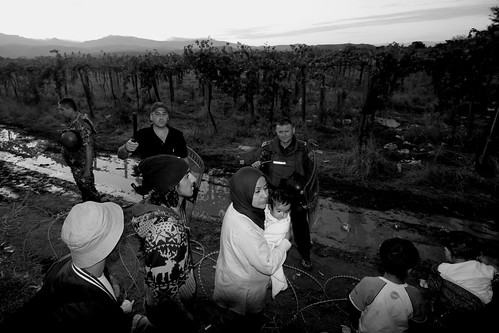
I took this photograph in August, 2015 in the neutral zone that separates Greece from it's northern neighbour, Macedonia. Then, the village of Idomeni was unknown, even to the vast majority of Greeks. A tiny railway crossing that for some reason was fast becoming the focal point for refugees taking the Western Balkan Route from Turkey to the countries of northern Europe.
However, this day was different, instead of tens or hundreds making their surreptitiously across the border to catch the north bound train in the town of Gevgeliji, thousands had been left stranded by the decision by the Macedonian government to close down the unofficial crossing point and deploy both riot police and border troops to enforce this decision.
With summer temperatures reaching 35C+ these people were left to fend for themselves in the fields around the tiny railways station on the Greek side of the border, Drinking water was virtually non-existent and refugees were reduced to drinking water from the irrigation systems in nearby fields, and sanitary facilities were just a handful of portoloos that quickly became unusable due to the demands of so many people.
The fact that the border had been closed came as no surprise as this had been a fairly regular occurrence all through the summer of 2015 as EU and Balkan governments vacillated over what to do with the ever increasing number of refugees and migrants fleeing the fighting in Syria and Afghanistan and poverty in other regions of the world.
This confusion manifested itself as an endlessly changing policy on the part of the Greek authorities and in particular, the police who would turn a blind eye to refugees making their way from the Greek islands to Idomeni and then suddenly introduce bans of movement in the north. Not, that such moves made much of difference to the numbers of refugees moving north, if the trains were denied them, refugees took the local buses or taxis. In the worst cases when all other options were denied them , they simply walked, guided the 70 km from the nearest large city, Thessaloniki by Google maps.
However, not only the Greek authorities but also their Macedonia counterparts had started to clamp down on refugee movement and not only were the borders more tightly guarded, the train that connected Gevgeliji with Belgrade had been suspended, the daily service completely overwhelmed by the scale of the passenger flow.
Yet, the border was still relatively porous and the nothing to mark it out but a dusty series of paths and raggedy hedges that separated Macedonian and Greek fields. With nothing in the way of natural or man made barriers to deter them , many made the dash to the nearby town , chased down by Macedonia police or border units in the wheat fields.
On the other hand while this was an option for healthy young people with a sense of adventure, it was really possible for the bulk of refugees who were travelling in family groups, often with older relatives or young children, Instead, they sweltered in the summer heat, waiting for the travel rules to change once again as they has so many times before.
The local solidarity groups that had been helping those making the journey north since 2014 were overwhelmed by the sudden increase in the scale of the numbers of refugees suddenly amassed in Idomeni and so appeals groups across northern Greece to come and help out. I managed to wing a place on a convoy of cars and vans that had set out from Thessaloniki, carrying drinking water, cooked food, clothing and sanitary items. I had been doing this with my group since May and I thought my experience would help in this situation and in that I was completely and utterly wrong.
Not only was the scale of the crisis much greater than I had previously experienced, the state of those in need was far more precarious. Instead of providing food and clothing to those who were tired and weary from their journey from Athens to Thessaloniki, these people were in need of far more and as a result more desperate. It was a combination that required all those providing help and required a degree of discipline and organisation that we had till then not obtained.It quickly became clear that if we were not to create more problems then we were solving then we would have to up our game.
The experience and failures I witnessed that day would prove invaluable when our group started going up to Idomeni on a regular basis later on in September and till the route was finally shut down for good in March 2017.
Friday, March 03, 2017
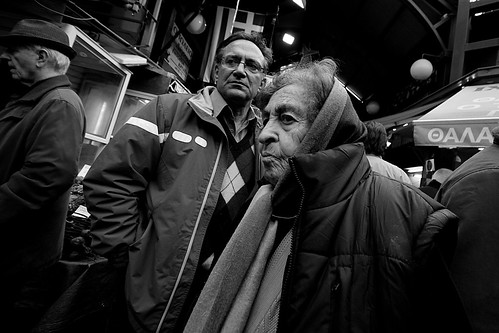
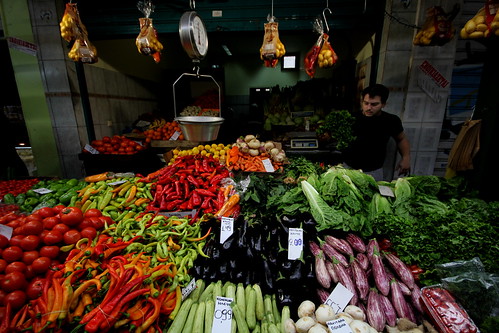
Moving north
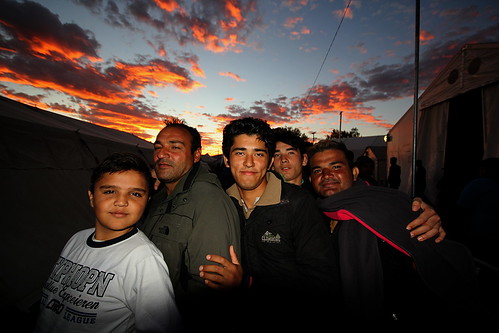
A reminder of what I was doing last year in the refugee transit camp in Idomeni on the Greek border.
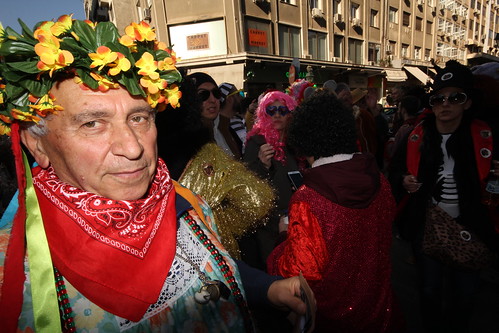
The traditional "bell ringers" from Greece and many other parts of the Balkans gathered in Thessaloniki
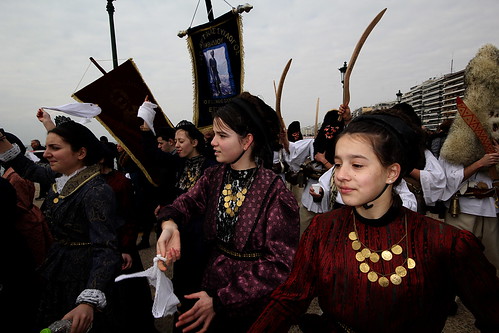
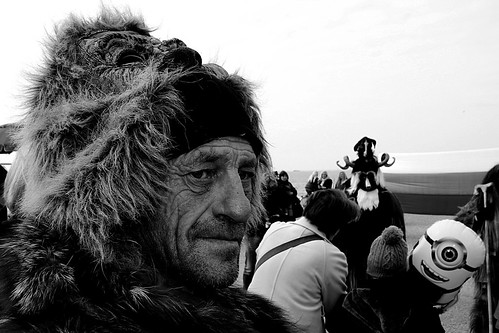
These dances were used to drive off evil spirits with the sound of their bells and so ensure health and prosperity for the whole community in the coming year.
Monday, January 30, 2017

Friday, January 27, 2017
Teaching language via story telling.
Story telling seems to be hard wired into us and tapping that deeply rooted need is a great way to get students to be more creative and expressive in the foreign language they wish to learn. Nowadays, with the advent of ever cheaper hardware and a ready supply of free-to-use applications, the cost of using such equipment in lessons has dropped significantly.
Here is a teaching idea that utilises such opportunities. A number of different aspects of language can be practiced with this exercise and it encourages active production in written form while creating dialogues and via the recording section it encourages students to listen to themselves and change their performances in response.
This is a long term project that will need multiple lessons and much will be best assigned for homework, also it requires the teacher to be comfortable with the software used and so is not for the technologically faint hearted. However, to simplify the procedure the video segment could be omitted and student could record themselves on their smart phones.
The level of the lesson depends very much on the source material chosen but could range from near beginner to advanced.
You'll need:
-Access to PC with a microphone and speakers and ideally the internet (useful but not absolutely
necessary).
-Comics in digital form or scanned pages from regular comics
-Windows Movie Maker
-An image processing app/program such as Windows Paint./Photoshop or GIMP.
-Audacity a free audio editor and recorder program (Optional).
Many comics in digital form come in .CBR/CBZ and other similar formats which means you'll need a special program to read them on a PC e.g. Comic Book Reader. However, this format cannot be read by image processing programs, To make them compatible you'll have to decompress or "unzip" them. which you can easily do by right clicking with your mouse or touch pad the file you need and decompressing it.The result will be that every page will become a jpg image file which you can then use with the other programs mentioned here.
.
Lesson Plan
There are three possible options for this stage of the lesson, you can use a comic strip with no dialogue e.g. Tiny Titan's Beast Boy or you could use a strip with dialogue and either let students read existing dialogue or blank out the speech bubbles and let students replace it with their own - see Star Wars Rebels example.
Once again the choice of comic strip also will reflect what kind of language structure, and/or vocabulary is being practiced/taught. Also whether the project will be best done by individual students or in groups is on best decided by the teacher. The exercise is very open ended and can be adapted for any number of language teaching items. This plan is a general introduction to the concepts rather than a step-by-step guide. Also the burden of much of the preparation will have to be taken up by the teacher unless you want to spend hours explaining several different programs to your students.


Here is a teaching idea that utilises such opportunities. A number of different aspects of language can be practiced with this exercise and it encourages active production in written form while creating dialogues and via the recording section it encourages students to listen to themselves and change their performances in response.
This is a long term project that will need multiple lessons and much will be best assigned for homework, also it requires the teacher to be comfortable with the software used and so is not for the technologically faint hearted. However, to simplify the procedure the video segment could be omitted and student could record themselves on their smart phones.
The level of the lesson depends very much on the source material chosen but could range from near beginner to advanced.
You'll need:
-Access to PC with a microphone and speakers and ideally the internet (useful but not absolutely
necessary).
-Comics in digital form or scanned pages from regular comics
-Windows Movie Maker
-An image processing app/program such as Windows Paint./Photoshop or GIMP.
-Audacity a free audio editor and recorder program (Optional).
Many comics in digital form come in .CBR/CBZ and other similar formats which means you'll need a special program to read them on a PC e.g. Comic Book Reader. However, this format cannot be read by image processing programs, To make them compatible you'll have to decompress or "unzip" them. which you can easily do by right clicking with your mouse or touch pad the file you need and decompressing it.The result will be that every page will become a jpg image file which you can then use with the other programs mentioned here.
.
Lesson Plan
There are three possible options for this stage of the lesson, you can use a comic strip with no dialogue e.g. Tiny Titan's Beast Boy or you could use a strip with dialogue and either let students read existing dialogue or blank out the speech bubbles and let students replace it with their own - see Star Wars Rebels example.
Once again the choice of comic strip also will reflect what kind of language structure, and/or vocabulary is being practiced/taught. Also whether the project will be best done by individual students or in groups is on best decided by the teacher. The exercise is very open ended and can be adapted for any number of language teaching items. This plan is a general introduction to the concepts rather than a step-by-step guide. Also the burden of much of the preparation will have to be taken up by the teacher unless you want to spend hours explaining several different programs to your students.


You will need to cut up the comic strip into sets of one, two or three using your image processing program and then add these images to the the Windows Movie Maker program (Here is a video tutorial on how to use WWM). To add your dialogue to the video you can use the existing recorder function that WMM has or record them via Audacity, an excellent free to use studio recording program, in which case you'll need to add the audio files separately to your WMM project.
You'll then need to adjust the length of time the images stay on screen in order to fit images and dialogue (the video tutorial mentioned above explains how to do this)..
BE WARNED: Recording dialogue correctly is a time consuming process and your students will probably need multiple takes before you or they are happy with the final result. However, this is the heart of the exercise as it requires students to listen to themselves closely and correct any mistakes made in pronunciation. The time spent is well worth the results.
The downside is that older student often recoil from the sound of their own voice, the upside is that it makes them aware of long term issues and allows them to improve enormously.
Instead of using comics, you could also use children's books or pages from a school text book.
Sunday, January 22, 2017
Civics in the era of Trump is set for a shake up

Ok, kids, what are the three branches on the US government?
Friday, January 20, 2017
Energy poverty and pollution in Greece
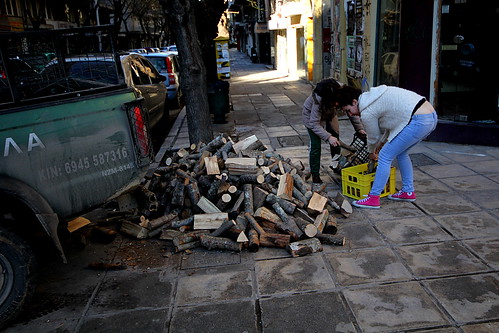
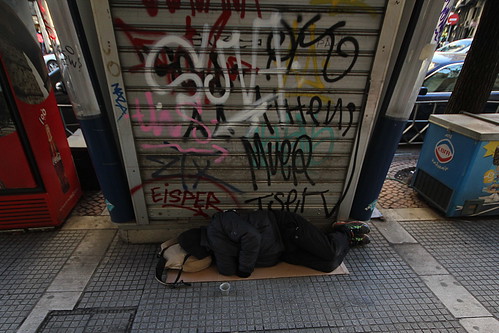
One of the symptom or perhaps better put, a victim of the economic crisis in Greece is air quality, especially in large cities such as Athens and Thessaloniki as people switch from using heating oil and electricity to burning wood in order to heat their homes.
The government's attempt to claw in revenue by massively increasing taxation on the heating oil that used to be the staple of central heating boilers in many urban apartment blocks has seen many residents abandon them, unable to pay for the oil that fuelled them. In addition, in Greece people are wary of running up massive electricity bills and so are loathed to rely just on it for heating.
In their place many people have returned to traditional wood burning stoves which produce far more air pollution than other forms of heating and in built up urban areas have led to a serious decline in air quality, especially when combined with other sources of smog such as car exhaust fumes.
The recent bitterly cold spell in Greece dramatically brought to the fore energy poverty, yet another entry in a long list of woes that Greeks have had to face since the start of the economic crisis in 2009. Even after years of supposed bail outs and mandated economic "adjustments" (Read cuts in health, educational spending, pensions etc) the economy continues to wither and die on the vine, starved on capital and the prospect of improvement any time soon.
Snow bound Thessaloniki
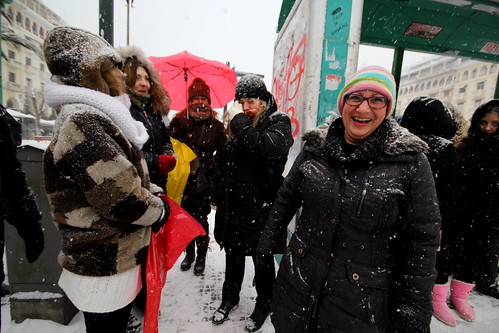
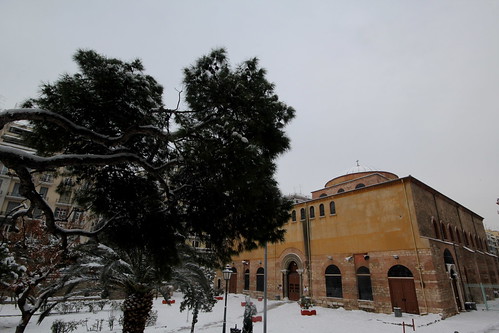
Thankfully, the worst of the recent cold snap is over here in Thessaloniki. Last week temperatures nose dived far below zero and the city was blanketed with snow for the first time in years, According to some accounts it was coldest spell Thessaloniki has experienced since the 1930s. As result many were left without heating and water as gas and water pipes froze then cracked open. To add to people's woes electricity supplies were affected in many areas, making for a particularly miserable week for some.
Thursday, January 12, 2017
The winter crisis in Greece - refugees left in limbo as those in charge pass the buck

After days of anticipation, the Ariadni cold wave finally hit Greece a few days ago bring polar temperatures and heavy snowfall across across the country. Not only was this spate of bad weather predicted days in advance, it was the butt of many jokes and sarcastic comments on Facebook and Twitter as the full force of the front hit nearly two days later than had been originally forecast. So why the Greek authorities and the large international NGOs who help run many of the camps were taken so completely by surprise by the event is something of a surprise in itself. While many ordinary Greeks were left without water and electricity by the extreme cold, those worst hit were many of the 60,000 refugees still living in tents and abandoned industrial buildings in makeshift camps.
On the Greek islands of Lesbos, Chios and Samos some refugees were left to spend days in unheated tents enduring temperatures as low as -5C , Nor was it only the islands that saw such squalid neglect of people in dire need. Despite repeated assurances by Greece' Migration minister, Yannis Mouzalas that, with a few minor exceptions that those on the mainland were already in properly "winterised" accommodations (see his interview in the Turkish daily Hurriyet) photographs and video soon appeared on both Facebook and Twitter from volunteers and aid workers on the ground showing freezing families in snow covered tents and freezing warehouses struggling to survive polar temperatures.
Once the story was picked up by the international media the Greek government's response was to first ban photography and filming in the worst effected camps (refugee camps are under the control of either the Greek army or police force and access to them is strictly regulated) and then slowly place a minority (500 out of nearly 6,000) of the most vulnerable in more suitable housing, at least until the worst of the winter weather abated.
While the severity of the cold spell is unusual for Greece, it is not unprecedented, Greek winters especially in the north are shorter than those in northern Europe but are often quite severe due to the mountainous topography of the region, so much so that the nation has over 25 ski resorts that people flock to every year. Even on the islands winter temperatures are often no more clement than those in some parts of northern Europe such as southern UK and Ireland, even in a mild winter. Forcing people to live in tents and abandoned buildings for months in such conditions is nothing short of criminal.
As is so often the case, finding the villain of the piece is a complicated, frustrating process with all the major players, Greek central government, local authorities, EU and UNHCR Greece busily blaming each other for this easily avoided fiasco. In the meantime many refugee still find themselves in cold, squalid camps waiting for a plan to improve the situation that no one in a position of authority seems willing to provide.
Saturday, December 31, 2016


Monday, December 19, 2016
English for refugees - Recipe dictation and cooking together
This lesson plan is based on a idea from Teaching Adults Second Language Learners by McKay and Tom
Aim - To help refugees use cooking vocabulary, write recipes
Materials - Cooking equipment and ingredients, access to a kitchen, photocopies (see below)
Level - Elementary/intermediate.
1 - Ask students what verbs/words we use to talk about cooking. write some on the board and mime them to ensure understanding. Otherwise ask students to use smart phones for translation.
2 - Elicit words and write them on the board, use mime to ensure understanding.
3 - Hand out this photocopy from Englishwsheets.com


7 - Read the recipe aloud and have students fill in the missing gaps.
8 - When you have finished reading have students take turns in completing the dictation on the board or in groups of 3-4
9 - Now get students to use this as a template for their own recipes, encourage them to use their smart phones to find ingredients and names of cooking equipment
10 Tell students that next lesson we will be cooking together in Oikopolis's kitchen, ask students to say who would like to cook something simple for the class, e;g salads, dips etc that take less than an hour to make. Take students on a tour of the kitchen to check that it has all the equipment they need.,
Aim - To help refugees use cooking vocabulary, write recipes
Materials - Cooking equipment and ingredients, access to a kitchen, photocopies (see below)
Level - Elementary/intermediate.
1 - Ask students what verbs/words we use to talk about cooking. write some on the board and mime them to ensure understanding. Otherwise ask students to use smart phones for translation.
2 - Elicit words and write them on the board, use mime to ensure understanding.
3 - Hand out this photocopy from Englishwsheets.com

4 - Students copy down any words they didn't know, check comprehension.
5 - In pairs, student mime words from the photocopy and the other s have to guess them.
6 - Now explain that you are going to give them a recipe (or write it on the board) and that they have to copy them into their notebooks but some words and/or numbers will be missing. (Just choose numbers for beginner students).

7 - Read the recipe aloud and have students fill in the missing gaps.
8 - When you have finished reading have students take turns in completing the dictation on the board or in groups of 3-4
9 - Now get students to use this as a template for their own recipes, encourage them to use their smart phones to find ingredients and names of cooking equipment
10 Tell students that next lesson we will be cooking together in Oikopolis's kitchen, ask students to say who would like to cook something simple for the class, e;g salads, dips etc that take less than an hour to make. Take students on a tour of the kitchen to check that it has all the equipment they need.,
Sunday, December 18, 2016
Thursday, December 15, 2016
VIDEO: Clashes between riot police and anarchists in Greek port city of Thessaloniki.
December 6 marks the 8th anniversary of the killing of a 15 year old Greek teenager, Alexis Grigoropoulos in central Athens district of Exarchia. Within hours violent protests swept the country and for weeks afterwards Greece saw clashes between demonstrators and riot police.
Every year the events is commemorated, often violently.
Video taken in Thessaloniki on 6 December 2016.
English for refugees - word games for the revision of vocabulary

Last time we played this game to lighten the mood and revise some of the vocabulary areas we have covered recently.
1 - Divide the board into a grid, On one axis write the categories you wish to cover, I also included easier categories such as cities and names in order to help the less advanced students.
2 Divide the class into teams - The size will depend on how much English your students know, with elementary/beginner students, use bigger teams.
3 - Ask students to shout out some (5-10) letters of the alphabet.
4 - Write them in the grid and go through some examples.
Letter Name City Part of the body Something in the home
F Fay Florence Face Freezer
5 - Set a suitable time limit (2-10 minutes) - encourage students to use their notes from previous classes and their smart phones.
6 - The winning time is the one who complete the grid or has the most correct entries when the time limit is up.
7 - Elicit answers from the whole class, write them on the board,
Thursday, December 08, 2016
English for refugees - Describing homes - finding accomodation

PART ONE
Aim - To help refugees with some grasp of English describe and find accommodation Greek city of Thessaloniki
Materials - Photographs of different kinds of housing either from magazines or via via smart phone.
Level - Elementary/intermediate.
1 - Ask students to think of their dream/perfect home. You may need a photograph to help get your message across and then describe the place and say why you want to live in this place.
2 - Now elicit suitable vocabulary for describing a home;
Type - e.g. flat/house/villa etc
Size - e.g in square meters or number of rooms/bedrooms
Location e.g in the centre/suburbs/countryside
Amenities e.g.garden/swimming pool/utilities room/garage etc
3 - Write these on the board elicit further terms from the students.
4 - Now students look for a suitable dream home on their smart phones or simply describe it to the person next to them. Students then ask each other why they want to live in this place.
5 - Now draw a floor plan of your own or one you have found on the internet. Label the rooms and facilities, check comprehension.

6 - Students then draw their own present home/previous residence floor plan or for their dream home.
7 - Students then describe their plan.
e,g, It is/was
It has/had
I like/liked etc
PART TWO
Aim - To help refugees with some grasp of English describe and find accommodation Greek city of Thessaloniki
Materials - Photographs of different kinds of housing either from magazines or via via smart phone and a map of the city..
Level - Elementary/intermediate
1 - In the next lesson recap the language used to describe homes (see part one)
TYPE
SIZE
LOCATION
AMENITIES
2 - Now divide the students into two groups landlords/landladies and tenants - explain terms.
3 - Now in their groups students think of questions the landlords/landladies and tenants would ask.
Landlords/landladies
e'g How long do you want to stay?
Do you have pets?
How many people are there in your family?
How will you pay the rent?- cash/credit card/direct debit?
etc.
Tenants
e.g Where is the apartment?
How big is it?
How many bedrooms does it have?
How much is the rent?
Howe much is the deposit?
etc.
4 - Write these and any others on the board so students can see them during the following exercises.
5 - Give out landlords/landladies and tenants role play cards (cut into strips)


6 - Work on vocabulary issues and either assign roles at random or ask student to choose their own roles.
7 - Students write down/copy suitable questions and practice them in pairs.
8 - Now students stand up and the landlords/landladies go to one corner of the room and tenants to the other. Explain that the tenants are looking for accommodation and the landlords/landladies have properties in and around Thessaloniki. Remind students that in Greece prices are often are negotiable so they can haggle/negotiate things such as cost of rent.
You may also need to pin up a large map of the city to help students understand where the properties are located
9 - Student try to find suitable property/tenant. Encourage students to try more than one option.
10 Students then explain how they made their choice to the class.
11 - If time permits students swap roles.
In the next lesson students can repeat the exercise using their real life details in order to recap.
Wednesday, December 07, 2016
Sunday, December 04, 2016
English for refugees - Giving directions

Aim - To help refugees with some grasp of English give and understand directions as well as talk about locations in the city of Thessaloniki, Greece.
Materials - A map of the city either on paper or via Google Maps via smart phone.
Level - Elementary/intermediate.
Before the lesson begins, choose a nearby shop/cafe/office that the students are likely to know or have seen.
1 - Ask the students if they know the shop/cafe/office you have chosen.
2 - Now ask them where it is and how I can get there.
3 - Write these phrases on the board Turn, left, turn right, go straight on, stop
4 - Explain to the students they are going to play a game and that they need to get into teams of 2-4 people each. In each group one person is going to be blindfolded (students can use hats/scarves/hooded coats etc and the other students will be giving them directions in order to reach a particular point in the classroom. You may need to demonstrate this yourself and get students to give you directions,

5 - Stand in the corner of the classroom and students in another corner. Now their fellow team members shout out directions so they can reach you.
6 - Play the game 2-3 more teams with different team members blindfolded.
7 - Now ask students to once again elicit language used to give directions. Use mime and example as well as drawings ti explain them.
e,g It's on the left/right/next to/near/opposite/behind/in front of/on the corner/at the supermarket/cross/go past etc.
8 - Students write down how to get to their bus stop from the building or how to get to a supermarket/shop etc from their home.
9 - Now students explain to each other the directions they've written (if they can without looking at their notes).
10 Hand out a map of the city or ask students to look it up on Google Maps on their phones and write some nearby landmarks on the board.
Aristotelous Square/Kamara/ The sea front etc.
11 - Together students give each other directions of how to reach there.
Subscribe to:
Posts (Atom)