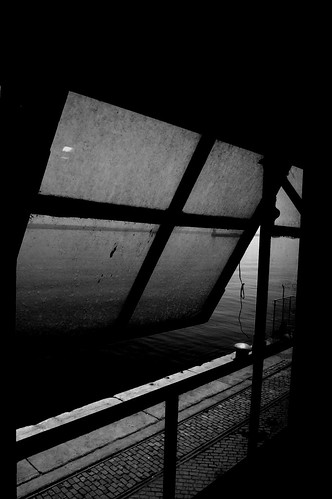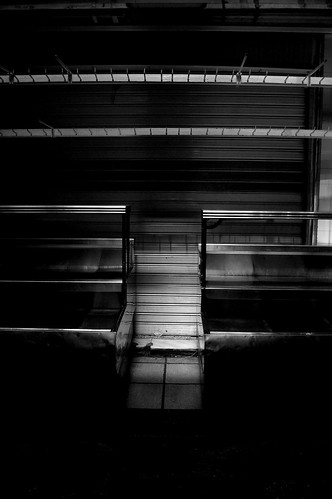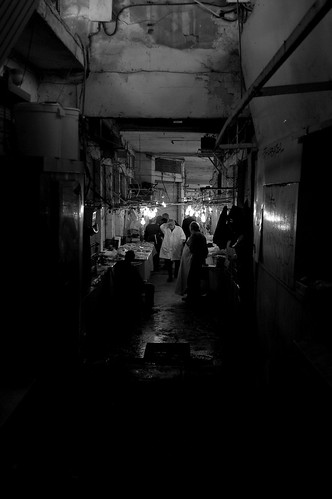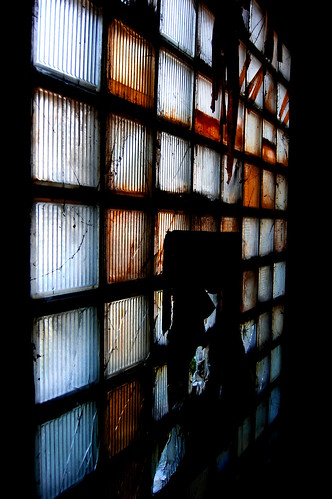
Taken in an abandoned warehouse on the west side of the city. I had about 15 minutes in between lessons. Creepy place to be sure and one that would make the perfect backdrop to a apocalyptic movie.
In “The Greek Schools of Istanbul,” published by Agra, Thessaloniki-born photographer Paris Petridis has captured those old schools. The Zappeion, Zografeio and Megali tou Genous schools, and the lesser-known Astiki Vlangas, Galata Primary and Koinotiki Astiki of Halkidona, once part of a thriving Greek world, are now in a state of dignified decline.
They give rise to nostalgic associations of ideas that fan out like an accordion: school photographs, Kemal and Jesus, the crescent and the cross, Greek “Victorian” style, imposing buildings and crisp classicism in the urban fabric of Istanbul. Remnants of a bygone era, the Greek schools remind us how much has changed in the past century."
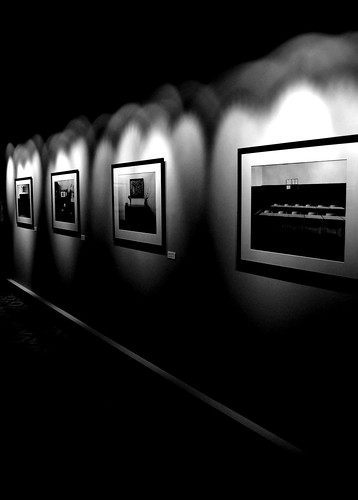
The exhibition by Marios Eleftheriadis is on at the Loutra Paradeisios on Egnatia at the top of Aristotelous Square until 30/5.
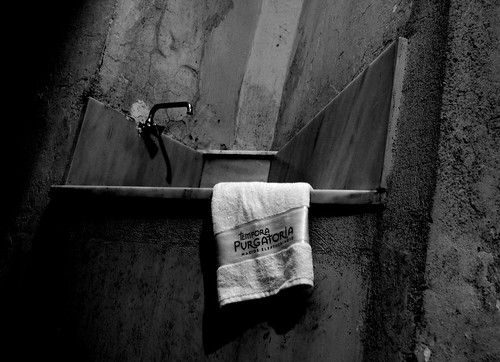
Εγκαινιάζονται στις 19/4 η έκθεση «Tempora Purgatoria» του Μάριου Ελευθεριάδη.
www.mariosnet.gr/
In scenes reminiscent of Steinbeck's 1930's classic, the Grapes of Wrath, immigrant and minority workers have clashed with what Greek newspapers called "hired thugs' over pay and conditions. Amidst sometimes violent clashes agricultural workers in the Greek town of Nea Manolada, home to 90% of Greece's strawberry production took part in a four day stoppage aimed at getting a pay rise of 3.5 euros a day.
As of Sunday strawberry producers have agreed to rise pay from 22.5 to 28 euros for farm labourers.However, the figure of 28 euros only applies to European workers, non-Europeans will receive only 25 euros according to the Greek newspaper, Kathimerini. Fears still remain that the producers will fail to honour even this agreement, due to be take effect in Autumn, once media attention has died down. The local council sets the minimum wage for untrained labourers at 30.4 euros a day.
It should be noted that strawberrys, sometimes called "red gold" by local producers, retail at 1.5 to 3 euros a kilo on the Greek market
The newspaper also brought to light several cases in which the police force and members of the local authorities, which turned a blind eye this week to attacks on union and political activists by landowners, are also involved with various scams involving the sale of fake residence permits for immigrant workers.
Miltos Paulou, head of the European Union Agency for Fundemental Rights (FRA) stated that 70% of those working in intensive agriculture in Greece are illegal immigrants and that Greek law limits foreign workers ability to change jobs so allowing the kind of exploitation seen in Nea Manolada and many other areas.
Tags: Greece | agriculture | immmigrant workers | labor relations | Nea Manolada | strawberries | World
Fighting has erupted in Southern Greece between strawberry farmers and migrant workers striking for higher pay.
According to a Greek trades union support the migrants, about 400 were attacked by farmers and what were described as "hired thugs".
Three trade unionists were hurt and one farmer was arrested, police say.
The clashes occurred in an area hit by last year's fires, and where slave labour conditions for fruit pickers have recently been revealed.
Source: news.bbc.co.uk
Tags: area | Asia | farmer | From | Greece | have | southern | strawberry | trade | union | About | according | ATTACKED | been | between | Clash | Conditions | described | erupted | Fighting | Fires | fruit | GREEK | Higher | HIRED | labour | last | MIGRANT | occurred | PICKERS | recently | revealed | SLAVE | strike | support | THUGS | were | What | Where | With | workers | World | year
Immigrant farm workers seeking a rise of three euros a day were attacked and in some cases beaten in Nea Manolada, Greece. The demand for the daily wage to be raised from 22 to 25 euros provoked violent confrontations between local farmers and the mainly immigrant work force in the town which produces 90% of the Greece's strawberry crop. In addition there were violent clashes between land owners and activists with the Greek trade union, PAME and members of KKE (Greek Communist Party) who were organising protests.
In a report in the Eleutherotypia newspaper also made note of the fact that the farm workers live in four shanty towns paying 100 -150 euros each for shacks, most of which have no access to electricity or running water. Forced to live in ghettos the newspaper also mentioned that workers also have restrictions placed on their movements as the camps are surrounded by barbed wire and spotlights.
Many of the children of the farm workers do not attend school, but rather work alongside their parents in the field according to a report by the newspaper. Without access to education or medical treatment those working in Nea Manolada are also victims of the local authorities according to an investigation by the the internal affairs department of the Greek police force with members of the local council involved with scams that allow land owners to sell workers for 300 to 500 euros paperwork that allow them to apply for residence permits.
Tags: GREEK | immigration | labor | Nea Manolada | World
I had the chance to catch up with an old friend today. Can't wait for the school term to end. This one has been a killer. 17 weeks without a break is way too long.